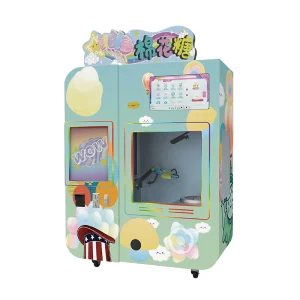
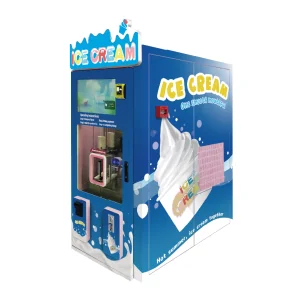
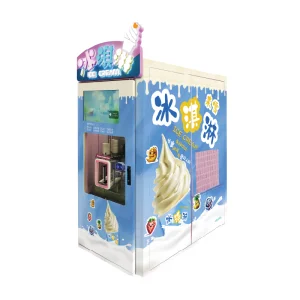
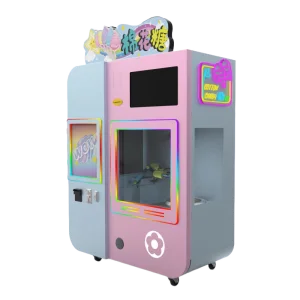
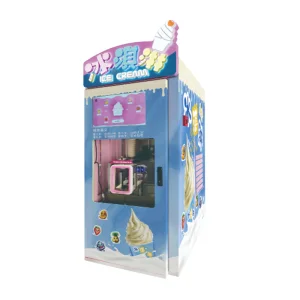
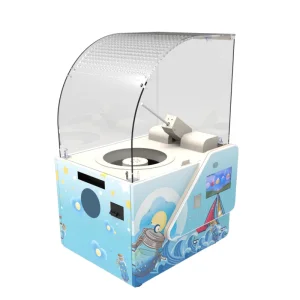
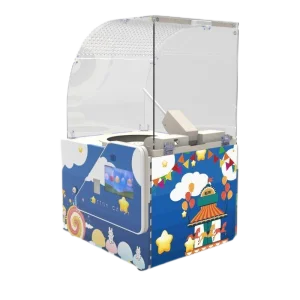
Explore our factory-direct smart vending equipment engineered for high-margin unattended retail across cosmetics, automated confectionery, and interactive treats.
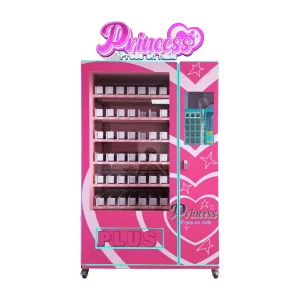
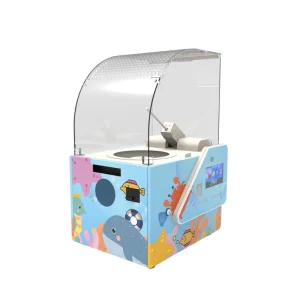

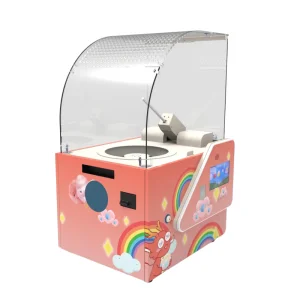
The global automated retail landscape has expanded far beyond traditional cold beverage dispensers and packaged snack vending equipment. In the modern post-cashier era, global enterprise buyers, retail operators, and venue concessionaires actively seek specialized, high-margin micro-retail systems classified under the industry designation of "Other Vending Machines." This critical vertical encompasses purpose-built robotic kiosks, freshly prepared food automats (cotton candy, soft-serve ice cream, hot popcorn, bean-to-cup coffee), high-value beauty/cosmetics dispensers (eyelashes, lipsticks, press-on nails), and custom industrial dispensing units.
As consumer purchasing behaviors lean toward instant gratification, immersive visual entertainment, and hygienic touchless interactions, the demand for highly customized OEM/ODM vending architectures has spiked. Operating at the intersection of precision robotics, Internet of Things (IoT) cloud telemetry, and specialized mechanical engineering, a premier Other Vending Machine Manufacturer & Factory serves as the technical backbone for global enterprises aiming to unlock untapped commercial footprints without incurring prohibitive labor costs.
Procuring non-standard or speciality automated retail machinery requires a sophisticated industrial cluster capable of rapid iterative R&D, precision hardware fabrication, and deep supply chain integration. Guangzhou and the broader Pearl River Delta in China stand as the world's primary innovation hub for complex robotics and specialized commercial machinery. Partnering directly with a source manufacturer in China offers unique, measurable operational advantages for global buyers:
From raw heavy-gauge sheet metal laser cutting, CNC bending, and robotic welding to automated wiring harness fabrication and mainboard SMT assembly, managing production completely in-house eliminates third-party markups and enforces stringent tolerance standards.
Speciality retail demands unique physical dimensions, bespoke spiral/elevator delivery mechanisms, custom graphic wraps, and specialized dispense logic. In-house engineering teams can execute CAD modifications and prototype hardware within accelerated timelines.
Leveraging localized commercial refrigeration, industrial PLC controllers, NEMA-rated stepper motors, high-definition capacitive touchscreens, and food-grade stainless steel allows China factories to deliver industrial reliability at optimized capital expenditure.
Working directly with an OEM/ODM source factory eliminates communication bottlenecks inherent to middleman trading companies. Direct access to firmware engineers and mechanical designers ensures that technical specifications, payment gateway APIs, and voltage requirements are built exactly to your region's operational parameters from day one.
The commercial vending industry is undergoing a structural transformation driven by artificial intelligence, mechanical automation, and real-time cloud data connectivity. Enterprise buyers must align with manufacturers whose technology roadmaps reflect these macro dynamics:
Modern consumers demand an experience, not just a transaction. Robotic cotton candy machines featuring transparent tempered glass display chambers and multi-axis RGB visual spinning routines double as foot-traffic magnets in high-density retail spaces.
Seamless integration of global cashless infrastructure—including Nayax, CPI, Ingenico, credit card EMV chip readers, Apple Pay, Google Wallet, and regional QR ecosystems (WeChat Pay, Alipay, KakaoPay)—is essential for high conversion rates globally.
Enterprise fleet operators require remote micro-level visibility. IoT telemetry platforms continuously stream ingredient level monitoring, internal temperature logs, sales velocity metrics, component health diagnostics, and automated fault alerts directly to mobile and desktop dashboards.
Speciality vending machines are engineered to monetize high-dwell-time corridors and impulse purchasing zones where dedicated retail staff would be cost-prohibitive. Optimal deployment environments demand customized hardware profiles:
| Deployment Venue | Recommended Machine Category | Key Operational Requirement | Primary Revenue Driver |
|---|---|---|---|
| Shopping Malls & Atriums | Robotic Cotton Candy & Soft-Serve Ice Cream Automats | Compact footprint, visual glass chamber, cashless payment UI | High footfall, family impulse buying, experiential visual appeal |
| Theme Parks & Family Centers | High-Capacity Automated Confectionery & Popcorn Kiosks | Rapid serve cycle (<30s), continuous ingredient hoppers, rugged chassis | Peak-hour queue mitigation, maximum throughput per hour |
| Beauty Boutiques & Nightclubs/KTVs | Lash, Lipstick & Press-On Nail Locker/Spiral Dispensers | Bespoke product tray sizing, secure optical drop sensors, high-end LED display | 24/7 access to high-margin beauty essentials, zero labor cost |
| Transit Hubs & Corporate Campuses | Freshly Ground Bean-to-Cup Coffee Vending Robots | MDB/DEX telemetry compliance, commercial water filtration, dual grinder logic | Consistent daily consumer routines, premium beverage price points |
| Confectionery Commercial Facilities | Industrial Canned Cotton Candy Packaging Lines | Automated weight dosing, hermetic sealing interface, continuous conveyor output | Bulk factory wholesale production, branded retail shelf supply |
Importing non-standard commercial vending equipment into regulated international markets requires meticulous adherence to electrical safety, sanitation, and communication standards. Quality-driven manufacturers implement rigorous compliance engineering across all build phases:
Equipment exported to North America, Europe, and Asia-Pacific must hold verified compliance documentation. Reliable manufacturers validate machines to CE, ETL/cETL, NAMA, RoHS, PSE, and FCC standards. Electrical layouts support dual-voltage configurations (110V/60Hz and 220V/50Hz) with region-specific industrial plugs.
To eliminate out-of-box failures in unattended environments, every unit undergoes an 11-step testing protocol. This includes raw material incoming verification, high-voltage insulation safety checks, 24-hour continuous mechanical burn-in cycles, vibration transport simulations, and simulated cash/cashless transaction testing.
Enterprise backend software integration depends on standardized internal communication. Master Controller Units (MCUs) utilize standard MDB (Multi-Drop Bus) and DEX/UCS interfaces to interface smoothly with third-party bill validators, coin changers, credit card terminals, and external ERP systems.
Detailed technical and commercial answers provided by our senior vending engineering and global logistics teams.
Discover our full catalog of commercial vending systems, fully automatic food production robots, and versatile semi-automatic units built for global operation.