
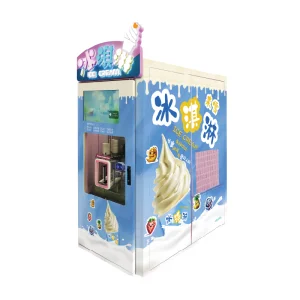
Engineered for high-ambient stability, non-stop 24/7 uptime, and seamless integration with localized Indian digital payments (UPI / QR Codes).
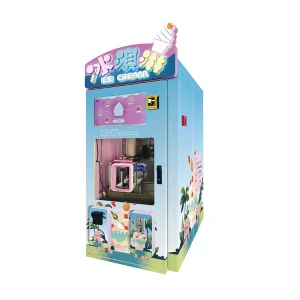
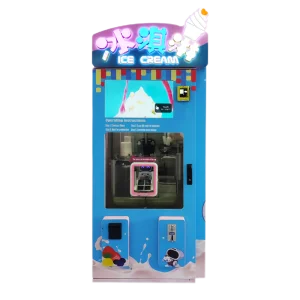
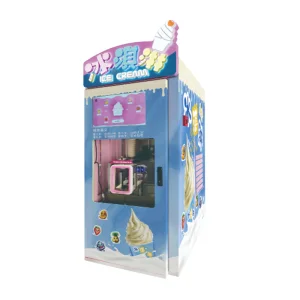
The Indian retail and quick-service restaurant (QSR) sector is experiencing a monumental shift towards fully automated, contactless micro-retail formats. Driven by a population exceeding 1.4 billion, rapidly rising disposable incomes, and year-round warm climatic conditions across Central, Western, and Southern India, the demand for impulse dairy items—specifically soft-serve ice cream—has reached an all-time high. Traditional brick-and-mortar dessert parlors face persistent headwinds, including soaring real estate rental costs in Tier-1 cities (such as Mumbai, Bengaluru, Delhi-NCR, and Hyderabad), high employee turnover rates, and rising operational overheads. In response, enterprise B2B procurement officers, vending operators, and dairy brands are turning to smart robotic ice cream vending machines as a strategic vehicle for rapid market expansion.
A primary catalyst for this industrial transformation is India's digital payment ecosystem. Powered by the Unified Payments Interface (UPI)—which processes billions of seamless transactions monthly via apps like PhonePe, Paytm, and Google Pay—consumer adoption of touchless QR payments is nearly universal. Smart ice cream vending machines equipped with IoT telemetry modules enable immediate QR scanning, delivering a complete transaction-to-dispense cycle within 30 seconds without human intervention.
To maximize Return on Investment (ROI), commercial operators focus on high-density micro-locations characterized by extended operating hours and heavy impulse buying power:
Why leading global operators and Indian B2B buyers partner with Guangzhou SevenCloud (Qiyun Technology) as their preferred OEM/ODM manufacturing hub.
By operating an 11,000 m² facility with direct control over laser cutting, CNC bending, and structural welding, we eliminate middleman markups while guaranteeing structural durability suited for long-distance export cargo handling.
Leveraging China's world-class component ecosystem (including commercial Secop/Embraco compressors and high-grade food-grade stainless steel), we deliver 30% to 45% capital expenditure savings compared to European equivalents.
Every unit undergoes a rigorous 11-stage quality audit, including 24-hour continuous burn-in testing and thermal chamber stress tests up to +45°C, ensuring flawless performance under tropical Indian ambient conditions.
Deploying unattended food robotics in emerging markets requires specialized engineering to withstand local infrastructure challenges.
| Operational Challenge in India | Standard Commercial Vending | SevenCloud Industrial Adaptation |
|---|---|---|
| High Ambient Summer Heat (+40°C to +45°C) | Frequent compressor trip-offs, soft ice cream melt, bacterial risks. | Tropicalized Dual-Compressor Cooling with heavy-duty thermal insulation and pre-cooling hoppers keeping liquid mix below 4°C at all times. |
| Power Grid Voltage Fluctuations | Board burnout, system resets, corrupted transaction data. | Wide-voltage input modules (230V ±15%, 50Hz) equipped with internal surge protection and unexpected power-failure data recovery. |
| UPI Cashless Payment Integration | MDB card reader only, requiring costly localized conversion kits. | Native IoT API supporting dynamic QR generation for Paytm, PhonePe, Google Pay, and BharatPE with real-time cloud webhook verification. |
| Hygiene & FSSAI Standards Compliance | Manual nightly disassembly required; risk of contamination. | Automated Pasteurization & CIP (Clean-In-Place) self-cleaning cycles, food-grade 304/316 stainless contact parts, and hermetically sealed dispensing doors. |
A direct side-by-side financial breakdown demonstrating why automated kiosks yield a drastically faster payback period.
| Financial Metrics | Traditional Ice Cream Shop (Tier 1 Indian Mall) | SevenCloud Robotic Vending Kiosk |
|---|---|---|
| Required Floor Footprint | 150 – 400 sq. ft. | 9.5 – 15 sq. ft. |
| Monthly Rental Cost | ₹150,000 – ₹350,000 / month | ₹20,000 – ₹45,000 / month |
| Labor Overhead (Staffing) | 2 to 4 workers per shift (salaries, training, turnover) | Zero counter staff (1 maintenance tech for 10 machines) |
| Operating Hours | 10 – 12 hours (mall trading hours) | 24 Hours / 7 Days continuous operation |
| Estimated Payback Period (ROI) | 18 – 24 Months | 4 – 7 Months |
Discover our range of customizable machines tailored for Indian procurement networks, chain store operators, and independent distributors.
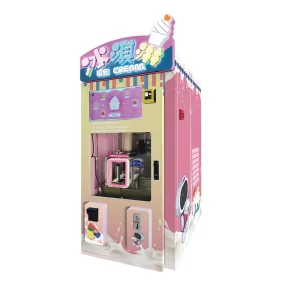

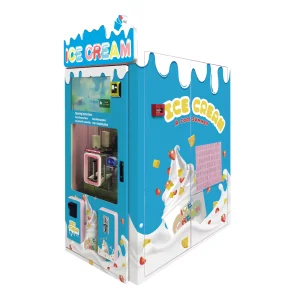
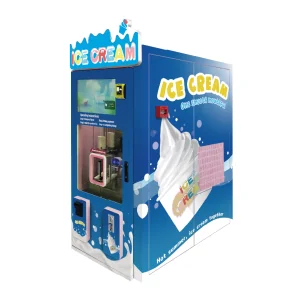
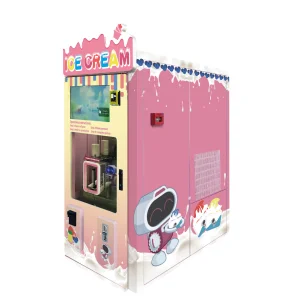
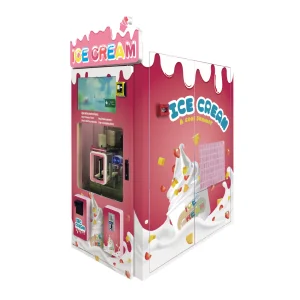
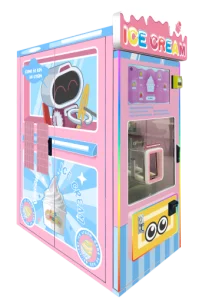
Comprehensive technical guidance based on real-world engineering deployment across Indian ports and commercial venues.
Our machines come pre-configured with a universal IoT gateway that integrates with Indian payment aggregators via RESTful APIs. When a customer selects an ice cream flavor on the 21.5" touchscreen, the system generates a dynamic UPI QR code compatible with PhonePe, Paytm, Google Pay, and BHIM. Once payment confirmation is received via cloud webhook, dispensing triggers automatically.
Yes. All export models intended for the Indian market are manufactured with 230V / 50Hz single-phase electrical systems. They include built-in industrial surge protection modules and heavy-duty grounding to prevent control-board damage during local grid voltage spikes.
We use tropicalized commercial compressors (such as Secop or Embraco) paired with independent dual-refrigeration loops. The main freezing cylinder maintains precise freezing consistency while the liquid mix storage hopper stays strictly below 4°C, satisfying local food safety standards even under high ambient heat.
We ship directly from Guangzhou/Shenzhen port to key Indian container ports including Nhava Sheva (Mumbai), Chennai Port, Mundra, and Cochin. Typical production lead time is 15 to 20 business days, followed by 14 to 18 days ocean transit time. Full export documentation (Form A/COO, Commercial Invoice, Packing List, CE Certificates) is supplied for smooth customs clearance.
SevenCloud machines feature automated CIP (Clean-In-Place) self-cleaning functionality. Operators set scheduled pasteurization cycles via the touch interface or remotely through the management dashboard. This reduces manual wash-downs to once every 7 to 14 days, depending on local ingredient guidelines.