High-margin, robust semi-automatic and automated spinning units optimized for Scandinavian commercial venues, family leisure centers, and event fleets.
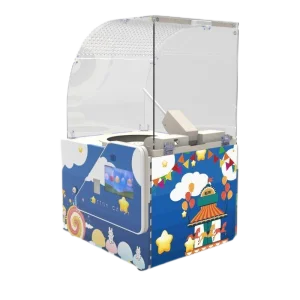

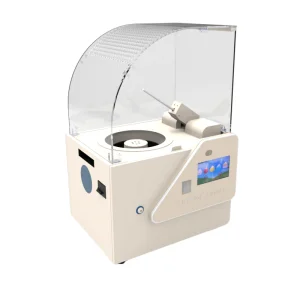
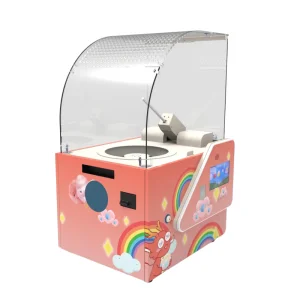
Understanding the economic pressures, labor dynamics, and consumer expectations driving automated retail across Norway’s prime commercial infrastructure.
Norway represents one of the most unique commercial ecosystems in Europe. Characterized by high purchasing power per capita, sophisticated urban infrastructure in regions like Oslo, Bergen, Stavanger, and Trondheim, and an almost complete transition toward a cashless society, local commercial operators face both monumental opportunities and acute operational challenges. Chief among these challenges is the exceptionally high cost of manual labor. Traditional concession stands, entertainment booths, and manual cotton candy production in Norwegian amusement parks, ski resorts, and shopping malls (such as Sandvika Storsenter or Lagunen Storsenter) struggle to maintain profitability when reliant on fully manual staff.
This economic structural shift has accelerated the adoption of semi-automatic cotton candy machines and intelligent robotic vending stations. A semi-automatic unit bridges the gap between total robotic autonomy and artisanal snack presentation. By taking over the complex thermodynamic execution—precise sugar liquefaction, high-rpm centrifugal spinning, and thermal regulation—operators can produce uniform, hygienic, high-margin cotton candy in under 45 seconds per serving with zero specialized staff training.
Reduces labor overhead by up to 75%. Staff only manage stick positioning and order processing, eliminating manual sugar dosing errors and lengthy preparation cycles.
Engineered using 304 food-grade stainless steel bowls, sealed splash guards, and anti-dust acrylic domes that meet strict Norwegian Food Safety Authority hygienic protocols.
Compatible with standard MDB telemetry protocols for seamless terminal integration with Nayax, Castles Technology, Vipps QR payments, and contactless BankAxept cards.
An authoritative analysis of heating element metallurgy, centrifugal dynamics, and thermal feedback loops designed for stable indoor/outdoor operations.
Norwegian indoor ambient temperatures remain climate-controlled, but seasonal outdoor deployments—such as Christmas markets in Oslo (Jul i Vinterland), Bergen light festivals, or winter ski hubs like Geilo and Trysil—expose equipment to rapid thermal loss. Standard commercial cotton candy machines utilize primitive voltage regulators that suffer from extreme temperature fluctuations, leading to caramelized, burnt sugar or un-melted sucrose crystals.
Our partner manufacturing plants utilize **Closed-Loop Proportional-Integral-Derivative (PID) Thermostat Controllers**. Equipped with platinum RTD sensors embedded directly within the brass/copper heating head assembly, the system samples temperature at 100Hz. Power output to the heating coil dynamically modulates to maintain an exact $165^\circ\text{C} - 175^\circ\text{C}$ melt zone regardless of ambient airflow, ensuring consistent fluff density and preventing sugar carbonization.
The core spinning mechanism operates at speeds between 2,800 RPM and 3,400 RPM. At these high velocities, micro-imbalances in raw sugar distribution can lead to shaft wobble, bearing wear, and excessive operational noise—a critical flaw for high-end Norwegian indoor shopping venues. Industrial semi-automatic units incorporate self-balancing magnetic suspension bushings and shock-absorbing rubber mounts, reducing operational acoustic output below 58 dB.
| Engineering Parameter | Traditional Manual Machine | Industrial Semi-Automatic Unit | Norwegian Market Operational Impact |
|---|---|---|---|
| Heating Component | Standard Aluminum / Open Coil | Food-Grade Copper / Brass Alloy + PID | Prevents sugar scorching; 40% faster warm-up time. |
| Production Speed | 90 - 180 seconds / unit | 30 - 45 seconds / unit | High throughput during peak festival / weekend rushes. |
| Sugar Yield Efficiency | 12g - 18g waste per serving | < 2g micro-particulate waste | Lower raw material overhead; cleaner operating chamber. |
| Hygienic Isolation | Open bowl top | Enclosed Acrylic Shield + Negative Fan Shield | Meets strict Mattilsynet sanitation guidelines. |
| Power Consumption | Unregulated 2000W constant draw | Dynamic 1500W eco-cycle modulation | Complies with Nordic environmental energy standards. |
Norway's coastal climate often exhibits high relative humidity (RH > 75% in cities like Bergen). High humidity causes traditional cotton candy floss to collapse rapidly into syrup. Advanced semi-automatic units integrate a low-wattage dehumidifying air jet surround system near the extrusion rim. By blowing dry, warm air upward through the spinning basin, the structural integrity of the sucrose web is preserved, allowing high-volume event operators to prepare and serve products without structural degradation.
Strategic placement guidelines for Norwegian enterprises, event equipment rental providers, and commercial real estate developers.
Ideal for placement in high-footfall atrium spaces such as Oslo City, Storo Storsenter, or Kvadrat. Compact footprints (under 1 sq meter) allow integration alongside existing coffee kiosks or arcade zones with minimal real estate lease costs.
Theme parks like TusenFryd, Kongeparken, and indoor Family Entertainment Centers require high peak throughput. Semi-automatic operation lets young guests watch the creation process through transparent domes while keeping queue times minimal.
Mobile semi-automatic units built with heavy-duty caster wheels and reinforced flight-case exteriors are used by event hire operators across seasonal festivals, winter markets, and corporate events throughout the Nordics.
Ensuring seamless import, grid connection, safety validation, and long-term spare-parts supply across the EEA trade zone.
A realistic financial breakdown based on standard Norwegian commercial retail pricing (NOK) and raw sugar input expenditures.
| Operational Metric | Average Daily Projection | Monthly Aggregate (30 Days) | Annualized Output (365 Days) |
|---|---|---|---|
| Units Sold (Servings) | 60 units | 1,800 units | 21,900 units |
| Average Retail Price per Unit | 50 NOK | 50 NOK | 50 NOK |
| Gross Revenue Generated | 3,000 NOK | 90,000 NOK | 1,095,000 NOK |
| Raw Material Cost (Sugar + Paper Stick) | - 240 NOK (4 NOK/unit) | - 7,200 NOK | - 87,600 NOK |
| Electricity & Site Power Allocation | - 30 NOK | - 900 NOK | - 10,950 NOK |
| Estimated Net Profit Margin | 2,730 NOK | 81,900 NOK | 996,450 NOK |
*Model assumes a standard high-traffic location during weekend peak hours. Local commercial rental fees excluded.
How next-generation R&D is transforming semi-automatic cotton candy machinery into intelligent, eco-friendly automated retail nodes.
Optical and thermal micro-sensors assess the ambient humidity and exact melting viscosity of flavored sugars in real time, auto-tuning the spinner RPM to maintain optimal filament thickness.
Next-gen auto-dispensing sticks utilizing FSC-certified Birch wood or marine-degradable paper composite tubes to align with strict Nordic zero-waste environmental regulations.
Full IoT integration allowing multi-unit operators across Oslo, Bergen, and Stavanger to monitor sugar container levels, daily revenue, motor wear, and cleaning cycles from a single mobile dashboard.
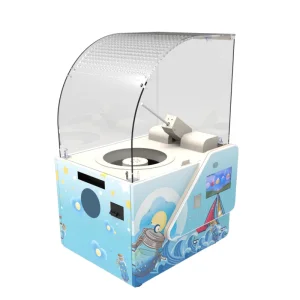
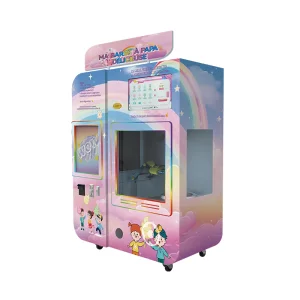
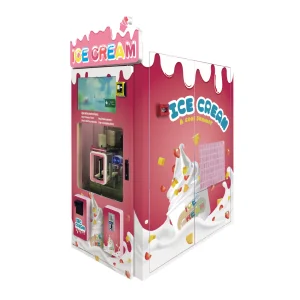
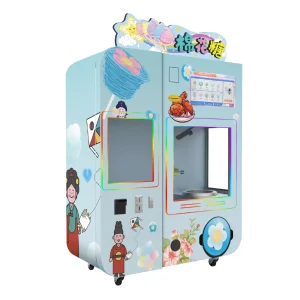
Explore our full line of semi-automatic, fully automatic vending, and specialty confectionery production hardware available for Norwegian import.
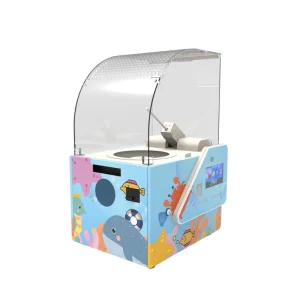

Detailed technical and commercial answers addressing regulatory compliance, electrical standards, and operational economics in Norway.
Partner directly with a leading commercial vending manufacturer. Request complete OEM/ODM product catalog sheets, technical compliance documentation, and DDP Norwegian freight quotes today.
Send Inquiry Now