Industrial-grade self-service machinery engineered for compact urban installation, low noise footprints, and continuous 24/7 commercial operation.
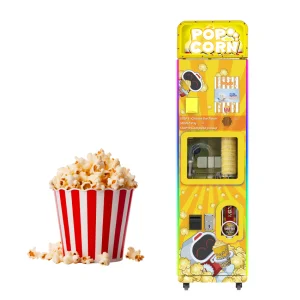
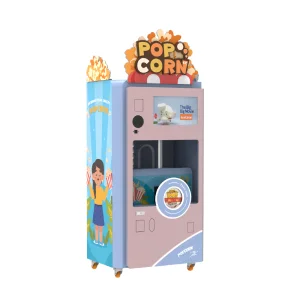
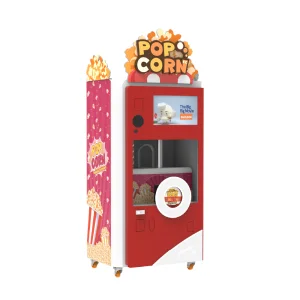
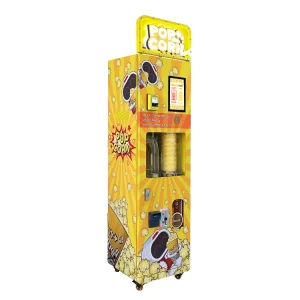
Tokyo represents the world's most sophisticated and hyper-dense automated retail market. With over 4 million vending units nationwide and an unparalleled density of automated service touchpoints, the Tokyo metropolitan area (including key commercial hubs such as Shinjuku, Shibuya, Chiyoda, and Ginza) operates under unique spatial, regulatory, and consumer dynamics. For commercial snack operators, deploying a popcorn vending machine factory solution in Tokyo requires balancing strict floor-space efficiency ($/sq. meter productivity) with high-throughput mechanical reliability.
Tokyo utilizes 100V AC at 50Hz (Eastern Japan grid). Factory designs must incorporate custom transformer coils, active power factor correction (PFC), and rapid heating modules that stay within 15A circuit thresholds without tripping commercial circuit breakers.
Over 88% of urban micro-transactions in Tokyo are performed cashless via FeliCa-based transit IC cards (Suica, Pasmo) and QR platforms (PayPay, LINE Pay). Modern factory builds must integrate MDB 4.2 telemetry interfaces supporting localized Japanese payment gateways.
Equipment operating in Japanese public commercial spaces must strictly comply with PSE (Electrical Appliance and Material Safety Law) and sanitary regulations defined by Tokyo Public Health Centers (Hokenjo) regarding thermal food contact zones.
Urban real estate in Tokyo commands premium rental rates. Traditional concession stands requiring manual labor face acute operational headwinds due to Japan’s labor shortages and rising hourly wages. Fully automated popcorn robots act as autonomous micro-enterprises, delivering fresh, hot, popping theater within footprints as small as 0.75 square meters.
Globally, the automated concession industry is undergoing a structural paradigm shift from static, cold-vending pre-packaged snacks toward dynamic, visual, "freshly prepared" automated food robotics. The global popcorn market—valued at over $12 billion—has historically been anchored in cinemas and static retail bags. However, consumer demand for hot, impulse-driven, freshly popped snacks without artificial preservatives has created a lucrative market segment for smart hot-air and kettle-style popcorn vending machines.
The unit financial performance of direct factory-engineered popcorn vending machines outpaces traditional cold drink or snack vending due to the extreme cost-expansion ratio of raw corn kernels. Non-GMO butterfly or mushroom corn kernels exhibit an expansion ratio of 1:38 to 1:44 when subjected to regulated thermal airflow.
| Metric / Operational Variable | Traditional Concession Counter | Standard Vending Machine | SevenCloud Tokyo-Spec Popcorn Robot |
|---|---|---|---|
| Labor Requirement | 1 - 2 Staff / Shift | Zero (Static Stock) | Zero (100% Autonomous) |
| Product Freshness | Variable (Heat Lamp) | Pre-packaged (Cold / Stale) | Fresh Hot Air Popped On-Demand |
| Raw Ingredient Cost / Serve | ~$0.25 - $0.35 USD | ~$0.80 - $1.20 USD | ~$0.12 - $0.18 USD |
| Retail Selling Price (Tokyo) | ¥400 - ¥600 JPY | ¥250 - ¥350 JPY | ¥400 - ¥500 JPY |
| Operating Gross Margin | 55% - 65% (Labor heavy) | 40% - 50% | 82% - 88% |
Consumers in Tokyo are increasingly health-conscious. Modern factories are transitioning from oil-submerged frying kettles to closed-loop forced hot-air fluidization. This reduces calories while eliminating grease buildup inside internal robotic components.
IoT integration enables real-time tracking of kernel hopper weight, cup dispensing inventory, thermal heating curves, and error logging. Operators manage hundreds of units scattered across Tokyo transit lines from a single dashboard.
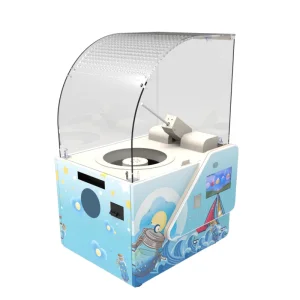
Modern automated hardware is no longer a silent metal box. Transparent heat-resistant tempered glass display windows, custom RGB ambient lighting sync, and localized Japanese voice prompts turn cooking into a mesmerizing visual show.
Deploying popcorn vending machinery across Tokyo requires matching hardware specifications with the precise foot-traffic dynamics and spatial constraints of localized commercial districts:
Game centers, pachinko parlors, and multi-story KTV venues in Shinjuku’s Kabukicho or Shibuya Center-Gai operate into early morning hours. High-capacity popcorn machines equipped with automatic cup-dispensing arrays (up to 120-cup internal storage) provide impulse snacking for late-night youth crowds without requiring staff supervision.
In Akihabara, snack robotics fit seamlessly into anime retail spaces, pop-up stores, and hobby shops. Custom full-body anime wraps, coupled with digital touchscreens displaying custom brand animations during the 90-second popping cycle, maximize dwell time and turn routine purchases into shareable social content.
Commuter waiting areas and airport lounge zones require ultra-quiet operation, rapid heat-up times, and zero smoke or particulate emission. Industrial factory builds equipped with internal HEPA air filtration and active carbon scrubbers trap oil vapor and aroma particles when necessary to comply with transportation facility codes.
Family-centric leisure centers require multi-flavor variety. Models featuring one-button flavor switching (e.g., Japanese Matcha, Sea Salt, Caramel, Sweet Butter) allow high-throughput family serving with minimal physical interaction, guaranteeing high hygiene standards.
Our factory R&D engineering teams systematically solve core mechanical failure points inherent in low-grade commercial popcorn dispensers. Below is our standard industrial platform architecture:
Utilizes optical sensor-guided servo motors and vibration-assisted hopper necks to eliminate raw unpopped kernel blockages and cup misalignment jams during high-humidity Tokyo summer periods.
Dual PID temperature control loops maintain forced air at an exact 230°C–250°C popping window. This yields >98% kernel popping rates within 80 seconds without scorching or burning butter coatings.
Internal storage hoppers feature periodic UV-C germicidal lamps and sealed, food-grade 304 stainless steel contact interior shells, fulfilling Japanese health authority sanitation compliance automatically.
Scaling a snack robot fleet across Tokyo requires more than standard hardware delivery. Our factory provides end-to-end macro operational integration for corporate vending operators, franchise networks, and commercial real estate groups:
Work directly with our factory engineering team to build custom-branded, high-profit snack vending hardware tailored for Japan and global markets.
Send Inquiry NowIn-depth answers regarding factory manufacturing, Tokyo site compliance, logistics, and machine operation.
Explore our full range of fully automated popcorn, cotton candy, and soft-serve ice cream robot machines built for global deployment.
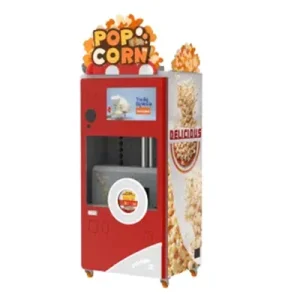
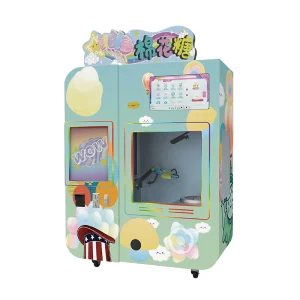
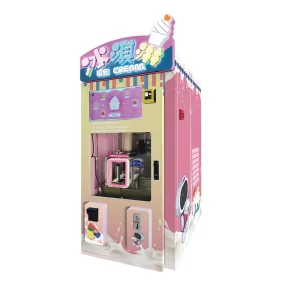
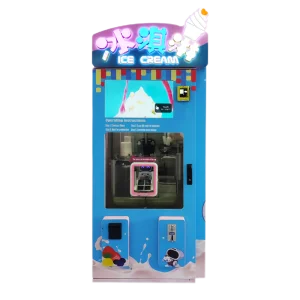


Contact our direct manufacturing engineers to receive full technical documentation, PSE/CE certification reports, factory-direct pricing, and localized Tokyo shipping schedules.
Send Inquiry Now