Our core robotic platforms engineered specifically for heavy footfall zones in Umeda, Namba, Dotonbori, and Kansai International Airport.
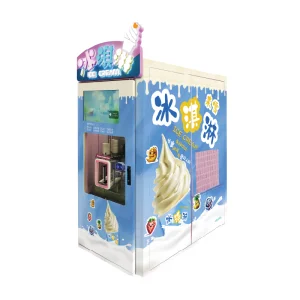
Industrial dual-compressor architecture engineered for continuous high-capacity output during peak Osaka tourist rushes.
Explore Specifications
Space-optimized sub-1m² footprint tailored for tight retail corridors and arcade integration across Shinsaibashi venues.
Explore Specifications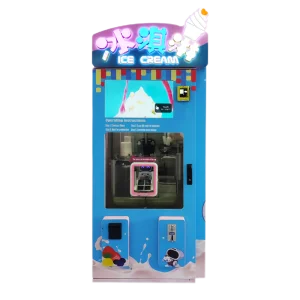
One-click fully automated pasteurization and dispensing system strictly adhering to Japanese sanitation guidelines.
Explore Specifications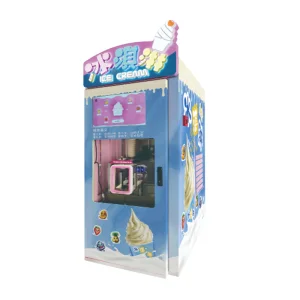
Heavy-duty 24/7 self-cleaning operational model designed for continuous night-economy sales in Osaka entertainment districts.
Explore SpecificationsOsaka represents Japan’s historical capital of culinary innovation and commercial trading. As the Kansai region prepares for expanded international footfall—driven by major regional developments, transportation node upgrades, and year-round tourism—the local commercial food service infrastructure faces a structural operational dilemma: acute labor shortages combined with escalating real estate overheads.
In high-density commercial hubs such as Umeda, Namba, Tennoji, and Dotonbori, customer footfall velocity exceeds thousands of impressions per hour per square meter. However, Japanese demographic metrics show a shrinking working-age population, pushing hourly wages in food service to historic highs. Conventional soft-serve ice cream operations require dedicated counter staff, continuous monitoring, and complex daily manual sanitization—creating severe operational bottlenecks.
Fully automated robotic ice cream vending machines bridge this gap by replacing manual labor with precision robotics, enabling 24/7 unattended operation within compact, sub-square-meter footprints. For Osaka vending operators, real estate developers, and concessionaires, OEM robotic hardware offers a direct path to maximizing gross margin per square foot.
Deploying commercial food automation in Western Japan demands strict adherence to local regulatory frameworks, including Japan's Food Sanitation Act (食品衛生法), PSE (Product Safety Electrical Appliance & Material) Certification, and compliance with the Kansai Electric Power 60Hz power grid standard.
Building commercial vending hardware capable of operating continuously in high-ambient Osaka summer temperatures requires zero engineering compromise. Our manufacturing facility combines aerospace-grade mechatronics with dual-circuit refrigeration systems.
Utilizes commercial-grade Embraco compressor units running eco-friendly R290 refrigerant. Independent cooling loops separate the raw mix storage hopper (+2°C to +4°C preservation) from the freezing cylinder, preventing mix thermal degradation over extended operational periods.
High-precision Japanese industrial stepper motors and closed-loop servo actuators handle cup pickup, multi-flavor swirl dispensing, topping addition, and door locking. Repeatable positional accuracy within ±0.1mm prevents spillage and mechanical jam events.
Integrated Clean-in-Place (CIP) pasteurization heat cycle elevates liquid mix to 65°C+ overnight to eliminate bacterial growth, allowing Osaka fleet managers to reduce manual wash cycles from daily to once every 7 to 14 days without violating health codes.
To assist enterprise buyers, operators, and procurement officers in calculating capital expenditure ROI, the matrix below compares a traditional manned soft-serve station against our fully automated OEM ice cream vending machine operating in a typical high-footfall Osaka venue (e.g., Umeda Station Transit Mall).
| Operational Parameter | Manned Soft-Serve Kiosk (Osaka) | OEM Automated Robotic Vending Station | Operational Variance & Advantage |
|---|---|---|---|
| Required Floor Footprint | 8.0 m² – 15.0 m² | 0.85 m² – 1.2 m² | 85% Footprint Reduction (Substantial rental savings) |
| Monthly Labor Overhead | ¥450,000 – ¥750,000 JPY (2-3 Shifts) | ¥0 JPY (Unattended Operation) | 100% Direct Labor Elimination |
| Daily Operating Window | 10–12 Hours (Constrained by shifts) | 24 Hours / 365 Days | +100% Operational Availability (Captures night economy) |
| Sanitization & Hygiene | Manual wash down; human error prone | Automated CIP Pasteurization | Standardized pasteurization conforming to HACCP |
| Japanese Payment Integration | POS terminal + Cash Register + Cashier | Embedded IC Cards (ICOCA/Suica) & PayPay | Zero cashier bottleneck; instant digital settlement |
| Mean Time to Break-Even | 14 – 22 Months | 4.5 – 7 Months | 3x Faster Capital Recoupment |
Deploying vending machinery into Japan without local electrical adaptation or transaction interface customization causes operational friction. Our OEM manufacturing process tailors every machine to local Kansai infrastructure specs before export.
Fully integrated hardware support for local transit IC cards (ICOCA in Kansai, Suica, Pasmo) via Nayax or local Japanese payment readers. Seamless cloud API support for popular Japanese QR payment wallets including PayPay, LINE Pay, and d-払い (d-Barai), as well as classic JPY coin/bill acceptors.
Unlike Tokyo (50Hz), Osaka operates under the Kansai Electric Power 60Hz frequency standard. Our machines feature industrial dual-frequency power transformers (AC 100V / 200V 60Hz) with PSE mark electrical insulation, preventing compressor overheating and harmonic noise in compliance with Japanese fire safety codes.
The 21.5-inch capacitive touchscreen interface features localized Japanese text prompts with polite honorific phrasing (Keigo), accompanied by instant toggles for English, Traditional Chinese, and Korean to serve international travelers across Osaka destination hubs.
Our OEM research and development roadmap focuses on integrating cutting-edge machine learning and energy efficiency upgrades into our ice cream vending machines serving Osaka fleet operators.
Embedded HD cameras powered by computer vision algorithms monitor every dispensed soft-serve swirl in real-time. If an irregular dispense or low-viscosity shape is detected, the unit automatically executes a self-correction dispense cycle, safeguarding brand reputation.
Vibration sensors on compressor mounts and thermal degradation tracking provide telemetry data directly to cloud dashboards. Fleet managers receive automated alerts before mechanical failure occurs, ensuring near 100% operational uptime.
Integration of variable-speed inverter compressors reduces energy consumption during low-traffic overnight hours by up to 42%, assisting Osaka operators in meeting corporate ESG and carbon reduction mandates.
Explore our comprehensive array of customizable vending models designed for international distributors and Japanese retail operators.
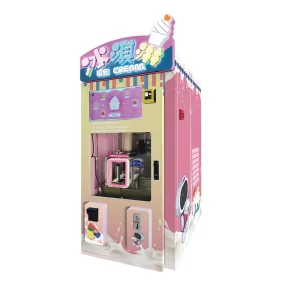
Built for fast output and continuous operation during large events in Osaka convention centers.
Explore Specifications
Updated 2025 robotics framework with enhanced Japanese currency and IC payment modules.
Explore Specifications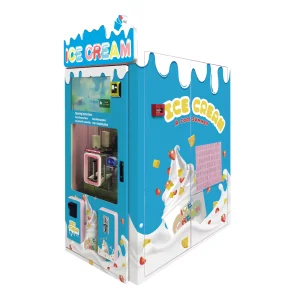
Real-time stock alerts and remote temperature adjustment via dedicated smartphone dashboard.
Explore Specifications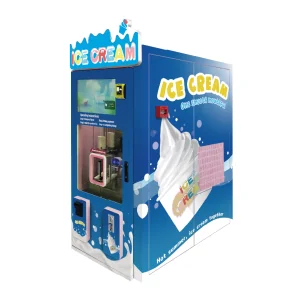
Economical price point designed for high return on investment in tourist shopping street locations.
Explore Specifications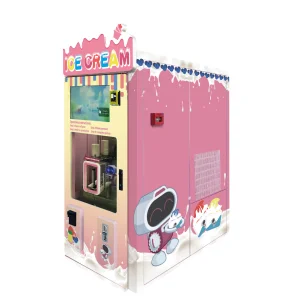
Fully cashless architecture compatible with major Japanese mobile wallets and credit card readers.
Explore Specifications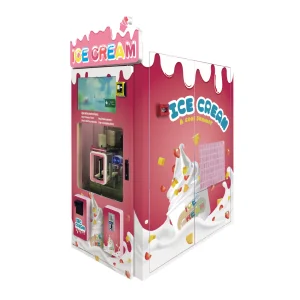
Interactive touch UI allows Osaka customers to mix flavors and add syrup/dry toppings automatically.
Explore Specifications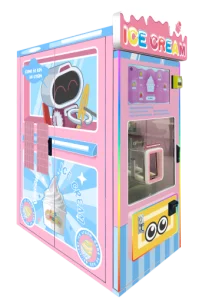
Standard industrial platform customized for OEM distributors supplying the Kansai marketplace.
Explore Specifications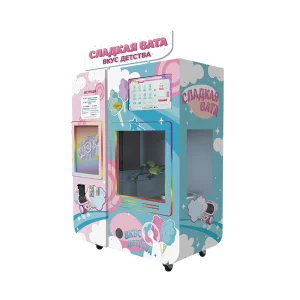
Multi-functional robotic station serving eye-catching patterned treats for Osaka family venues.
Explore SpecificationsDetailed technical answers addressing electrical compatibility, sanitation approvals, shipping logisitics to Osaka Port, and custom OEM manufacturing options.
All machines manufactured for export to Osaka and the Kansai region are configured at our factory with 60Hz industrial transformers and dual-frequency compressors (100V / 200V AC). This prevents the electrical motor overheating, harmonic noise, and refrigeration efficiency drop that occurs when running standard 50Hz equipment on Western Japan's power grid.
Yes. All food-contact surfaces inside our soft-serve machines—including mix hoppers, peristaltic pumps, dispensing nozzles, and freezing cylinders—are constructed from food-grade SUS304/316 stainless steel and BPA-free silicone. The machines feature an automated high-temperature Clean-in-Place (CIP) pasteurization cycle that satisfies health bureau requirements across Osaka Prefecture.
Absolutely. We support MDB (Multi-Drop Bus) payment protocols compatible with Japanese cashless telemetry hardware such as Nayax and local Japanese payment terminals. Machines can accept Kansai transit IC cards (ICOCA), national cards (Suica/Pasmo), QR payments (PayPay, LINE Pay), credit cards, as well as Japanese Yen coin and bill acceptors.
Custom manufacturing and factory testing take approximately 15 to 20 working days. Direct sea freight from our nearest port to Osaka Port (Osaka-ko) or Nanko Container Terminal typically takes 5 to 8 days in transit. We handle export documentation, CE/PSE certificates, and wooden crate packing suited for sea transit.
We offer full OEM customization: custom vinyl machine wraps with Japanese typography/anime artwork, LED chassis accent lighting, custom touch-screen user interface themes, customized sound/voice prompts in Japanese, and specialized dispensing algorithms for specific dairy mix viscosities.
Each machine is equipped with a 4G/Wi-Fi IoT telemetry module connected to a web-based dashboard and mobile app. Fleet managers can monitor real-time sales revenue, track raw ingredient inventory levels, view live internal refrigeration temperatures, receive fault notifications, and update menu pricing remotely.
Partner directly with a source OEM manufacturer. Request detailed technical specifications, PSE certification compliance documentation, and direct factory pricing tailored for Osaka and Kansai importers.
