Engineered with high-ambient tropical cooling, automated sugar-dosing mechanisms, and direct QRIS digital payment gateway integration for high-footfall Indonesian commercial venues.
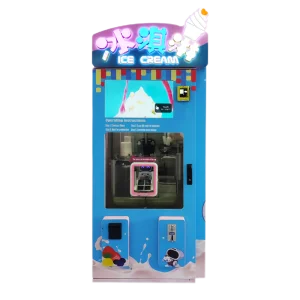
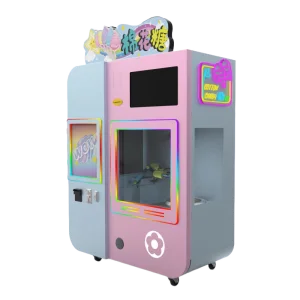
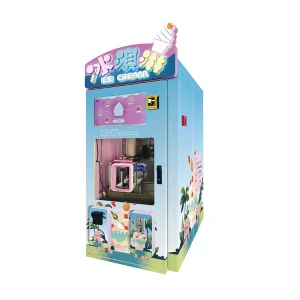
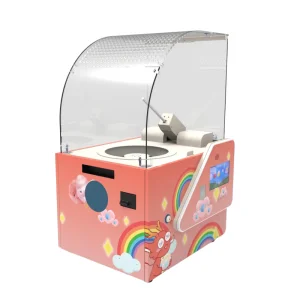
Analyzing demographic shifts, urban expansion across Jabodetabek, footfall dynamics in premium shopping centers, and the rapid transition toward contact-free micro-retail robotics.
The Special Capital Region of Jakarta, alongside its surrounding metropolitan sprawl—collectively known as Jabodetabek (Jakarta, Bogor, Depok, Tangerang, and Bekasi)—represents an urban economy of over 30 million inhabitants. As Southeast Asia’s largest single municipal consumer market, Jakarta serves as the primary testbed for emerging automated retail technologies, robotic concession hubs, and Original Design Manufacturer (ODM) smart hardware deployments. The confluence of a young median demographic age (under 30 years old), hyper-density, rising middle-class disposable income, and near-universal smartphone penetration has catalyzed unprecedented demand for automated self-service vending experiences.
Traditional food and beverage brick-and-mortar installations across Jakarta face acute operational bottlenecks, including soaring real estate rental costs per square meter in tier-1 shopping destinations (such as Grand Indonesia, Mall Kelapa Gading, Central Park Mall, and Plaza Senayan), escalating labor overhead, and continuous training turnover. In contrast, robotic automated vending solutions engineered by verified source OEMs/ODMs present a high-margin, ultra-compact alternative. Operating within footprints as compressed as 1.0 to 1.5 square meters, these intelligent systems deliver 24/7 autonomous point-of-sale capabilities with zero direct staff reliance.
Jakarta’s mega-malls draw 40,000 to 120,000 weekend visitors per site. Compact automated kiosks monetize atrium corridors with minimal square-meter overhead.
Over 92% of urban consumer transactions in Jakarta utilize QRIS (Quick Response Code Indonesian Standard) linked to GoPay, OVO, ShopeePay, or DANA.
Constant high ambient temperatures (28°C–35°C) sustain persistent year-round consumer demand for frozen soft-serve ice cream and chilled confectionery.
Furthermore, tropical climatic realities in Indonesia pose severe engineering challenges for standard commercial vending hardware. High ambient humidity levels (frequently exceeding 80%) cause raw sugar clumping, moisture ingress, and thermal degradation in non-specialized machinery. Source ODM factories specializing in the Jakarta ecosystem must deploy customized hardware architectures: internal multi-stage dehumidification modules, sealed stainless steel raw material hoppers, tropicalized heavy-duty refrigeration compressors, and anti-condensation double-glazed display viewports. Without these specialized OEM modifications, off-the-shelf vending equipment experiences high failure rates within months of operation in Indonesian tropical environments.
Inside SevenCloud's state-of-the-art 11,000 m² smart manufacturing center: High-precision robotics, real-time IoT telemetry, and food-safety hygiene standards.
When sourcing commercial automated equipment for deployment in Jakarta, procurement executives must distinguish between trading intermediaries and genuine Source Original Design Manufacturers (ODM). SevenCloud (Guangzhou Seven Cloud Technology Co., Ltd.), established in 2015, operates an expansive 11,000 square meter integrated manufacturing facility equipped with advanced laser cutting chassis fabricators, automated CNC press brakes, robot-welding assembly lines, and dedicated environmental simulation testing chambers.
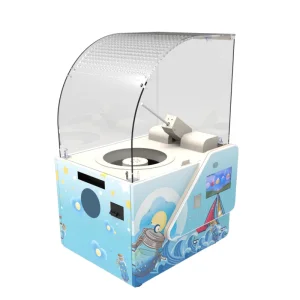
Our flagship ice cream and cotton candy vending platforms integrate industrial 3-axis to 6-axis robotic arms equipped with high-torque brushless stepper motors and absolute encoder position feedback. Unlike simplistic linear actuators that suffer from mechanical binding over time, our robotic arms maintain positioning tolerances within ±0.1mm across hundreds of thousands of continuous operational cycles. In automated cotton candy makers, the high-speed rotating burner head operates at speeds up to 4,000 RPM, utilizing precise closed-loop temperature control (±1°C) to ensure sugar caramelization without scorching, producing intricate 3D flower and heart geometric patterns completely unattended.
All structural metalwork utilizes 304 food-grade stainless steel and heavy-gauge electro-galvanized cold-rolled steel plates with powder-coated anti-corrosion finishes. Critical refrigeration systems incorporate imported Secop/Embraco tropical compressors operating on eco-friendly R290/R404A refrigerants capable of continuous duty cycle chilling down to -18°C even when external ambient temperatures reach 45°C.
Every equipment unit deployed across Jakarta is connected to the SevenCloud Cloud Telemetry Infrastructure via 4G/5G SIM modules or local Wi-Fi bridges. Enterprise fleet operators gain real-time visibility into operational parameters via localized Web and Mobile Dashboard interfaces:
To eliminate dead-on-arrival (DOA) scenarios and minimize field maintenance in overseas markets like Indonesia, every SevenCloud machine undergoes a mandatory 11-step quality inspection regimen prior to export packaging:
| QC Phase | Inspection Protocol | Technical Acceptance Standard |
|---|---|---|
| 01. IQC | Incoming Raw Material Inspection | Dimensional verification & material metallurgy cert validation. |
| 02. Sub-Assy | Component Functional Testing | 100% bench test of PCB relays, valves, pumps, and motors. |
| 03. HVAC Test | Refrigeration & Thermal Stress Test | Pull-down to sub-zero temperatures in environmental heat chamber. |
| 04. Robotics | Multi-Axis Kinematic Calibration | Positional accuracy verified within ±0.1mm tolerance. |
| 05. Burn-In | 24-Hour Continuous Endurance Run | Uninterrupted operational cycle test with zero electronic faults. |
| 06. Batch Test | 200-Unit Continuous Production Test | Full physical dispensing test of 200 consecutive consumer orders. |
| 07. Transit Sim | Vibration & Drop Shock Simulation | Simulates ocean freight handling and rough road transport stress. |
Demonstrating granular unit economics, CAPEX/OPEX breakdowns, revenue projections in Indonesian Rupiah (IDR), and strategic placement venue matrix.
Investing in commercial smart vending fleets across Jakarta requires clear analytical modeling of return on investment (ROI), asset payback periods, and venue placement economics. Due to the high profit margins inherent in automated soft-serve ice cream and spun sugar products (raw material cost typically representing under 12% to 18% of retail price), automated vending robots present unmatched financial efficiency.
Consider a standard commercial installation of a SevenCloud Fully Automatic Ice Cream Vending Robot within a high-traffic shopping center in South Jakarta (e.g., Kota Kasablanka or Pondok Indah Mall):
| Monthly Financial Line Item | Amount in Indonesian Rupiah (IDR) | Amount in USD (Approx) |
|---|---|---|
| Gross Revenue (2,400 cups/mo) | IDR 60,000,000 | $3,850 |
| Less: Raw Material & Consumables | (IDR 9,600,000) | ($615) |
| Less: Mall Corridor Space Rent (Fix/Rev Share) | (IDR 12,000,000) | ($770) |
| Less: Power Electricity & 4G Data SIM | (IDR 1,800,000) | ($115) |
| Less: Local Technician Restock Labor Allocation | (IDR 3,000,000) | ($190) |
| NET MONTHLY OPERATING PROFIT | IDR 33,600,000 | $2,160 |
With a fully imported machine cost (including ocean freight, customs clearance duties in Tanjung Priok, and local logistics) amortized around USD 6,500 – USD 9,000 depending on final ODM customization options, full capital investment payback is typically achieved within 3.5 to 5.5 months of operational deployment. Subsequent operational months yield pure recurring net profit with minimal ongoing management oversight.
Field data collected across hundreds of active installations highlights specific high-yield commercial venue typologies in the Jabodetabek urban corridor:
Positioning near cinema exits, food courts, indoor ice-skating rinks, and children's play areas (e.g., KidZania, Timezone) guarantees continuous high-velocity impulse buying.
High-humidity outdoor leisure destinations like Taman Impian Jaya Ancol, Waterbom PIK, and Trans Studio Mall cibubur provide extreme footfall volumes on weekends and holidays.
Strategic placements along the Jakarta MRT (e.g., Bundaran HI, Dukuh Atas stations) and LRT corridors capture busy office workers seeking rapid, contactless snack options.
Universitas Indonesia (UI), BINUS campuses, and Trisakti areas offer dense student populations eager for novel, Instagrammable tech-driven food experiences.
Ensuring seamless market entry in Jakarta through pre-configured payment integration, Halal food-contact material safety, SNI compliance, and Tanjung Priok customs clearance support.
Deploying imported robotic food machinery into the Indonesian market requires navigating technical localization, financial payment processing gateways, and stringent food safety regulatory frameworks. SevenCloud offers comprehensive ODM customization to guarantee full turnkey operational readiness upon arrival in Jakarta.
Cashless digital payment adoption in Jakarta is among the highest in East Asia. SevenCloud vending machines are natively pre-fitted with specialized QRIS-compatible payment terminals (supporting Nayax, ITL, or localized Indonesian API gateways). Customers simply scan the dynamic QR code displayed on the machine’s touchscreen using any major Indonesian mobile wallet or banking application:
Transactions clear within 1.5 seconds, triggering instant pulse signals to the controller board to initiate automated preparation. Cash bill acceptors (configured for IDR 10,000, 20,000, and 50,000 banknotes) can also be installed for dual payment flexibility.
As Indonesia enforces mandatory Halal certification under BPJPH (Badan Penyelenggara Jaminan Produk Halal), food equipment design must comply with strict hygiene separation laws. SevenCloud automated machines feature isolated internal food-contact zones constructed exclusively from inert SS304 stainless steel, food-grade PTFE tubing, and NSF-certified dispensing pumps. The system includes automated Clean-in-Place (CIP) high-temperature hot water flushing cycles to maintain pristine sanitization standards without human intervention, simplifying local BPOM safety approvals.
Shipping large-format commercial machinery to Jakarta requires meticulous freight handling and customs classification. SevenCloud assists Indonesian import partners with complete documentation packets under correct Harmonized System (HS) Codes:
Pioneering innovations in automated micro-retail: AI-driven audience analytics, touchless gesture interaction, and self-cleaning robotics.
Integrating privacy-compliant optical sensors to analyze passing footfall demographics, automatically optimizing screen advertising campaigns and dynamic promotional discounts during non-peak hours.
Next-generation dual-extrusion thermal heads and parallel multi-axis motion planning will cut product dispense times from 60 seconds down to 30 seconds, doubling throughput during peak mall rush hours.
Fully automated ozonated water back-flushing systems eliminate physical manual disassembly cleaning requirements, expanding maintenance intervention intervals from 3 days to 30 days.
Detailed technical, operational, and commercial answers for fleet operators, mall concessionaires, and vending importers in Indonesia.
Explore our full lineup of automated snack robotics, specialty candy floss dispensers, smart coffee kiosks, and custom retail vending machinery.

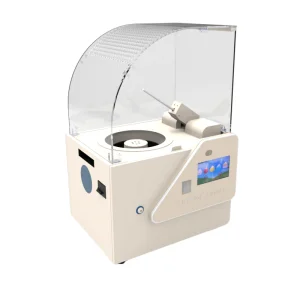
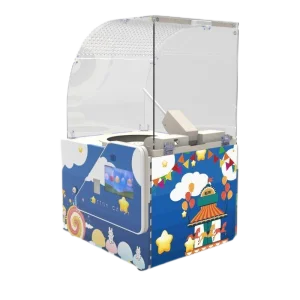
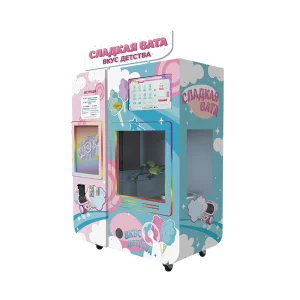
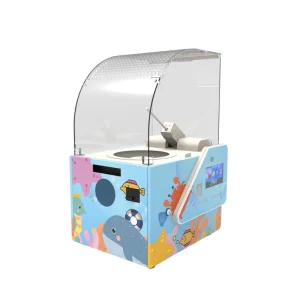


Partner directly with Guangzhou Seven Cloud Technology Co., Ltd. — Guangzhou’s premier source ODM/OEM factory. Receive factory-direct pricing, FOB/CIF Tanjung Priok logistics planning, and custom hardware engineering support.
