


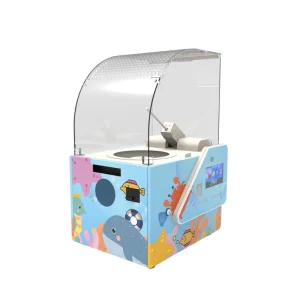
An authoritative whitepaper analysis on transitioning legacy vending hardware into autonomous, AI-connected micro-fulfillment hubs.
The global automated retail landscape is undergoing an unprecedented paradigm shift. Legacy vending machines—historically restricted to passive mechanical drop-dispensing—are rapidly giving way to interactive, robotic micro-fulfillment kiosks. As commercial real estate costs escalate and consumer demand for instant, experiential gratification intensifies, global operators face a critical strategic crossroads: replace capital-intensive hardware fleets entirely or execute systematic, industrial-grade vending machine upgrades.
Wholesale vending machine upgrade manufacturers play a pivotal role in this industrial evolution. Modernization is no longer limited to mounting an external cashless payment terminal. True architectural upgrades require a comprehensive overhaul of internal micro-controllers, Multi-Drop Bus (MDB 4.3) communications, DEX/UCS telemetry streaming, robotic actuator integration, and adaptive energy management. By upgrading existing chassis with modern robotic modules—such as precision soft-serve dispensing arms, high-speed cotton candy spinners, fresh bean-to-cup coffee extractors, and automated inventory sensors—operators achieve up to a 340% increase in average transaction value while drastically cutting maintenance overhead.
Industry Data Insight: Global automated retail telemetry studies indicate that legacy vending machines retrofitted with interactive touchscreen UX, dynamic cashless telemetry, and robotic preparation capabilities achieve ROI payback periods within 4.2 to 6.8 months, compared to 18+ months for traditional static vending models.
Furthermore, regulatory compliance surrounding food safety (HACCP), refrigeration standards (R290 eco-friendly propellants), and electrical safety certifications (CE, ETL, UL, NAMA) requires that upgrade components meet stringent OEM specifications. Factory-direct engineering guarantees that retrofitted subsystems maintain structural integrity, thermostatic stability, and uninterrupted communication with cloud management dashboards.
Technological convergence is redefining unmanned commercial retail. Explore the core technological vectors driving modern equipment retrofits.
Modern upgrade mainboards integrate ARM Cortex architecture capable of running real-time edge processing. Machine operational status, sugar/milk inventory levels, component temperatures, and fault codes are transmitted instantly via MQTT/HTTPS to centralized telemetry clouds.
Transitioning from traditional coils to multi-axis robotic end-effectors. High-precision stepper motors and optical encoder feedback allow seamless dispensing of fragile treats, ice cream cones, intricate cotton candy art, and cosmetics without jam risks.
Upgraded hardware interfaces bridge legacy MDB protocols with modern PCI-compliant contactless card readers, Apple Pay, Google Wallet, and regional QR payment frameworks (Alipay, WeChat Pay, Nayax, Cantaloupe) for instant transaction authorization.
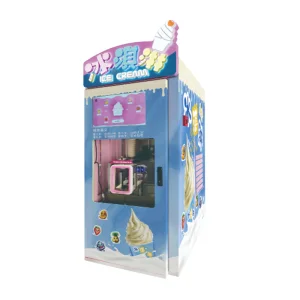
For fresh food and dairy vending (e.g., SI-321 ice cream robots), upgrade kits include automated Clean-In-Place (CIP) pasteurization, UV-C sterilizing chambers, and sealed peristaltic fluid lines to ensure strict adherence to FDA and EU sanitation codes.
Replacing mechanical pushbuttons with high-definition 21.5" to 55" capacitive touchscreens running custom Android/Linux UI. Interactive digital signage displays preparation animations, multi-item cart selection, and localized video advertising.
Advanced sensor arrays monitor compressor pressures, heating element resistance, motor current draw, and door seal integrity. Machine learning models predict component fatigue before breakdown occurs, routing maintenance technicians proactively.
Strategic deployment blueprints optimized for high-traffic environments across global markets.
Vending machine upgrades are not one-size-fits-all; physical environment, ambient humidity, foot-traffic velocity, and customer demographic profiles dictate the requisite hardware and software configuration. As an experienced source manufacturer, Guangzhou Seven Cloud Technology Co., Ltd. (SevenCloud) engineers custom hardware upgrade frameworks tailored to distinct operational environments:
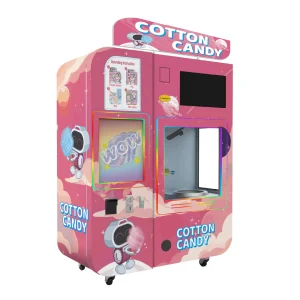
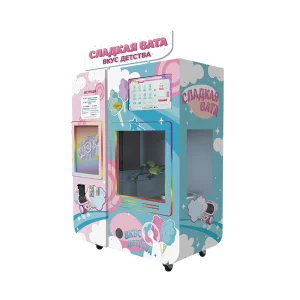
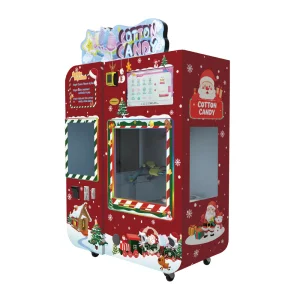
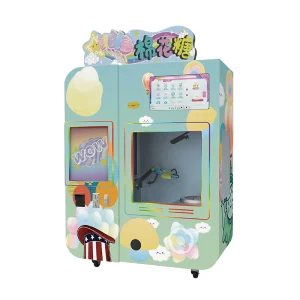
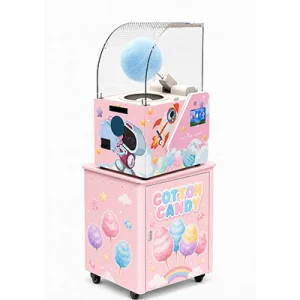
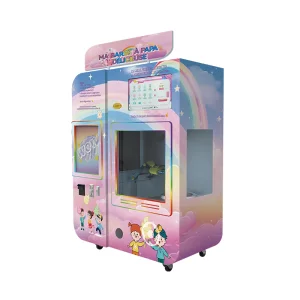
In premium shopping centers, consumer engagement relies heavily on visual spectacle. Upgrading standard vending units into fully automated robotic cotton candy kiosks (such as the flower-pattern SI-321 series) or automated cosmetic vending pods creates an experiential attraction. The visual preparation process draws crowds, converting passive foot traffic into high-margin impulse sales.
Entertainment venues require extreme hardware durability and continuous, high-capacity throughput. Upgrade specifications feature reinforced NEMA-rated sheet metal chassis, heavy-duty anti-vandal touchscreen glass, and high-capacity ingredient hoppers. Automatic sugar dosing and multi-color LED illumination ensure round-the-clock operational performance during peak weekend rushes without staff supervision.
Transportation hubs demand total operational autonomy and 100% transaction reliability. Upgraded bean-to-cup coffee robots and fresh soft-serve ice cream units are retrofitted with dual-redundant payment gateways, continuous power-surge protection, and automatic SMS/Email low-stock telemetry alerts, delivering consistent revenue in unstaffed night-shift operations.
Behind every high-performing vending upgrade is an industrial-grade manufacturing facility committed to total quality management.
Operating out of an 11,000 square-meter state-of-the-art production base in Guangzhou, China, SevenCloud provides end-to-end OEM and ODM upgrade services for global vending network owners, brand franchisors, and commercial equipment distributors. Rather than outsourcing key structural assembly, our facility houses complete sheet-metal fabrication workshops, precision CNC machining centers, automated wiring harness assembly, and dedicated robotic testing cells.
To ensure zero field failure rates in international shipments, every upgraded vending machine and modular retrofit kit must pass our rigorous 11-step quality inspection framework:
Spectroscopic verification of food-grade 304 stainless steel, heavy-gauge cold-rolled steel, and certified electronic board sub-assemblies.
Micrometric validation of mechanical gears, stepper motor shafts, pneumatic fittings, and robotic arm linkages.
High-voltage isolation testing, CAN bus continuity checks, and signal noise suppression verification across all internal wiring.
Bench-testing isolated sub-modules: boiler units, refrigeration compressors, sugar atomizers, and cup dispenser mechanisms.
Pressure sealing test for water lines, CO2 gas channels, and pasteurization heating jackets to eliminate leak vectors.
Laser alignment of cabinet panels, door hinges, sealing gaskets, and anti-theft drop shutter mechanisms.
Current draw profiling under peak load, thermal imaging of power supplies, and refrigeration pull-down speed validation.
Every fully assembled machine undergoes a 24-hour un-interrupted operational stress cycle to force early component infant-mortality failure in-factory.
Automated robotic dispensing of 200 consecutive test cycles (ice cream dispense, cotton candy shape creation, coffee brew) to ensure zero jam rates.
Multi-axis vibration plate simulation imitating rough ocean freight and overland trucking conditions to verify mechanical fastness.
Comprehensive visual, electrical, firmware version, language localization, and export wooden crate sealing audit prior to container loading.
Our engineering vision for continuous technology enhancement, modular upgrade kits, and sustainable automated retail hardware.
Deployment of internal optical camera arrays coupled with edge-AI to track product volume, detect mechanical jams instantly, and enable facial-recognition age verification for restricted product vending.
Transitioning from fixed gantry motion to compact, 6-axis articulated robotic arms within standardized vending enclosures. Enables complex multi-ingredient dish assembly, automated topping art, and rapid product changeovers via software update.
Architectural adoption of ultra-low standby variable frequency compressors, integrated solar-assisted micro-capacitors, and closed-loop internal water purification units for self-sustaining remote outdoor deployment.
Expert technical responses to key questions regarding vending machine modernization, MDB compliance, IoT integration, and global supply logistics.
