Explore precision-engineered automated ice cream, cotton candy, and popcorn machines with standardized spatial profiles designed for high-density retail venues.



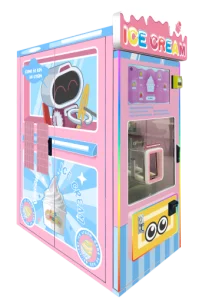
Architects, commercial property developers, and fleet operators require millimeter-precise spatial data. Proper installation envelope planning prevents thermal throttling, optimizes revenue per square meter, and ensures compliance with worldwide building access codes.
In the modern commercial landscape, unattended automated kiosks—ranging from robotic soft-serve dispensing hubs to fully automated sugar-spinning machines and high-capacity bean-to-cup coffee stations—represent high-density revenue real estate. However, procurement decisions made strictly on purchase price without analyzing the physical footprint, maintenance clearance envelope, and door-path clearance parameters consistently lead to costly site preparation failures, delayed deployments, and compromised thermal efficiency.
When evaluating wholesale vending machine dimensions manufacturers & companies, commercial procurement directors must treat each machine as an industrial appliance that interacts dynamically with its physical environment. A vending robot's total spatial demand extends well beyond its static metal cabinet. Operators must account for three distinct spatial zones: the Static Footprint (Cabinet Dimensions), the Operational Service Envelope (Door Swing & Maintenance Access), and the Environmental Boundary (Heat Dissipation & Plumbing/Power Clearance).
| Equipment Category | Average Height (mm / in) | Average Width (mm / in) | Average Depth (mm / in) | Gross Mass (kg / lbs) | Min. Air Clearance Rear/Sides |
|---|---|---|---|---|---|
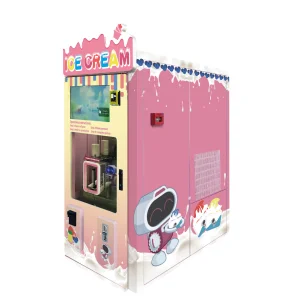
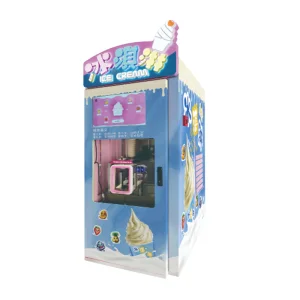
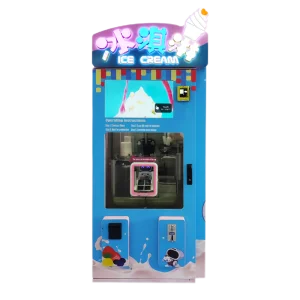
| Robotic Soft-Serve Ice Cream | 1950 mm / 76.7 in | 1100 mm / 43.3 in | 950 mm / 37.4 in | 380 kg / 837 lbs | 150 mm (6 in) Rear / 100 mm Sides |
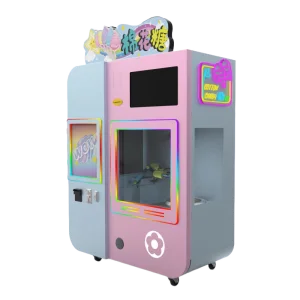
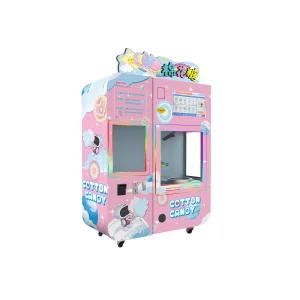
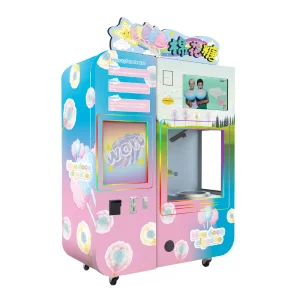
| Fully Automatic Cotton Candy Robot | 2050 mm / 80.7 in | 1400 mm / 55.1 in | 750 mm / 29.5 in | 320 kg / 705 lbs | 100 mm (4 in) Rear / 100 mm Sides |
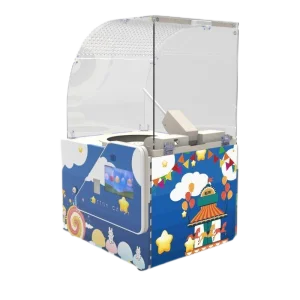
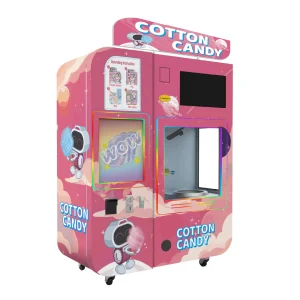
| Compact Commercial Cotton Candy | 1450 mm / 57.1 in | 850 mm / 33.5 in | 650 mm / 25.6 in | 110 kg / 242 lbs | 75 mm (3 in) Rear / 50 mm Sides |
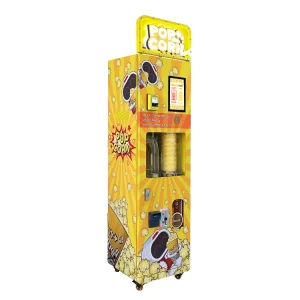
| High-Volume Popcorn Kiosk (P30) | 1880 mm / 74.0 in | 1000 mm / 39.4 in | 800 mm / 31.5 in | 260 kg / 573 lbs | 100 mm (4 in) Rear / 75 mm Sides |
| Bean-to-Cup Smart Coffee Robot | 1830 mm / 72.0 in | 900 mm / 35.4 in | 850 mm / 33.5 in | 290 kg / 639 lbs | 100 mm (4 in) Rear / 100 mm Sides |
Understanding the interplay between mechanical cabinet dimensions, electrical draw, HVAC thermal load, and logistics transit pathways.
The single most common operational bottleneck occurs during initial building entry. Commercial standard double doors typically provide 72 inches (1828 mm) of clear width, while standard single entrance doors offer only 36 inches (914 mm). Equipment manufacturers like SevenCloud engineer modular chassis components allowing major modules to unbolt, reducing transit width under 780 mm to navigate standard elevator cars and narrow retail access corridors.
Robotic refrigeration units (e.g., automated soft-serve machines) utilize industrial-grade compressors operating on eco-friendly refrigerants like R290 or R449A. Exhausting 2.2 kW to 4.5 kW of heat requires an uninterrupted airflow clearance zone of at least 150 mm behind the rear condenser shroud. Placing machines flush against solid drywall restricts intake, elevating compressor head pressure, inflating power costs by up to 35%, and triggering thermal cutoffs.
Under Section 308 of the Americans with Disabilities Act (ADA) and European EN 301 549 standards, all operative controls, payment terminals, touchscreens, and dispensing hatches must sit within a forward reach range of 15 inches (380 mm) minimum to 48 inches (1220 mm) maximum above the finished floor level. Precision manufacturing ensures interactive touchscreens sit at a 15-degree tilt angle, preventing glare while guaranteeing ergonomic access.
Fully loaded commercial robotic vending stations weigh between 300 kg and 450 kg. Distributed over a standard static footprint of 1.1 square meters, this generates a concentrated static load of approximately 3.8 kN/m². Heavy-duty industrial caster assemblies paired with threaded stainless steel leveling feet are essential to isolate robotic arm vibration during rapid axis displacement, preventing structural acoustic transfer through raised flooring systems.
How wholesale buyers can dramatically reduce international landed costs by matching equipment dimension specs with intermodal sea freight containers.
For international buyers, distributors, and global operator networks purchasing from China-based source manufacturers, the outer crated dimensions dictate ocean freight efficiency. Freight rates are calculated based on either actual weight or volumetric CBM (Cubic Meters). Because smart vending machines represent rigid hollow bodies containing specialized robotics, optimizing the packaging footprint directly translates to thousand-dollar savings per unit in landed costs.
Internal Dimensions: 5.89m (L) x 2.35m (W) x 2.39m (H)
Internal Dimensions: 12.03m (L) x 2.35m (W) x 2.69m (H)
Fumigated Solid Wood & Composite Barrier Protection
Combining hardware dimensions with cloud telemetry, standardized global payment integration, and internationally recognized food safety and electrical certifications.
As retail lease rates per square foot continue to escalate globally in high-traffic hubs like airports, transit stations, shopping malls, and amusement parks, the primary metric of success for operators is Revenue Per Square Meter (RPSM). Modern manufacturing companies are moving toward micro-robotics—reducing internal component footprints through integrated servo-actuated arms, compact brushless DC motors, and direct-drive planetary gearboxes.
This miniaturization of mechanical assemblies allows manufacturers to fit enterprise-grade food processing capabilities into cabinets under 1.2 square meters. For instance, SevenCloud’s cotton candy robotics utilize a multi-axis linear motion system that operates within a sealed micro-climate chamber. This guarantees smooth sugar filament spinning regardless of external relative humidity, eliminating the historical issue of sugar clumping in high-moisture environments.
Deploying smart vending machines across multi-national territories requires strict adherence to localized electrical codes and payment processing compliance:
Equipment is manufactured under strict quality frameworks holding CE, ETL, cETL, NAMA, RoHS, PSE, and FCC accreditations, ensuring seamless customs clearance and municipal building inspector sign-offs across North America, Europe, Asia-Pacific, and the Middle East.
Cutouts and mounting studs are engineered to standard NAMA / MDB (Multi-Drop Bus) specifications, supporting instant plug-and-play integration for Nayax VPOS Touch, Pax IM30, Crane Payment Innovations, as well as local QR-code wallets (Alipay, WeChat Pay, PayPay, KakaoPay).
Embedded telemetry modules transmit real-time hardware status, ingredient levels, temperature profiles, and sales analytics over secure 4G LTE/5G networks, allowing operators to optimize restocking routes based on volumetric inventory consumption.
Explore our full suite of automated commercial equipment, engineered for high operational uptime, modular servicing, and low spatial impact.
Addressing core technical, logistical, and spatial inquiries for global operators and equipment distributors.
