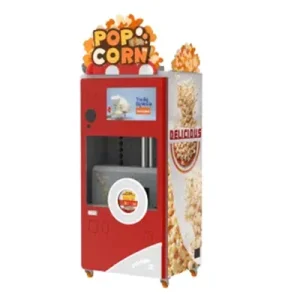
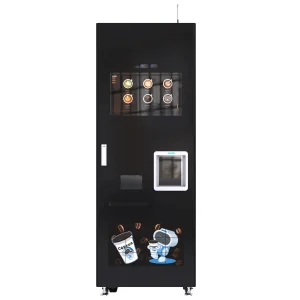
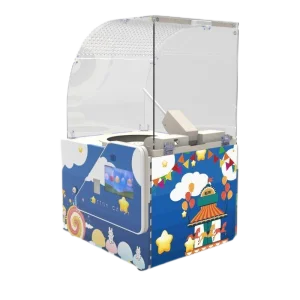
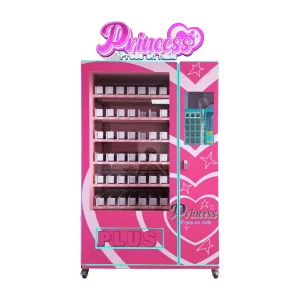
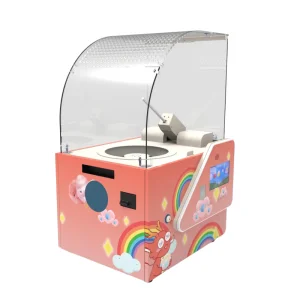
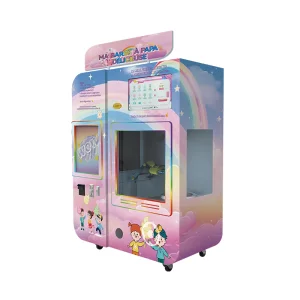
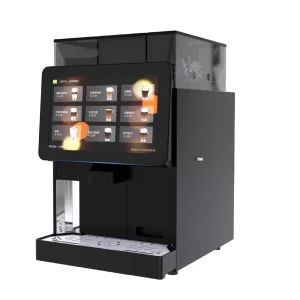
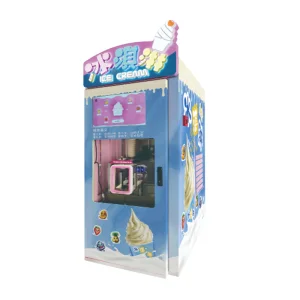
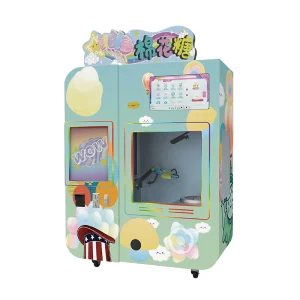
The Australian retail and hospitality market is undergoing a structural transformation driven by record-high minimum wages, soaring real estate footprint costs, and shifting consumer expectations for instant, touchless transactions. Owning a vending machine business in Australia has evolved from a passive side-income stream into an enterprise-grade capital deployment model.
In metropolitan hubs such as Sydney (NSW), Melbourne (VIC), Brisbane (QLD), and Perth (WA), operational costs for traditional brick-and-mortar retail have surged. Base hourly wage rates under the Restaurant and Retail Industry Awards often exceed AU$28 to AU$35 per hour (plus penalty rates on weekends and public holidays). Consequently, commercial venue operators—including shopping center syndicates (such as Westfield, Vicinity Centres, and Stockland), transport authorities, university precincts, and family entertainment centers (FECs)—are actively converting underutilized floor space into high-yield, 24/7 automated automated points of sale.
Information Gain Insight: While traditional snack and beverage vending machines yield gross margins between 40% and 55%, specialized automated robotic vending—such as fully automated cotton candy makers, robotic soft-serve ice cream dispensaries, and bean-to-cup fresh brew coffee systems—delivers gross margins between 75% and 88%. This shift transforms raw ingredient costs (sugar, milk solids, coffee beans) into high-value experiential retail sales.
Commercial automated vending units occupy between 1.0 m² and 2.2 m² of floor area. In high-traffic Australian corridors where retail rent ranges from AU$1,500 to AU$4,000 per m² per annum, automated robotics optimize revenue density per square meter without incurring leasing overheads for storage or service counters.
By replacing continuous service staff with precision robotic end-effectors, operators eliminate scheduling friction, penalty rate inflation, staff turnover costs, and extensive training schedules. A single field technician can maintain a fleet of 20 to 30 automated robotic units across a metropolitan area.
Modern Australian consumers—particularly Gen Z and families—demand interactive shopping experiences. Transparent tempered glass enclosures, RGB dynamic lighting, and live robotic production (e.g., shaping multi-color cotton candy or dispensing swirled soft-serve) drive organic foot-traffic capture and social sharing.
The future of Australian vending relies on the integration of hardware robotics with cloud-native management platforms. Suppliers must move beyond simple mechanical coil mechanisms to deliver intelligent automated kiosks capable of real-time diagnostics, dynamic pricing, and automated hygiene cycles.
Every commercial unit connects to a centralized SaaS control hub via encrypted 4G/5G M2M modules. Australian fleet managers can remotely monitor real-time stock levels, internal temperature curves, sugar/ingredient dispensing metrics, and electrical telemetry from any desktop or mobile device.
Embedded microcontrollers monitor motor current draw, heating element resistance, and compressor pressure ratios. machine-learning algorithms analyze operational variance to flag preventive maintenance tasks before component failure occurs, maintaining 99.4% uptime across commercial deployments.
Robotic food vending requires strict compliance with clean-in-place standards. Advanced soft-serve ice cream and coffee models feature automated pasteurization and hot-water sanitization routines, minimizing manual cleaning cycles to once per week while ensuring compliance with health regulations.
Importing and operating commercial automated retail equipment in Australia demands strict adherence to federal and state regulatory mandates. Substandard imported machinery without local certification risks operational shutdowns, site lease forfeitures, and denied insurance claims.
All commercial vending hardware destined for Australia must comply with AS/NZS 60335.1 and AS/NZS 60335.2.75 (particular requirements for commercial dispensing appliances). Equipment must display the Regulatory Compliance Mark (RCM) and be registered on the EESS database, backed by accredited EMC test reports.
Automated food preparation machinery—including popcorn poppers, cotton candy spinners, and coffee brewers—must comply with Food Standards Australia New Zealand (FSANZ) Standard 3.2.2 and 3.2.3. Internal food-contact components are engineered from food-grade 304/316 stainless steel and NSF-certified non-toxic polymers.
Australia is an almost entirely cashless economy. Machinery is pre-configured with MDB (Multi-Drop Bus) protocol interfaces to support Australian telemetry payment terminals, including Nayax VPOS Touch, Quest PayPass, Tyro, and Square. Systems support Visa, Mastercard, AMEX, Apple Pay, Google Pay, and local EFTPOS transactions.
Guangzhou Seven Cloud Technology Co., Ltd. (SevenCloud / Qiyun) operates an 11,000 m² smart manufacturing facility dedicated exclusively to research, development, assembly, and testing of intelligent commercial automated vending robots. Sourcing directly from our factory eliminates middleman markups and gives Australian buyers direct access to engineering-level customization.
Equipped with high-precision fiber laser cutters, CNC bending presses, and robotic welding cells, ensuring rigid structural integrity, anti-vibration frame construction, and seamless exterior panel alignment built for heavy public use.
Standardized assembly lines ensure consistent component placement, organized wiring harnesses with industrial heat-shrink protection, high-efficiency power supplies, and Japanese-engineered stepping motors.
From incoming raw material inspection to high-voltage insulation tests, every sub-assembly undergoes rigorous verification before integration into final cabinet configurations.
Prior to export packaging, every unit completes a mandatory 24-hour continuous operational burn-in test, including 200 uninterrupted production cycles to guarantee field reliability upon deployment in Australia.
Whether you are an independent operator scaling to 5 locations or an enterprise vending network expanding across Australia, our factory provides tailored procurement, white-labeling, and international logistics solutions.
Customize your fleet with bespoke powder-coat colors, vinyl brand wraps, localized user interface designs, custom audio alerts, and customer-facing touch-screen menu configurations tailored to the Australian commercial market.
We handle direct export packing using ISPM 15-compliant fumigated wooden crates designed to protect internal robotics during transit. Direct shipping routes connect our Guangzhou facility to major Australian ports: Sydney (Port Botany), Melbourne (Port of Melbourne), Brisbane, and Fremantle.
Australian buyers receive direct access to our technical support team. We offer video-based diagnostic support, fast air-freight spare parts dispatch, comprehensive English service manuals, and OTA (over-the-air) software updates for life.
Clear, expert answers regarding financial outlay, regulatory compliance, logistics, and operational maintenance for Australian buyers.
The total cost includes the factory FOB wholesale price, ocean freight to your chosen Australian port (Sydney, Melbourne, Brisbane, or Fremantle), local import tariffs/GST (5% customs duty if applicable + 10% GST, recoverable for registered businesses via BAS), and site installation setup. Specialized automated robotic vending units generally range between AU$6,000 and AU$18,000 depending on model complexity, compared to opening a traditional retail store, this offers a significantly lower barrier to entry.
Our machines feature standard MDB interface hardware designed to integrate seamlessly with Australian telemetry providers such as Nayax Australia or Quest. Once your card reader unit (e.g., Nayax VPOS Touch) is installed, payments are processed automatically via 4G telemetry directly into your Australian business bank account (ANZ, Commonwealth Bank, NAB, Westpac, etc.) with instant support for contactless debit/credit cards, EFTPOS, Apple Pay, and Google Pay.
Yes. We supply machine configurations customized for Australia's 230V/50Hz single-phase electrical supply, equipped with AS/NZS 3112 compliant heavy-duty power plugs. We provide comprehensive documentation packages including CE, CB, RoHS, and EMC test reports to help local importers secure RCM (Regulatory Compliance Mark) registration prior to commercial placement.
Food preparation machinery must comply with FSANZ Standard 3.2.2 and 3.2.3. Our machinery uses food-grade 304/316 stainless steel, food-grade silicone tubing, sealed ingredient hoppers, and automated sanitization cycles. In addition, local council food business notification or registration may be required depending on the state (NSW Health, VIC Dept of Health, QLD Health).
Modern automated robotic units require minimal manual intervention. Field technicians spend roughly 15 to 30 minutes per week per machine restocking consumables (such as sugar, paper sticks, coffee beans, cups, or ice cream mix) and wiping down external glass panels. Soft-serve ice cream and milk-based coffee machines execute automated CIP cleaning cycles to maintain hygiene standards.
SevenCloud keeps a complete inventory of core spare parts (including motors, sensors, mainboards, heating elements, and valves). Replacement parts are shipped directly to Australia via express air courier (DHL/FedEx), typically arriving within 3 to 5 business days. Remote technical diagnostics are handled via our online support portal with direct access to factory engineers.