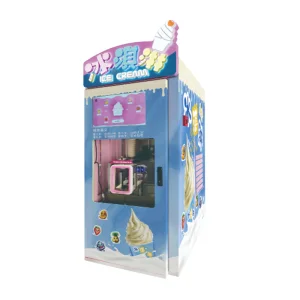
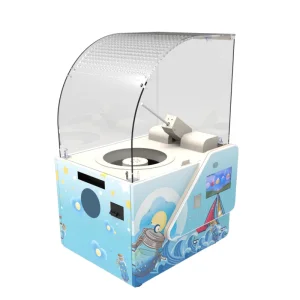
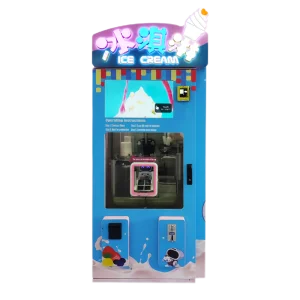
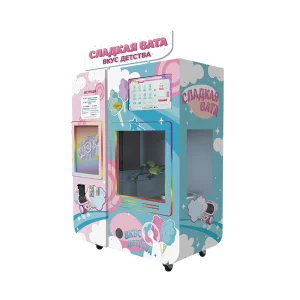
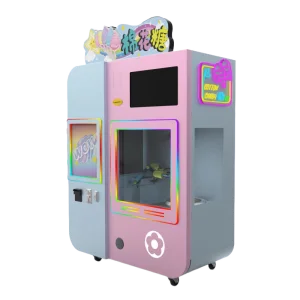
Direct factory production models certified for high-footfall commercial venues, featuring real-time telemetry, automated sanitation, and multi-currency transaction architecture.

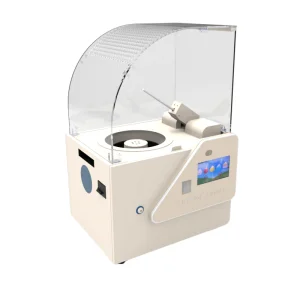
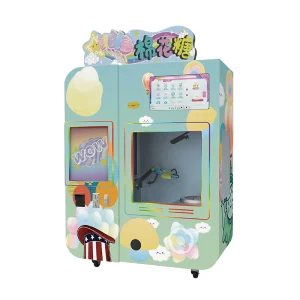
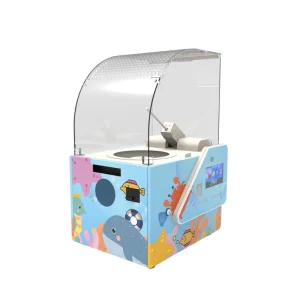

Analyzing the global paradigm shift from passive product distribution to real-time automated food preparation and interactive robotic micro-retail.
The global commercial vending ecosystem is undergoing a structural transition. Legacy static shelf-dispensing hardware is rapidly being superseded by fully autonomous culinary robotics. Commercial operators and vending fleet management entities no longer rely solely on pre-packaged snacks with minimal gross margins. Instead, high-yield categories—such as freshly spun cotton candy, soft-serve robotic ice cream, artisanal bean-to-cup coffee, and hot pop-on-demand popcorn—are delivering gross profit margins exceeding 80% to 90% per transaction unit.
From an enterprise procurement perspective, partnering directly with direct-from-factory source manufacturers eliminates middleman markups while unlocking tailored OEM/ODM hardware and software integration. Modern intelligent vending terminals function as decentralized micro-factories: managing thermal stabilization, precise robotic manipulation, continuous sanitization cycles, and real-time cloud data telemetry across high-density pedestrian environments.
Built from the ground up inside 11,000 m² state-of-the-art industrial manufacturing facilities with robust quality control pipelines.
Multi-axis servo-driven robotic arms ensure precision stick positioning, multi-pattern cotton candy shaping, and soft-serve ice cream swirling with repeatability under ±0.5mm precision.
Real-time SaaS cloud platforms transmit ingredient inventory levels, internal temperature readings, daily transaction analytics, and preventive maintenance alerts directly to mobile devices.
Integrated automated high-temperature pasteurization and liquid rinse flushes liquid tubes and food-contact chambers, adhering to stringent global food hygiene standards.
Evaluating regional demand patterns, regulatory compliance barriers, and payment ecosystem requirements across tier-one international markets.
Deploying commercial food vending fleets requires deep localization according to geography-specific operational parameters:
Our continuous R&D trajectory integrates advanced robotics, AI-driven predictive maintenance, and modular hardware design.
Automated cotton candy spinning chambers utilize closed-loop relative humidity control systems to prevent sugar crystallization under humid tropical conditions. Soft-serve ice cream units implement dual independent hoppers with standby night-mode preservation.
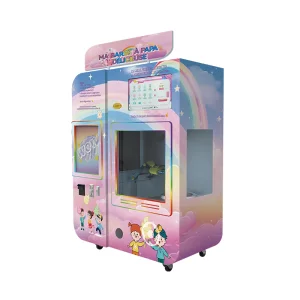
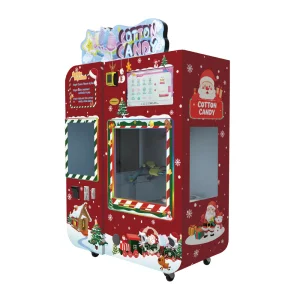
Equipped with high-resolution stepper motors, the 6-axis robotic mechanisms spin up to 32 intricate multi-color flower and geometric shapes in automated cotton candy terminals, turning raw sugar into a visual performance.
Next-gen models integrate embedded optical sensors to verify dispense completion, detect stick placement errors, and automatically trigger self-cleaning or error-recovery routines without operator intervention.
Optimizing location selection, footfall conversions, and payback timelines for scalable multi-terminal commercial deployments.
High footfall density coupled with family demographic profiles yields instant impulse purchasing. Visual robotic production acts as a secondary attraction, capturing queueing crowds and generating rapid unit turnover.
Compact machine footprints (< 1.5 m²) monetize dead space in high-rent indoor malls. Operating 24/7 with zero counter staff lowers operational expenses (OPEX) while capturing steady weekend foot traffic.
High-speed dispensing routines (< 60 to 90 seconds) serve rapid grab-and-go transit passengers and moviegoers during peak pre-show rush hours, maximizing revenue in narrow time windows.
Detailed technical and commercial answers prepared by our factory engineering and international export compliance teams.
Our manufacturing lines produce units certified under CE, ETL, cETL, CB, NAMA, RoHS, PSE, and FCC standards depending on specific model configurations. Prior to shipment, factory documentation and test certificates matching your destination country's electrical safety and food contact requirements are provided.
Each machine embeds a global IoT telemetry gateway supporting 4G/Wi-Fi connection to our SaaS cloud management console. Operators monitor real-time sales transactions, current sugar/milk mix levels, machine fault codes, internal temperatures, and remotely push menu price updates or promotional videos across all deployed terminals.
Cotton candy units incorporate automated water misting routines to clean the spinning head and collection bowl automatically. Soft-serve ice cream terminals feature automated overnight preservation pasteurization, requiring manual liquid mix refills and thorough sanitization cycles only once every 7 to 14 days depending on regional health regulations.
Yes. Equipment is factory-integrated with universal MDB/Pulse protocol interfaces compatible with major global cashless systems (Nayax, CPI, PAX, Payter), bill acceptors, coin mechanisms, and local QR-code mobile payment gateways (Alipay, WeChat Pay, PayTM, KakaoPay).
Given raw material costs represent only 10% to 15% of transaction prices (e.g., $0.15 sugar cost for a $3.00 to $5.00 cotton candy sale), machines placed in high-footfall venues (selling 50–100 units daily) typically achieve full capital expenditure (CAPEX) payback within 2 to 4 months of continuous operation.
Explore our full line-up of custom ice cream robots, compact semi-automatic candy floss makers, flower-pattern dispensers, and heavy-duty production models.