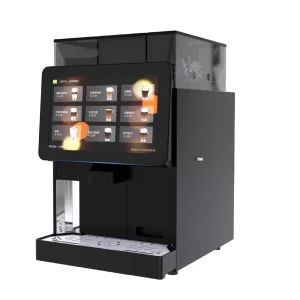
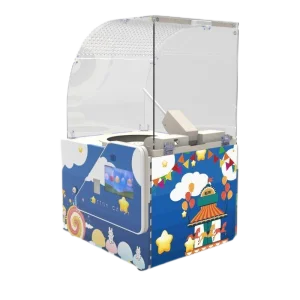
Direct factory turnkey equipment integrated with MDB/Dex cashless protocols, IoT telemetry, and automated self-cleaning mechanisms.
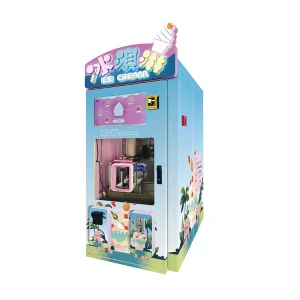
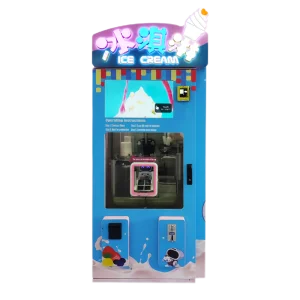

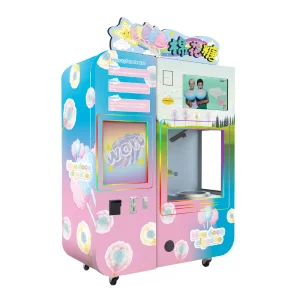
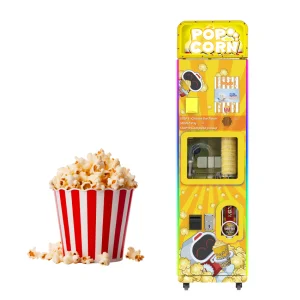
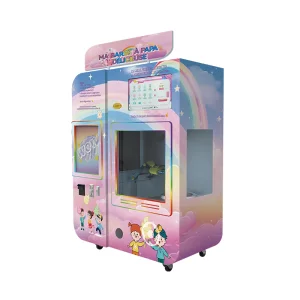
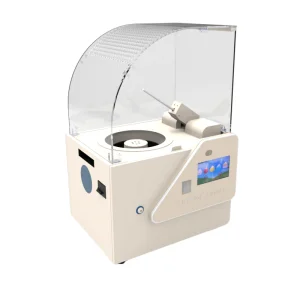
The global smart vending machine industry is undergoing a structural paradigm shift driven by rising labor overheads, rapid urban density expansion, and consumer demand for instant, frictionless, high-hygiene automated retail services.
Modern vending machinery has transitioned from passive spiral drop slots to active multi-axis robotic arms. In automated cotton candy and soft-serve ice cream vending systems, precise stepper motors and servo actuation allow complex 3D shape generation, visual cooking spectacles, and gentle product handling that elevates the consumer experience into an interactive entertainment event.
Enterprise operators no longer rely on manual route inspection. Advanced OEM vending platforms incorporate IoT telemetry modules, continuously streaming real-time metrics including ingredient levels, boiler temperatures, freezer performance, coin/bill validator statuses, and error codes directly to centralized cloud management web suites and mobile operator apps.
Global consumer payment habits vary significantly by jurisdiction. Leading OEM/ODM manufacturers engineer modular payment cutouts supporting MDB (Multi-Drop Bus) standards. This enables seamless plug-and-play integration with credit card readers (Nayax, Ingenico, Pax), QR-code mobile wallets (Apple Pay, Google Pay, Alipay), and traditional multi-currency coin and bank-note acceptors.
When global brand owners, chain operators, and commercial vending distributors evaluate China-based OEM manufacturers, technical diligence must extend beyond initial FOB prices to total cost of ownership (TCO), build engineering, and certification safety.
| Technical Evaluation Metric | Standard Off-the-Shelf Commercial Vending | Industrial OEM/ODM Custom Manufacturing (Our Standard) |
|---|---|---|
| Chassis Structural Engineering | 0.8mm–1.0mm SPCC sheet metal, standard powder coating | 1.5mm–2.0mm heavy-duty cold-rolled steel / SUS304 stainless steel frame |
| Food-Contact Sanitation | Basic commercial plastic tubing, manual washing required | Food-grade NSF/FDA certified SUS316, automated CIP high-temp self-cleaning |
| Refrigeration & Thermal Control | Commercial rotary compressor, non-inverter, standard insulation | Embraco/Secop inverter compressor, R290 eco-refrigerant, 70mm polyurethane foam |
| Payment System Architecture | Fixed local payment interface, regional limitations | Universal MDB 4.3 & DEX interface, multi-country gateway compliance |
| Firmware & Software API | Closed proprietary software, no external API support | Open API/RESTful architecture, custom UI skinning, cloud SaaS integration |
| Regulatory Certifications | Basic domestic CE or self-declaration | Comprehensive CE, ETL/cETL, NAMA, RoHS, PSE, KC, and FCC certified |
Unattended equipment placed in high-footfall public environments faces structural stress, frequent physical interactions, and environmental humidity. Our OEM production lines utilize precision fiber laser cutting, automated CNC bending, and robotic seam welding to manufacture reinforced dual-layer steel chassis capable of withstand vandal thermal stress and heavy multi-shift operation.
For fresh food vending systems such as soft-serve ice cream robots and bean-to-cup coffee machines, microbial control is paramount. OEM solutions feature automated pasteurization cycles, food-grade silicone delivery tubes, and CIP (Clean-In-Place) hot water flushing mechanisms that satisfy stringent municipal public health authority requirements globally.
To guarantee minimal field downtime, our hardware architecture prioritizes modular component design. Power supplies, mainboard controllers, bill validators, dispense motors, and heating elements are engineered as quick-release sub-assemblies. Field technicians can replace faulty modules in under 10 minutes without specialized tools.
Deploying unattended automated retail robotics requires tailored hardware configurations customized to the operational demands, ambient conditions, and transaction velocity of target deployment environments.
High-traffic leisure venues demand high transaction throughput and visual theatricality. Fully automatic cotton candy robots producing multi-color, multi-pattern sugar art and robotic ice cream dispensers serve as both impulse snack points and entertainment attractions, driving high profit margins during peak queuing periods.
Unattended retail kiosks deployed in indoor shopping center concourses benefit from small footprints (typically 1.0m²–1.5m²) and ultra-quiet operation. Integrated dynamic LED backlighting, customizable brand vinyl wraps, and touch-screen video screens convert passive footfall into high-conversion repeat transactions.
Airports, metro hubs, and railway stations operate on a 24/7 basis requiring bulletproof uptime and rapid payment processing. Freshly ground bean-to-cup coffee vending kiosks and automated popcorn machines deliver consistent hot product speed (< 45 seconds per order) for rushed travelers.
From semi-automatic tabletop equipment for event operators to heavy-duty industrial popcorn and cotton candy manufacturing lines.

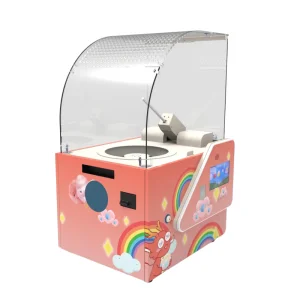
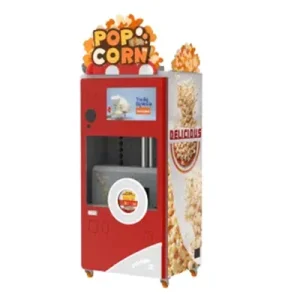
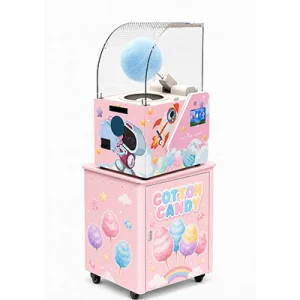
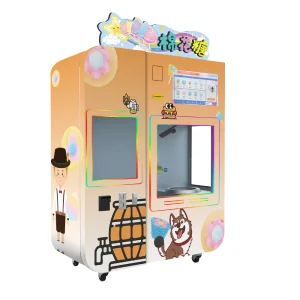
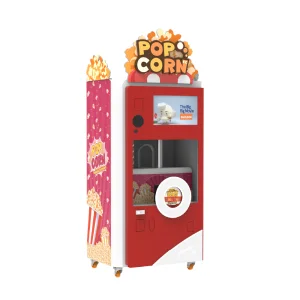
Our engineering team continuously innovates across mechanical precision, embedded firmware safety, thermal dynamics, and artificial intelligence vision to deliver reliable next-generation automated retail machinery.
Next-generation OEM vending platforms integrate onboard AI camera sensors to inspect dispensed product quality in real time. For instance, in automated soft-serve ice cream and cotton candy robots, computer vision algorithms instantly verify syrup dispensing swirl accuracy, stick insertion depth, and cotton candy ball volume before opening the dispense door to customers.
By leveraging machine learning models trained on millions of operating hours, our telemetry platform transitions machine servicing from reactive repair to predictive maintenance. Embedded vibration, pressure, and thermal sensors detect early mechanical wear in compressors, gearboxes, and sugar heating heads—triggering automated maintenance alerts weeks before a component failure occurs.
Environmental regulations demand high thermal efficiency and lower standby power consumption. Our engineering roadmap incorporates variable-frequency compressor drives, smart standby power sleep modes, high-efficiency vacuum insulation panels, and eco-friendly R290/R600a hydrocarbon refrigerants that reduce total energy consumption by up to 35% compared to legacy models.
To ensure seamless customs clearance and hassle-free commercial operation in key global jurisdictions (North America, European Union, Middle East, Asia-Pacific), our factory executes an 11-step quality assurance protocol.
Every single manufactured unit passes rigorous testing prior to export packing: IQC raw material inspection → Component functional testing → Structural subassembly verification → Electrical grounding safety test → High-temp pasteurization cycle test → Payment gateway handshake validation → 24-Hour continuous burn-in trial → 200-Unit dispense stress test → Transportation vibration simulation → Final factory QA audit → Moisture-proof export crating.
Our manufacturing facility and commercial vending product portfolio hold verified international certifications including CE (LVD/EMC), ETL & cETL (UL 751 / CSA C22.2), NAMA, RoHS, PSE, KC, and FCC. Certificate documentation and test reports are supplied with every OEM equipment order for rapid customs declaration.
We tailor machines to meet specific regional requirements: 110V/60Hz or 220V/50Hz power transformer configurations, localized plug types (US, EU, UK, AU, South Africa), multi-language touchscreen user interfaces (English, Spanish, French, German, Arabic, Japanese, Korean, etc.), and local fiscal tax memory integrations.
Detailed technical, logistical, and commercial answers for vending operators, importers, and brand owners considering direct factory procurement.