Explore source-factory OEM platforms engineered for high-traffic automated retail deployment.

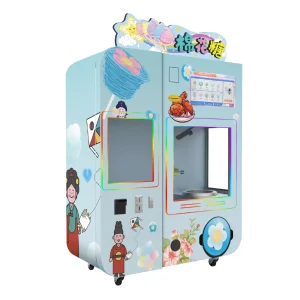
Why location procurement strategy, locator fee structuring, and hardware OEM reliability form the critical triad of profitable unattended retail fleet deployment.
Vending locator fees are transactional commissions or upfront service charges paid to professional location placement companies, specialized brokers, or property locators to secure high-footfall real estate contracts for vending machines. In modern automated retail—especially for high-margin robotic food dispensers like cotton candy, soft-serve ice cream, freshly ground coffee, and popcorn stations—securing high-converting placements represents up to 60% of long-term operational success.
Securing prime real estate means nothing if hardware breakdowns lead to machine downtime. Property managers at tier-1 shopping malls, theme parks, and transit hubs demand zero-fault aesthetics, quiet mechanical operations, and remote telemetry visibility. Source-factory OEM partnerships ensure hardware customizability, strict CE/ETL safety compliance, and direct engineering access to handle high-turnover vending throughput smoothly.
Robotic snack vending machines achieve gross margins exceeding 80% to 90% (sugar, syrup, and corn inputs cost pennies per transaction). Understanding how to balance fixed locator finder fees ($200–$800 upfront) versus revenue-sharing commissions (8%–20% gross sales) allows smart operators to preserve internal rate of return (IRR) across multi-city machine networks.
Evaluating upfront locator fees, monthly lease commissions, and foot-traffic conversion dynamics across commercial property types.
When contracting with third-party vending locators or direct corporate real estate brokers, operators encounter three main financial structures. Selecting the right fee model depends directly on foot-traffic reliability and expected transaction velocity.
| Venue Category | Typical Foot Traffic | Standard Locator Fee Range | Recommended Contract Model |
|---|---|---|---|
| Tier-1 Mega Malls | 25,000+ daily | $500 – $1,200 / unit | Flat Upfront + Space Rent |
| Theme & Water Parks | 15,000+ daily | $600 – $1,500 / unit | Tiered Revenue Split (12%-18%) |
| Family Entertainment (FEC) | 5,000+ daily | $300 – $600 / unit | Flat Upfront + Low Utility Fee |
| Transit Hubs & Airports | 40,000+ daily | $800 – $2,000 / unit | Strict RFP Minimum Guarantee |
| Cinemas & Arcades | 3,000+ weekend | $250 – $500 / unit | Revenue Share (15%) |
When evaluating third-party locator fees, always demand a 60-day replacement guarantee in the contract. If a located spot yields less than $1,000 gross monthly revenue during the first 60 days, the locator service must secure a replacement location without charging additional locator fees.
Why direct partnership with an established source factory like Guangzhou Seven Cloud Technology Co., Ltd. gives global operators an unbeatable cost-to-performance advantage.
Unlike trading entities, SevenCloud operates a complete vertically integrated 11,000 m² manufacturing plant in Panyu District, Guangzhou. From laser sheet-metal cutting and automated bending chassis assembly to wire harness routing, every component is manufactured in-house for maximum control over build quality and structural integrity.
Every single vending robot undergoes an exhaustive 11-step inspection protocol prior to export packing. This includes raw material verification, circuit subassembly stress tests, functional automated dispensing checks, 24-hour continuous burn-in environmental chamber testing, and transport simulation vibration testing to guarantee zero out-of-box defects.
From custom metal wrap decals, specialized coin/cash validators, and contactless credit card Readers (Nayax, Ingenico, Payter) to multi-language UI software localization (over 30+ languages supported), SevenCloud's 130+ technical staff customize machines to meet regional regulatory and branding requirements.
Matching specific automated robot hardware models to target consumer venue demographics for peak conversion rates.
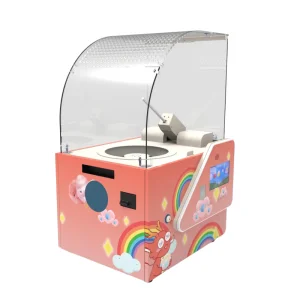
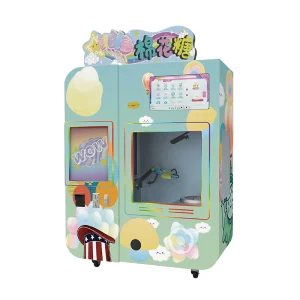
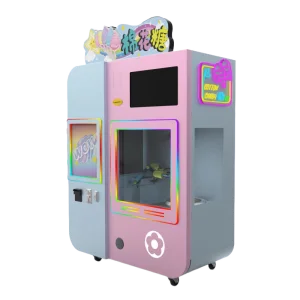
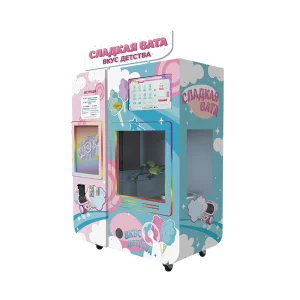
Recommended Hardware: Fully Automatic AI 3D Flower Cotton Candy Vending Robot (SC-320 Series).
Why It Works: Families strolling through theme parks are drawn to visual entertainment. The robotic arm crafting 64+ multi-color 3D sugar flower patterns inside a transparent illuminated glass chamber turns candy preparation into a live show. High impulse buy conversion supports premium pricing ($6.00–$10.00/unit).
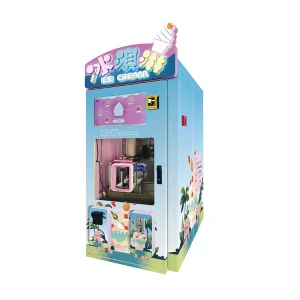
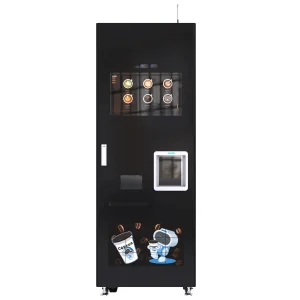
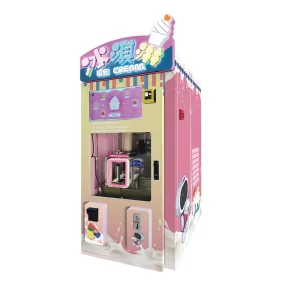
Recommended Hardware: Robotic Soft-Serve Ice Cream Vending Station & Fresh Bean Coffee Robot.
Why It Works: Mall traffic demands clean, hygienic automated execution with minimal footprint (occupying less than 2 m²). Automated self-cleaning sanitation protocols and real-time telemetry allow operators to run units 24/7 in central mall plazas without dedicated store counters.
Recommended Hardware: P30 6-Flavor Automatic Popcorn Vending Machine.
Why It Works: Traditional movie theater concession lines experience intense bottlenecks prior to showtimes. Autonomous popcorn vending stations dispense hot, kettle-fried popcorn in under 45 seconds, relieving lobby queues while giving operators a 90% margin snack revenue stream.
Discover how IoT remote management telemetry, robotic precision actuators, and cloud-based diagnostic platforms transform machine reliability.
Every SevenCloud machine features built-in 4G/Wi-Fi/Ethernet IoT telemetry modules connecting to a centralized cloud portal. Operators monitor real-time sales transactions, raw sugar/ice cream mix inventory levels, temperature telemetry, error logs, and automated SMS/email low-ingredient alert triggers directly from their smartphones.
Patent-backed mechanical burner heads control sugar heating temperatures to within ±0.5°C, completely eliminating burnt sugar residue clogging. Multi-axis high-torque stepper motors ensure precise stick rotation and sugar strand wrapping, outputting complex 3D flower shapes reliably across hundreds of continuous cycles.
Full compatibility with international Multi-Drop Bus (MDB) standards guarantees seamless plug-and-play integration with credit card terminals (Nayax VPOS, Ingenico, USA Technologies), bill acceptors (MEI, JCM), coin mechanisms, and QR-code mobile wallets (Apple Pay, Google Pay, WeChat Pay, Alipay).
For soft-serve ice cream and milk-based beverage machines, integrated Clean-In-Place (CIP) automated flushing cycles and thermal pasteurization systems eliminate daily manual teardown requirements, meeting stringent international food sanitation guidelines (NSF, NAMA, CE).
Understanding regional import protocols, international safety certifications, and commercial market trends across major economic zones.
The global automated vending equipment market is experiencing rapid expansion, driven by rising urban labor costs and consumer demand for contact-free instant gratification. Different economic regions require tailored equipment approaches:
Requires ETL/cETL electrical safety certification, UL sanitation compliance, NAMA approval, ADA wheelchair accessibility compliance, and cashless credit card telemetry natively integrated into local payment networks.
Mandates CE compliance, RoHS directive adherence (restriction of hazardous substances), CB Scheme electrical safety certifications, and strict GDPR compliance for consumer data collected via touchscreen UI graphics.
Focuses on high-ambient temperature tolerance, heavy-duty refrigeration compressors (Embraco/Secop units), dual voltage (110V/220V switching), and localized QR payment options.
SevenCloud machines carry certified documentation, enabling smooth customs clearance and regulatory inspection approval globally:
Explore additional high-demand OEM solutions for specialized commercial deployment.
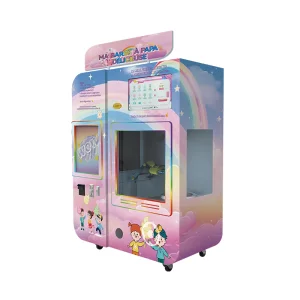
In-depth technical and operational answers to assist buyers, operators, and distributors in making informed procurement decisions.
Vending locator fees represent an initial capital outlay that must be factored into your overall Customer Acquisition Cost (CAC) per location. When paying a typical one-time upfront locator fee of $300 to $600 per site, this cost is usually fully amortized within the first 14 to 30 days of machine operation, provided the location meets baseline traffic metrics (generating $1,500–$3,500 monthly gross revenue).
For high-margin robotic food equipment—such as SevenCloud's cotton candy and soft-serve ice cream vending stations where COGS is below 12%—the high net profit margin absorbs initial locator fees rapidly compared to low-margin traditional snack/beverage vending machines (which carry 45%–55% COGS).
Sourcing directly from an OEM factory like Guangzhou Seven Cloud Technology Co., Ltd. eliminates middleman price markups (saving 30%–50% on initial hardware CapEx) and grants direct engineering access for hardware customization, custom software updates, and authentic factory spare parts replacement.
Brokers and local distributors frequently mark up equipment prices significantly without providing direct R&D support. Partnering with SevenCloud gives operators direct access to software engineers for IoT backend integration, custom localized payment gateways, and factory-direct technical training.
SevenCloud machines utilize industry-standard MDB (Multi-Drop Bus) communication protocols, enabling seamless integration with virtually any globally recognized payment processor. Supported hardware configurations include credit/debit card card readers (Nayax VPOS Touch, Ingenico self-service, Payter), international bill validators (JCM, ITL, MEI), coin acceptors with change dispensers, and custom optical scanners for QR-based digital mobile wallets (Apple Pay, Google Pay, KakaoPay, Paytm, WeChat Pay, Alipay).
Remote IoT telemetry transforms fleet logistics by replacing blind routine physical visits with data-driven operations. Fleet management teams view live inventory levels, real-time revenue tallies, internal component diagnostics, ambient environmental temperatures, and instant error codes via a web browser or mobile app.
Field technicians only visit locations when ingredient restocking (e.g., sugar, paper sticks, cup inventory) or targeted maintenance is required, cutting fuel, labor, and operational vehicle costs by up to 65%.
Depending on the specific hardware series, SevenCloud equipment carries international certifications including CE (European Conformity), ETL & cETL (North American Electrical Safety Standard), NAMA (National Automatic Merchandising Association), RoHS (Hazardous Substance Control), PSE (Japan), and FCC compliance. Food-contact components feature food-grade 304 stainless steel, BPA-free dispensing tubes, and sealed automated cleaning chambers designed to pass local municipal health department inspections worldwide.
Whether you are an established vending operator expanding your footprint, a professional locator securing high-value real estate contracts, or a regional distributor launching an automated retail brand—our OEM engineering team is ready to support your commercial roadmap.