Explore our factory-direct, CE/ETL-certified automated confectionery and ice cream robotics engineered for global franchise operators and vending distributors.
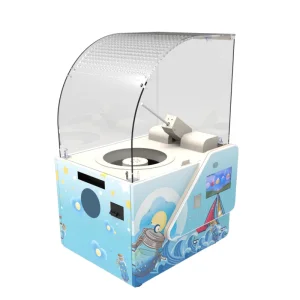
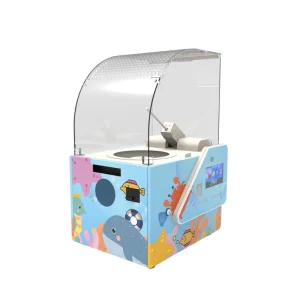
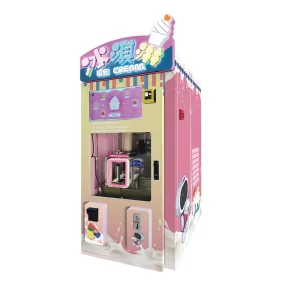
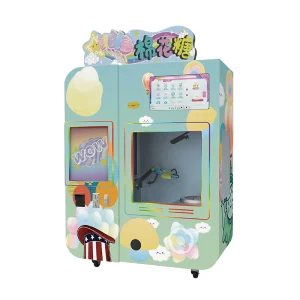
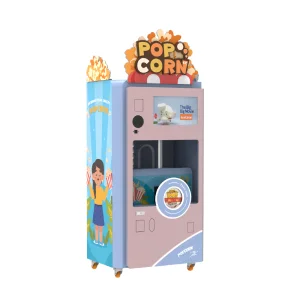
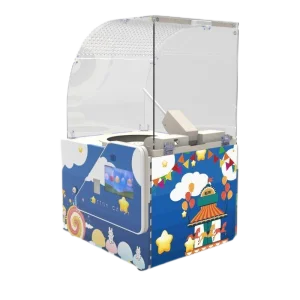

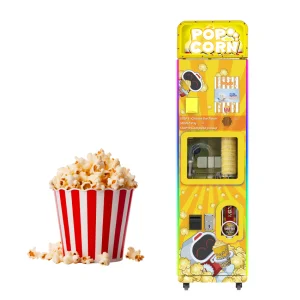
The global vending industry is undergoing a structural paradigm shift from passive product distribution to interactive, experience-driven automated food preparation robotics. Driven by escalating urban labor costs, real estate optimization demands, and shifting consumer expectations for instant, hygienic culinary experiences, the global unmanned retail market is projected to reach $42.1 Billion by 2030 (CAGR of 14.2%). Within this macro evolution, sweet snack robotics—encompassing automated cotton candy spinners, robotic soft-serve ice cream stations, freshly popped corn units, and automated barista platforms—represent the fastest-growing yield segment due to exceptional profit margins exceeding 80%.
Traditional commercial vending equipment relied on pre-packaged stock with tight margin ceilings and zero theatrical appeal. In contrast, modern automated confectionery and frozen dessert robots serve as high-converting, entertainment-driven micro-retail destinations. By transforming simple raw commodities (granulated sugar, liquid ice cream mix, raw popcorn kernels) into fresh gourmet snacks on demand, franchise operators unlock unprecedented Gross Margin Return on Investment (GMROI). Original Equipment Manufacturers (OEM) and Original Design Manufacturers (ODM) play a central structural role in this ecosystem, allowing brand builders, master franchisors, and commercial real estate groups to rapidly deploy turnkey networks under custom branded hardware and localized telemetric software controls.
Key macro catalysts currently fueling global enterprise procurement for vending franchises include:
Navigating the procurement landscape for smart vending hardware requires enterprise buyers to distinguish between simple transactional equipment purchasing and strategic OEM/ODM franchise platform engineering. Enterprise buyers generally fit into three distinct global operational profiles:
Entities acquiring regional or national exclusive rights to deploy branded automated retail kiosks. Requirements include custom UI/UX branding, proprietary machine decals, localized payment gateway integration, and localized IoT management cloud connectivity.
Commercial equipment suppliers seeking white-label manufacturing partners capable of delivering mass-volume, multi-certified (CE, ETL, NAMA, RoHS) hardware chassis built for seamless regional distribution and localized aftermarket service support.
Large-scale leisure, cinema, and family entertainment complexes looking to integrate autonomous dessert robots directly into their existing point-of-sale infrastructure, guest loyalty programs, and high-footfall revenue streams.
Evaluating OEM vending franchise opportunities requires rigorous capital expenditure (CapEx) and operational expenditure (OpEx) accounting. OEM direct-factory sourcing drastically reduces initial CapEx by removing intermediary distributor markups, allowing franchise networks to allocate capital toward prime micro-location leasing and brand marketing.
| Operational Parameter | Traditional Manual Kiosk / Franchise | OEM Unattended Vending Robot Network |
|---|---|---|
| Initial Capital Investment (Per Unit) | $25,000 – $45,000 (Counter construction, POS, appliances) | $4,500 – $12,000 (Direct Factory OEM Robotics) |
| On-Site Labor Requirement | 1.5 – 2.0 Full-Time Equivalents (FTE) per shift | 0 FTE (1 Restock technician manages 15–20 units) |
| Monthly Real Estate Overhead | 10 – 30 m² ($1,500 – $5,000/mo base rent) | 1.0 – 1.5 m² ($300 – $800/mo micro-space lease) |
| Operating Hours & Revenue Window | Limited to staffing shifts (typically 8–10 hours/day) | 24/7/365 Unattended operation capacity |
| Gross Margin on Consumables | 55% – 68% (Higher food waste, variable portioning) | 80% – 90% (Precision robotic sugar/syrup dosing) |
Building autonomous food robotics capable of executing hundreds of flawless cycles daily in high-footfall environments demands sophisticated industrial manufacturing practices. A world-class vending production facility must combine heavy sheet-metal fabrication, precision robotics assembly, cleanroom electrical wiring, and multi-stage environmental testing.
At our 11,000 square meter standardized manufacturing facility in Guangzhou, China, every machine undergoes a strict 11-Step Quality Assurance Protocol prior to international export. This rigorous manufacturing standard eliminates the reliability issues historically associated with low-cost vending hardware.
Laser-cut high-gauge galvanized steel frame construction treated with anti-corrosion electrostatic powder coating ensures structural rigidity, preventing vibration-induced mechanical wear over years of continuous operation.
All contact surfaces utilize 304/316 medical-grade stainless steel, food-grade silicone tubing, and BPA-free acrylic hoppers meeting NSF/FDA hygiene standards to prevent bacterial growth and simplify daily cleaning.
Industrial multi-axis servo motors and closed-loop step drives power robotic arms responsible for paper stick picking, sugar spinning, soft-serve dispensing, and lid sealing with sub-millimeter positional repeatability.
Before any unit receives factory release clearance for global dispatch, it must pass three non-negotiable stress tests designed to simulate severe real-world operational environments:
Modern franchise scalability relies entirely on cloud-based telemetry software. A single operator cannot scale a multi-unit network if field technicians must physically visit machines to check sugar levels, audit daily cash flows, or diagnose software glitches. Our proprietary IoT telemetry management ecosystem provides enterprise franchisees with real-time operational visibility across their entire robot deployment from any smartphone or desktop terminal.
Instant transaction telemetry tracking revenue, cash vs. cashless payment breakdown, peak hour transaction density, and average order value (AOV) across single units or clustered territory groups.
Algorithmic consumption tracking monitors remaining sugar weight, liquid ice cream volume, paper stick inventory, and cup counts, sending automated push notifications before a machine runs empty.
Over-the-Air (OTA) firmware updates, remote heating element temperature adjustments, robotic arm recalibrations, and digital media video display updates managed instantly without dispatching field engineers.
Deploying commercial vending machinery across diverse international jurisdictions requires strict compliance with regional electrical safety standards, sanitation mandates, and banking communication protocols. Failing to address these localization barriers during the OEM engineering phase can result in customs impoundment, regulatory fines, or unprocessable customer transactions.
Our OEM equipment architecture incorporates universal Multi-Drop Bus (MDB) master interfaces alongside Pulse, Executive, and RS-232 telemetry protocols. This guarantees seamless plug-and-play integration with global payment hardware and cashless gateway providers:
Every OEM machine configuration leaves our factory backed by verified international testing documentation necessary for immediate commercial operation in target export territories:
Full compliance with European CE Mark (Low Voltage Directive 2014/35/EU & EMC Directive 2014/30/EU), North American ETL / cETL Listed standards (UL 751 & CSA C22.2), and Japanese PSE certification.
Constructed in strict accordance with HACCP preventative food safety guidelines. High-temp self-cleaning cycles (soft-serve freeze preservation systems) and RoHS compliant toxic-free component assembly.
Built to align with National Automatic Merchandising Association (NAMA) engineering guidelines for public health, structural safety, and accessibility compliance (including ADA dimensional requirements in North America).
As computer vision, artificial intelligence, and advanced robotics continue to mature, the unattended retail sector will move toward total autonomous hyper-personalization. Our engineering team remains at the forefront of this technological curve, embedding next-generation features directly into our OEM manufacturing pipeline.
| Technology Horizon | Innovation Objective | Operational Impact for Franchise Operators |
|---|---|---|
| AI Vision Interactive UX (2025) | Integration of facial emotion detection & gesture control interface. | Tailors custom visual cotton candy patterns or flavor recommendations dynamically based on customer demographic cues. |
| Predictive Maintenance AI (2025-2026) | Edge-computing sensors analyzing motor harmonic micro-vibrations. | Identifies mechanical component wear weeks before failure occurs, scheduling preventative technician maintenance with zero downtime. |
| Zero-Water Automated CIP Systems (2026) | Closed-loop high-pressure ultrasonic self-cleaning mechanisms. | Reduces daily sanitation labor cycles by 70%, allowing soft-serve and fresh snack machines to run autonomously for up to 14 days between manual cleans. |
| Hyper-Efficient Eco-Cooling (2027) | Transition to R290 natural hydrocarbon refrigerants & variable-frequency drives. | Cuts power consumption by 35%, lowering utility bills for franchisors while meeting strict global carbon neutrality mandates. |
Discover our high-yield automated ice cream, popcorn, and specialized confectionery equipment solutions tailored for commercial franchise networks.

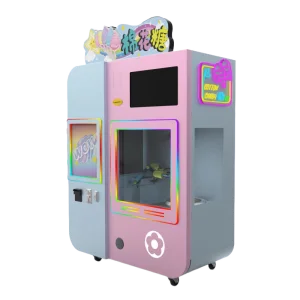

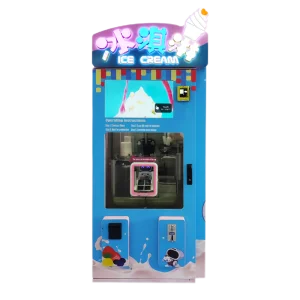
Clear answers to critical operational, financial, and manufacturing queries submitted by international vending franchise buyers and master distributors.
We offer flexible sample evaluation terms. For standard stock machinery with custom logo decals and software language UI updates, the MOQ is just 1 unit. For deep ODM engineering—such as custom structural sheet metal modifications, specialized external chassis wraps, or proprietary payment gateway integrations—the baseline MOQ starts at 5 to 10 units depending on technical scope.
High ambient humidity is the primary cause of sugar clogs in low-grade cotton candy equipment. Our industrial SC series machines utilize an enclosed, climate-controlled spinning chamber equipped with an automated internal dehumidification module, automatic high-temperature burner cleaning, and precision water-misting jets that wash the burner cup automatically after preset operational cycles.
Daily maintenance takes less than 15 minutes. Operators perform a quick external sanitation wipe and restock liquid ice cream mix and paper cups. Thanks to our integrated overnight pasteurization / pasteurized standby refrigeration system, liquid mix remains fresh inside the machine for up to 7 to 14 days before a complete wash cycle is required.
Yes. All machines feature standardized MDB (Multi-Drop Bus) interfaces compatible with global cashless card terminals including Nayax, Cantaloupe, and Ingenico. We pre-install card reader brackets and wire harness configurations at the factory based on your specified payment processor, allowing seamless credit card, Apple Pay, and local QR wallet processing.
We configure electrical transformers during assembly to match your destination country's grid requirements: 110V 60Hz (North America, Japan) or 220V–240V 50Hz/60Hz (Europe, UK, Australia, Middle East, Asia). Regional heavy-duty power plugs (US NEMA, EU Schuko, UK 3-pin, AU plug) are factory installed.
Cotton candy yields unmatched profit margins. A single serving requires approximately 20 to 30 grams of specialized granulated sugar and 1 paper stick, total consumable cost: $0.10 to $0.20 USD. Selling prices in shopping malls or amusement parks typically range between $4.00 and $8.00 USD, generating gross profit margins above 85% per transaction.
Every machine is covered by a 12-month comprehensive factory warranty on core components (compressors, robotic motors, mainboard controllers, touchscreens). In the event of a fault, our IoT diagnostic platform pinpoints the exact error code. We dispatch express replacement parts via DHL/FedEx alongside video replacement guides from our dedicated engineering support team.
Our core product line carries full European CE marking (LVD & EMC compliance), RoHS environmental safety compliance, North American ETL / cETL sanitation & electrical safety clearance, and Japanese PSE certification. Full compliance dossiers and test reports are supplied prior to shipment for seamless customs clearance.
The P10 model utilizes hot-air popping technology without sugar or oil, delivering a healthy, low-calorie snack with flavor applied via secondary seasoning packets. The P30 model utilizes kettle-style oil and sugar processing to deliver rich, traditional movie-theater style caramelized popcorn across up to 6 selectable flavor options.
Machines are encased in multi-layer protective foam wraps, sealed in moisture-proof vacuum barriers, and crated inside heavy-duty ISPM-15 compliant fumigated wooden export cases. We coordinate Ocean Freight (FCL/LCP), Air Freight, and door-to-door (DDP) delivery with complete export documentation handling.
