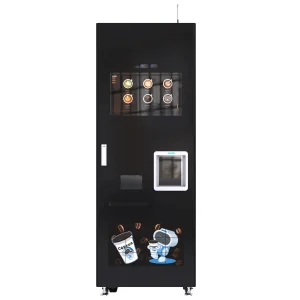
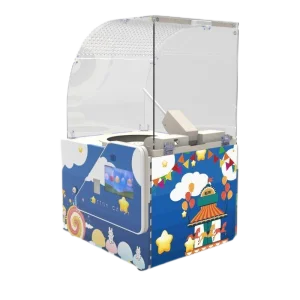
Explore our top-tier robotic cotton candy, ice cream, and beverage vending systems engineered for high-throughput unmanned retail.
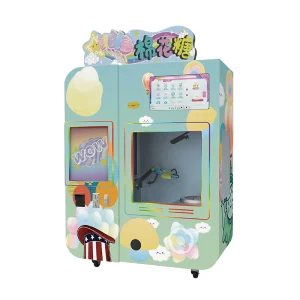
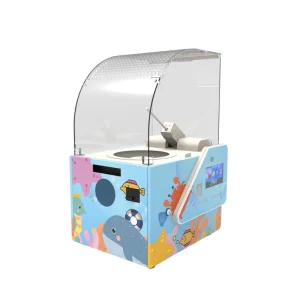

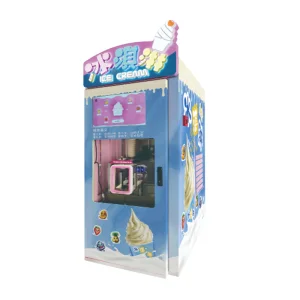

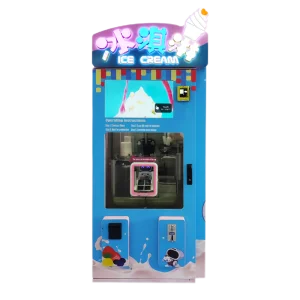
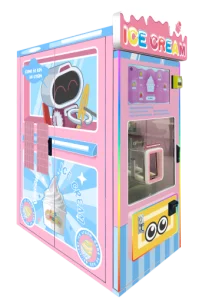
The convergence of mechanical automation, IoT telematics, and experiential retailing has elevated robotic vending machines from niche novelty novelties to scalable commercial assets.
Traditional human-operated snack counters face compounding inflation in minimum wage, overhead, and training expenses. An OEM robotic cotton candy vending machine operates 24/7 without manual labor, yielding a direct unit labor cost savings exceeding 85% per transaction.
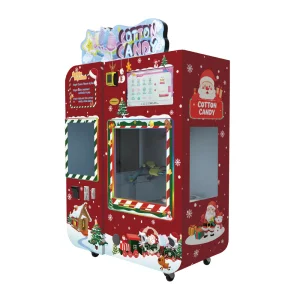
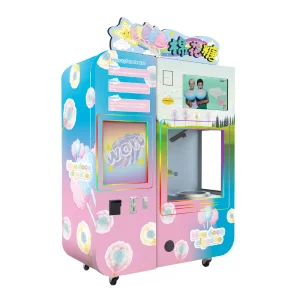
Unlike standard glass-front snack vending units, multi-axis robotic arms feature transparent acrylic display chambers, animated LED sequences, and custom floral-pattern spinning capabilities. This visual performance increases walk-by conversion rates by up to 340% in high-density family venues.
Raw material input for cotton candy production (granulated white/colored sugar plus paper sticks) averages $0.15 to $0.30 per serving. Retail price positioning typically spans $4.00 to $9.00 depending on location demographics, offering unmatched gross product margins exceeding 90%.
Pricing varies significantly based on internal robotic hardware tiers, climate-control HVAC modules, payment gateway integration, and OEM branding customization levels.
| Equipment Model Tier | Typical OEM Unit Price (FOB) | Target Placement Scenario | Core Robotic & Hardware Specs | Included Maintenance & Telemetry |
|---|---|---|---|---|
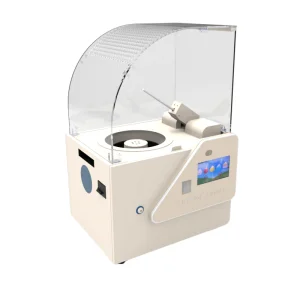
| Entry / Semi-Automatic Commercial | $1,800 – $3,200 USD | Countertop venues, KTVs, small event rentals | Single-axis spinner, manual stick insertion, basic push-button UI | 12-Month Mechanical Warranty, Basic Error Diagnostics |
| Standard 4-Flavor Automatic Robot | $4,500 – $6,800 USD | Indoor shopping centers, movie theater lobbies | 3-Axis Industrial Robotic Arm, 4 Sugar Canisters, Basic Touchscreen UI | IoT Cloud Dashboard, Remote Inventory Alerts, Standard Bill/Coin Acceptor |
| Flagship 6-Flavor High-Throughput OEM | $7,200 – $10,500 USD | Theme parks, flagship transit hubs, mega malls | 4-Axis High-Speed Robotic Manipulator, Integrated Dehumidifier HVAC, 32" HD Interactive Display | Full Telemetry API, Cashless Nayax/CPI Credit Card Reader, AI Auto Cleaning Cycle |
| Custom Dual-Function Combo (Ice Cream + Cotton Candy) | $11,000 – $16,500 USD | High-footfall tourist attractions, flagship FECs | Dual Robotic Arm Cell, Refrigerated Dairy Hopper, Multi-Color Sugar Dispenser | SCADA Cloud Telemetry, Dual Sanitation System, Customized Vinyl Wrap & Branding |
Industrial reliability is achieved through precise sugar melting thermal control, multi-axis motion planning, and internal environmental regulation.
Equipped with stepper-motor-driven robotic arms capable of 0.1mm positional accuracy. The end-effector manipulates paper sticks dynamically around high-speed spinning burners to produce complex 3D flower and animal patterns.
Features closed-loop PID temperature regulation (up to 250°C) with rapid cooling channels. Prevents sugar caramelization clogging, ensuring consistent sugar thread extraction across continuous high-volume dispensing cycles.
High ambient humidity leads to cotton candy deflation. Our built-in hermation compressor system maintains internal chamber relative humidity under 40% RH and temperature below 25°C, ensuring optimal product fluffiness in warm tropical climates.
To adhere to international municipal health guidelines, our OEM machines incorporate hot-water high-pressure atomization nozzles. After a set number of vends (or scheduled via cloud telemetry), the internal acrylic chamber executes an automated wash and thermal dry cycle, eliminating sugar residue accumulation without manual operator intervention.
Operators monitor entire machine fleets in real time via native iOS/Android mobile apps and web portals. Operational analytics include real-time sugar tank level indicators, stick capacity counters, daily revenue logs, voltage fluctuation alarms, and over-the-air (OTA) firmware update execution.
Deploying unattended commercial food robotics internationally requires rigorous electrical certification, food-grade contact sanitation, and regional payment gateway compatibility.
Fully compliant with International Electrotechnical Commission (IEC) norms. Certified with CE (EU Directive), ETL / UL 751 (North America), PSE (Japan), KC (South Korea), and RCM (Australia/NZ).
Internal sugar hoppers, dispenser tubes, and spinning bowls are constructed from certified food-grade SUS304 stainless steel and non-toxic food-grade silicone, meeting US FDA and EU 10/2011 regulations.
Supports MDB / Executive protocols for seamless plug-and-play installation of credit card validators (Nayax, Ingenico, PAX), bill acceptors (MEI, CashCode), and QR mobile payments (Apple Pay, Google Pay, WeChat Pay).
Selecting optimal placement locations directly controls transaction velocity and operational capital recovery timelines.
High footfall combined with leisure spending mindsets makes FECs prime real estate. Placed adjacent to redemption arcades or ticket queues, units routinely process 80 to 150 vends per day during weekend peaks, resulting in full machine payback within 60 to 90 operational days.
Positioned near children’s play areas, food courts, or cinema entrance corridors. Compact footprints (under 1.5 sq meters) minimize monthly space rental costs while capturing steady weekday evening and weekend walk-by impulse traffic.
Operating in 24-hour international transit zones offers continuous sales potential. The automated multi-language UI allows international travelers to select options in 12+ native languages, accepting multi-currency credit transactions seamlessly.
Replaces static souvenir stands with interactive robotic entertainment. Custom exterior vinyl wrapping allows operators to co-brand with local tourist landmarks, enhancing promotional visibility and social media shareability.
Our engineering team continuously advances the boundary of autonomous retail systems to maximize operator margins and customer engagement.
Integrating optical camera sensors to visually inspect the fluff volume and structural symmetry of each cotton candy before dispensing, automatically discarding sub-standard creations to guarantee 100% customer satisfaction.
Cloud telemetry algorithms adjust real-time menu pricing based on venue footfall density, ambient weather conditions, and peak operational hours, maximizing total venue yield.
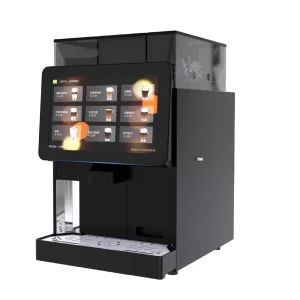
Developing unified chassis systems capable of housing swap-and-play modules: combine robotic cotton candy, soft-serve ice cream, freshly popped popcorn, and hot coffee in a single synchronized kiosk.
Critical technical and financial answers for equipment distributors, franchise network operators, and procurement managers.
OEM pricing is dictated by five primary technical factors: 1) Robotic Arm Axis & Motors: 4-axis industrial servo systems vs. basic 2-axis stepper configurations; 2) Internal HVAC & Dehumidification: Presence of automated compressor-driven humidity isolation chambers; 3) Payment Integration: Factory-installed cashless card validators (e.g., Nayax/CPI) and coin/bill readers; 4) OEM Customization: Custom exterior body toolings, vinyl graphics, illuminated signage, and software UI localization; 5) Order Volume Tiers: Volume discount brackets for container-load orders (20ft / 40HQ HQ shipments).
Under recommended operating conditions, our industrial-grade machines have an engineered design life of 5 to 8 years. Daily maintenance requires 10-15 minutes to replenish sugar hoppers, paper stick dispensers, and wipe down external glass surfaces. Weekly maintenance involves inspecting water filtration cartridges for the auto-cleaning system and clearing any sugar dust from internal exhaust vents.
Our patented burner system employs closed-loop PID thermal sensing coupled with high-speed pulse centrifugal spinning. After each product dispensing cycle, the machine executes a micro-purge blast of high-temperature air to clear residual melted sugar from the spinning slots, preventing caramelization buildup and eliminating burner head blockages.
Yes, provided the machine is configured with our optional Outdoor Climate Package. This upgrade adds a reinforced weather-sealed enclosure, UV-resistant acrylic windows, an upgraded industrial compressor dehumidifier to counteract ambient humidity, and internal thermal regulation to prevent sugar melting inside storage hoppers.
For standard equipment models with custom vinyl exterior decals and software UI logo implementation, the MOQ is just 1 unit, with a manufacturing lead time of 10 to 15 calendar days. For deep OEM projects requiring custom sheet-metal chassis modifications, custom lighting molds, or dedicated software API engineering, MOQs start at 10 units with lead times ranging from 25 to 40 days.
Select any model below to view technical specifications, request factory direct pricing, or configure custom OEM manufacturing options.