Industrial-grade automated robotics engineered for deployment in high-footfall environments worldwide.



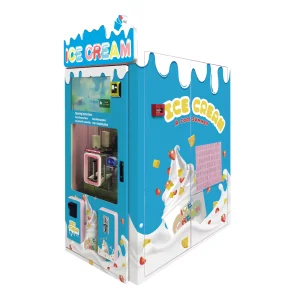
A technical evaluation of the transition from legacy concession stands to autonomous robotic micro-retail networks.
The global automated vending machine sector is undergoing a profound paradigm shift. Driven by skyrocketing labor costs, changing consumer expectations toward touchless hygiene, and the demand for instant visual entertainment, commercial confectionery machines have evolved from simple mechanical dispensers into highly sophisticated, IoT-enabled robotic kiosks. At the epicenter of this market expansion lies the OEM candy cotton candy machine manufacturing sector—a specialized domain merging thermal dynamics, multi-axis robotics, ambient humidity management, and cloud telematics.
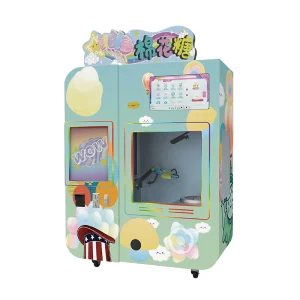
According to macroeconomic retail telemetry, unmanned specialized food micro-retail kiosks are projected to expand at a compound annual growth rate (CAGR) of over 14.8% through 2032. Traditional sugar-floss production relied on manual labor, skilled operators, and highly controlled indoor environments to prevent sugar crystallization failures caused by ambient humidity. Today's commercial-grade OEM candy cotton candy machinery integrates precision sensor arrays, high-speed centrifugal heating elements, and automated robotic arms capable of carving intricate 3D floral, multi-tiered, and multi-color shapes in under 60 seconds.
For corporate procurement officers, fleet operators, and institutional venue management groups (including shopping centers, theme parks, transportation hubs, and family entertainment centers), evaluating OEM cotton candy machine companies requires looking beyond surface-level aesthetics. Industrial longevity demands rigorous inspection of internal sheet-metal structural integrity, drive-motor torque ratings, food-grade contact certifications, and software resilience under high-concurrency order spikes.
Key performance metrics that enterprise buyers utilize when selecting OEM and ODM manufacturing partners.
Enterprise procurement requires precise TCO modeling. Our OEM platforms minimize power consumption through instant-induction heating elements while standardizing high-yield sugar consumption ratios, reducing raw ingredient wastage to under 2.1% per production run.
Downtime directly impairs net operating income. Leading OEM manufacturers implement industrial-grade brushless stepping motors, military-grade internal wiring harnesses, and modular sub-assembly swap architectures to guarantee rapid field maintenance.
Fleet operators managing hundreds of machines require unified telemetry APIs. Modern cotton candy machine OEM systems support MDB 5.0 protocols, integrated credit card processing (Nayax, Pax), and MQTT/HTTP cloud management layers for real-time inventory tracking.
| Evaluation Criterion | Legacy Concession Units | Standard Commercial Vending | Next-Gen SevenCloud OEM Platform |
|---|---|---|---|
| Robotic Precision | Manual human operation | 2-Axis basic mechanical arm | 4-Axis High-Precision Industrial Robot Arm |
| Humidity Control | None (clogs in high moisture) | Basic passive airflow fan | Closed-Loop Thermal & Dehumidification System |
| Sugar Yield Optimization | Variable (15-30g waste/serve) | Standard dosing (~10g waste) | Micro-dosing Stepper Motor (<2g waste) |
| Sanitation Protocol | Manual wash down required | Basic steam purge | High-Temp Auto-Boiling & UV Sterilization |
| Payment Systems | Cash only | Single local coin/bill validator | Global MDB, Contactless EMV, QR & Mobile Wallets |
An inside look at the mechanical innovations powering reliable 24/7 autonomous sugar spinning.
The core challenge in automated cotton candy production is maintaining precise burner temperature. Excessive heat caramelizes and burns the sugar, clogging output nozzles, while insufficient heat yields weak, unformable filaments. Advanced OEM machines utilize high-frequency PID thermal control loops coupled with ceramic induction heating, maintaining temperatures within ±0.5°C tolerances regardless of external line voltage fluctuations.
Sugar is inherently hygroscopic. In environments where humidity exceeds 60%, cotton candy sugar fluffs melt almost instantaneously into sticky syrup. SevenCloud’s engineering team introduced an internal climate chamber featuring a compact compressor-based dehumidifier and air-filtration system. This ensures the internal dispensing cabinet maintains an optimal relative humidity of <40% and a clean air flow certified under food-handling protocols.
A frequent point of failure in legacy automated cotton candy machines is stick jams. Modern OEM architectures incorporate optical sensor arrays and pneumatic grabber arms that verify paper stick presence, orientation, and friction tolerance before initiating the spinning cycle. If a defective stick is detected, the machine automatically ejects it into a waste hopper without halting system operations.
Food hygiene compliance is paramount for operating in high-tier retail environments. OEM cotton candy vending solutions utilize a high-pressure hot water purge system. After a configurable number of dispenses or period of inactivity, the system injects high-temperature steam/water into the spinning bowl to dissolve residual sugar crusts, draining the wash water into an internal isolated wastewater reservoir equipped with overflow sensors.
Ensuring frictionless international import, electrical safety, food contact approval, and regional technical coverage.
Navigating global trade compliance requires strict adherence to international electrical, safety, and sanitation standards. When sourcing equipment from an OEM candy cotton candy machine manufacturer, institutional buyers must confirm that the target equipment holds complete regulatory documentation aligned with their operating jurisdiction.
Complete compliance suites including European CE (LVD & EMC), North American ETL / UL 751, Japanese PSE, and South Korean KC certification ensure smooth customs clearance and local operational authorization.
All internal components contacting raw sugar, flavorings, or water feature FDA-compliant 304/316 food-grade stainless steel, food-safe silicone tubing, and BPA-free food dispensing chutes, backed by RoHS material purity testing.
Pre-configured hardware slots supporting MDB-compliant credit card terminals (Nayax, CPI, Pax), coin mechanism validators, bill acceptors, and localized mobile payment APIs (WeChat, Alipay, KakaoPay, Paytm, Apple Pay).
Equipment operational success hinges on long-term supply chain backing. As a professional OEM source factory operating out of an 11,000 m² production facility in Guangzhou, China, Guangzhou Seven Cloud Technology Co., Ltd. (SevenCloud) enforces a structured spare parts distribution model:
Emerging technology vectors shaping the next decade of automated dessert and snack vending systems.
Integrating high-speed camera sensors and machine learning models to monitor floss formation in real-time. The system dynamically adjusts robotic arm paths and burner speeds to compensate for subtle environmental shifts, achieving perfect visual symmetry every time.
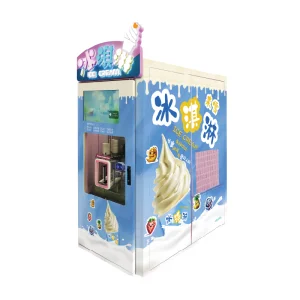
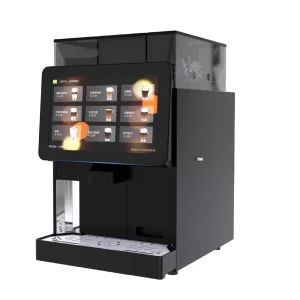
Future OEM platforms will merge cotton candy spinning, soft-serve ice cream dispensing, and cold beverage preparation within unified modular chassis architectures, maximizing venue revenue per square meter of floor footprint.
Transitioning equipment designs toward 100% compostable wooden/paper sticks, zero-plastic packaging materials, and energy-saving low-power sleep states that reduce idle power draw by up to 65% during non-peak hours.
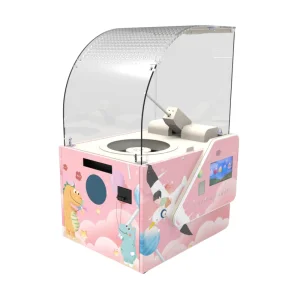
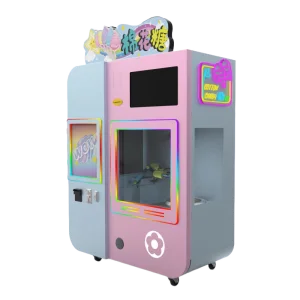
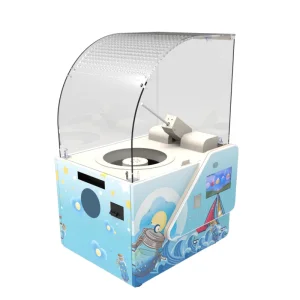
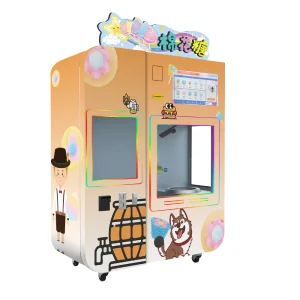
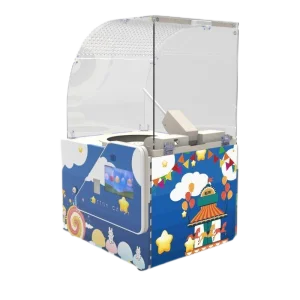
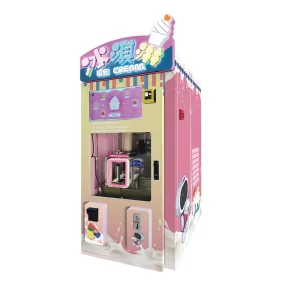
Explore our complete range of certified automated cotton candy, ice cream, and beverage vending models.
In-depth responses curated by our engineering specialists and global OEM trade services team.
