Featured unmanned automated vending solutions engineered with commercial-grade robotics, multi-flavor dispense nodes, and remote cloud management infrastructure.

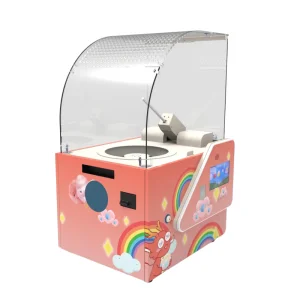
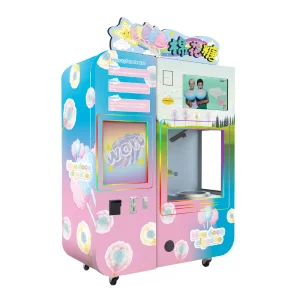

How ODM original design manufacturing is redefining operational margins, spatial economics, and consumer engagement in global automated food dispensing.
The global intelligent automated retail and vending sector is experiencing a structural metamorphosis. Driven by escalating urban labor costs, shifts toward touchless micro-transactions, and rapid advancements in robotic automation, traditional "static box" vending units are yielding to interactive, robotic Original Design Manufacturer (ODM) platforms. Global commercial operators no longer view vending units merely as passive dispensing cabinets; they are deployed as high-yield, 24/7 autonomous micro-factories capable of real-time culinary processing, robotic showmanship, and continuous cloud telemetry.
This whitepaper provides an exhaustive technical and strategic analysis of the global OEM/ODM vending manufacturing landscape. Anchored in field data, industrial engineering frameworks, and global regulatory realities, it examines how Tier-1 ODM manufacturers—principally concentrated within China's specialized hardware fabrication clusters—are solving complex multi-variable challenges. These range from precise thermal-dispensing stability in extreme ambient conditions to complex multi-currency payment interoperability and automated food safety compliance under international standards.
Analyzing the structural advantages of Guangzhou and Pearl River Delta manufacturing hubs in delivering cost efficiency, rapid prototyping, and industrial scalability.
Situated at the epicenter of world precision manufacturing (Guangzhou/Shenzhen), ODM production lines integrate sheet metal laser cutting, robotic welding, high-precision stepper motor assembly, and PCB SMT surface mounting within a 50-kilometer supply radius. This density reduces prototype-to-mass-production cycles by over 65% compared to Western counterparts.
Industrial reliability in unmanned deployment hinges on rigorous stress testing. Leading ODM factories employ an 11-stage quality protocol including incoming raw material spectral testing, sub-assembly load verification, 24-hour uninterrupted continuous burn-in testing, and simulated vibration transport testing to guarantee out-of-the-box operation globally.
By leveraging massive raw material procurement scale and vertically integrated tooling shops, China-based suppliers offer custom ODM machines at a capital expenditure point that allows operators to achieve full capital payback within 3 to 6 months of active deployment in premium retail space.
The architectural evolution from simple mechanical drop-cabinets to AI-driven multi-axis robotic kiosks with real-time telematics.
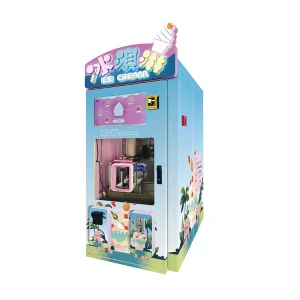
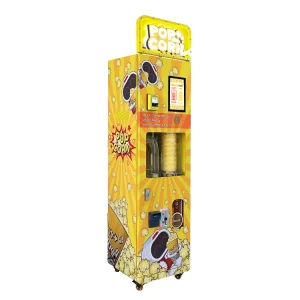
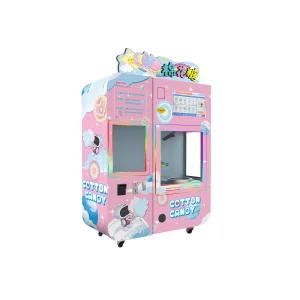
Modern vending engineering sits at the convergence of three technological vectors: precision mechatronics, cloud IoT management, and predictive AI analytics. In high-margin fresh-dispensing formats such as soft-serve ice cream robots, automated popcorn stations, and intricate multi-pattern cotton candy makers (e.g., model SC-320A), mechanical consistency directly dictates product profit margins.
Deploying automated retail infrastructure demands granular adaptation to regional demographics, foot-traffic psychology, and environmental conditions.
Primary Venues: Tier-1 Malls, Premium Outlets, Family Entertainment Centers (FECs), Theme Parks.
Operational Requirements: High emphasis on strict payment compliance (PCI-DSS, EMV Chip, Apple Pay/Google Pay via NAYAX or CPI telemetry). Equipment must possess ETL, CE, and NAMA certifications. High-volume output and automated self-cleaning features are mandatory due to extreme field labor costs ($20+/hr).
Primary Venues: Air-conditioned Transit Hubs, Mega Shopping Malls, Resort Complexes, Tourist Promenades.
Operational Requirements: Advanced dehumidification modules are required in Southeast Asia to handle 85%+ ambient humidity for sugar-based equipment. In the Middle East, dual high-capacity refrigeration units are crucial to maintain soft-serve ice cream liquid mix temperatures below 4°C despite 45°C exterior heat.
Primary Venues: KTV Establishments, Arcade Centers, Pedestrian Shopping Districts, University Campuses.
Operational Requirements: Compact machine footprint design due to high commercial rent per square meter. Integration of local QR-code payment rails (PayPay, KakaoPay, Line Pay) alongside strict local radio-frequency and electrical safety clearances (PSE, KC mark).
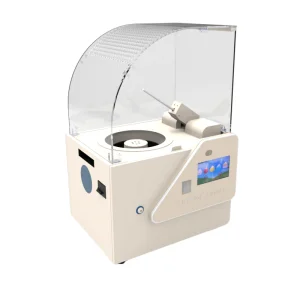
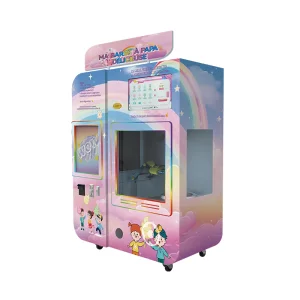
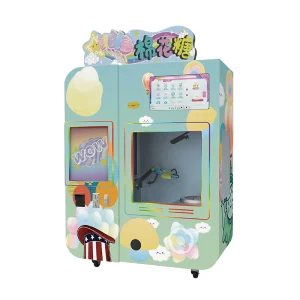
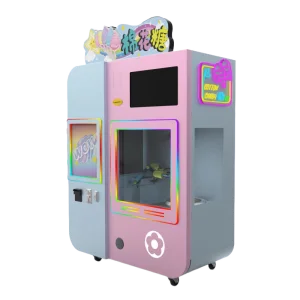
Complete customizable equipment offerings ranging from semi-automatic tabletop units to high-volume commercial production machinery.
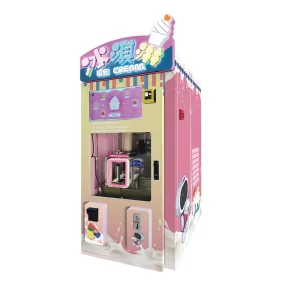
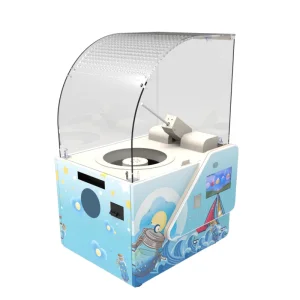

Navigating international food safety certification, electrical standards, and local payment integration protocols.
Cross-border deployment of automated food vending hardware presents intricate regulatory hurdles. Professional ODM manufacturers mitigate client market entry risk by embedding structural compliance into the engineering phase:
Full compliance with CE (LVD/EMC), ETL / UL 751 for North American electrical safety, PSE (Japan), and KC (South Korea). Machines are built with dual-voltage transformers (110V-240V, 50/60Hz) and commercial surge suppression components.
All wet contact paths utilize 304/316 medical-grade stainless steel or NSF-certified food-grade polymers. Internal CIP (Clean-In-Place) modules utilize UV-C sterilization channels and automated high-temperature rinse cycles to meet stringent health department rules.
Integrated NAMA MDB 4.3 interface protocols support seamless plug-and-play connection with global payment hardware including Nayax, Crane Payment Innovations (CPI), USA Technologies, as well as localized bill/coin acceptors and contactless QR scanners.
Quantifying financial economics: Robotic ODM Vending Kiosks versus Traditional Attended Retail Countertops.
| Financial & Operational Metric | Attended Retail Storefront / Stand | Traditional Static Vending Machine | Next-Gen ODM Robotic Vending Kiosk |
|---|---|---|---|
| Initial Capital Expenditure (CapEx) | High ($45,000 - $90,000 including buildout) | Low ($3,000 - $6,000) | Moderate ($8,000 - $18,000 direct ODM) |
| Monthly Labor Cost | $3,500 - $7,000 / shift | $0 (Restock labor only) | $0 (Restock & sanitation: ~2 hrs/week) |
| Daily Operating Hours | 8 - 12 Hours / Day | 24 Hours / Day | 24 Hours / Day (Unattended) |
| Average Product Profit Margin | 45% - 65% (Deducting labor & waste) | 30% - 50% (Pre-packaged goods) | 75% - 90% (Fresh raw sugar/milk conversion) |
| Customer Dwell Attraction | Standard human interaction | Low (Passive glass cabinet) | Extreme (Robotic visual entertainment show) |
| Breakeven Timeline | 14 - 24 Months | 12 - 18 Months | 3 - 6 Months |
In-depth answers addressing engineering, global logistics, OEM customization, and field operational queries.
