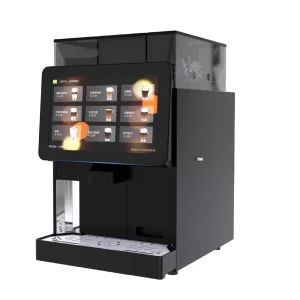
Explore our core Original Design Manufacturing (ODM) platforms engineered for high throughput, remote cloud management, and continuous autonomous operation.
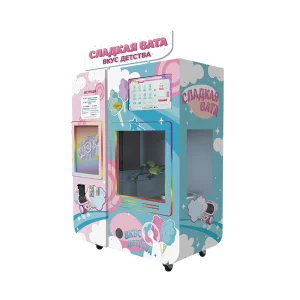
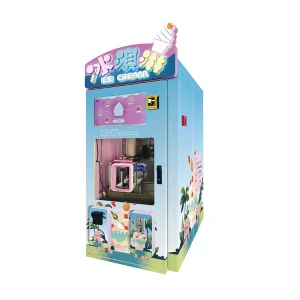
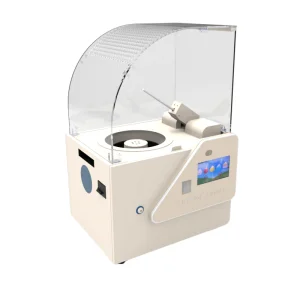
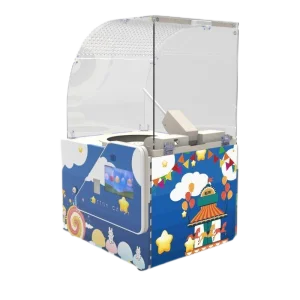
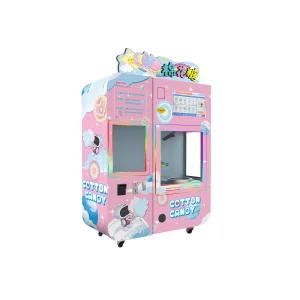
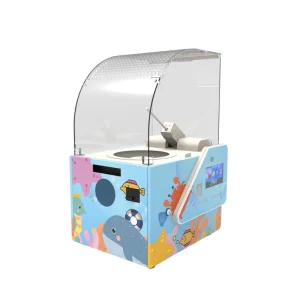
Analyzing the macro shift from basic mechanical snack dispensers to high-margin, interactive automated food robotics in global enterprise procurement.
The global vending machine market is experiencing a profound paradigm shift. Traditional passive vending models—historically reliant on pre-packaged, static inventory items—are rapidly being supplanted by dynamic, automated food-preparation robotics and cloud-connected interactive micro-retail terminals. According to industry macro metrics, the unattended automated food service sector is expanding at a CAGR exceeding 14.2%, driven by rising labor costs, real-estate optimization demands, and shifting consumer expectations toward real-time, customizable, and hygienic culinary experiences.
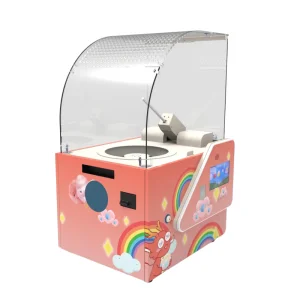
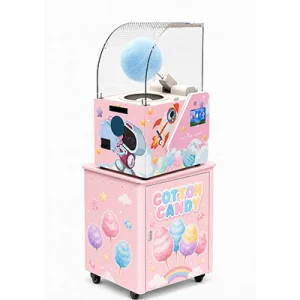
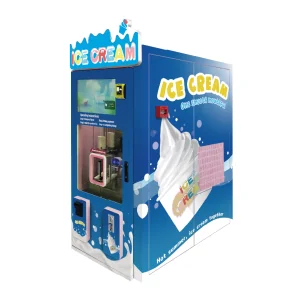
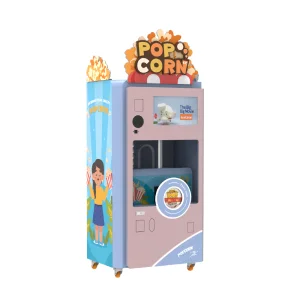
Original Design Manufacturing (ODM) and Original Equipment Manufacturing (OEM) partnerships have become the cornerstone for global brands, chain operators, and commercial venue syndicates seeking to capture this margin-rich opportunity. Modern enterprises no longer view vending equipment as simple metal enclosures; they treat them as specialized edge-computing nodes capable of delivering visual entertainment, precise food preparation (such as automated flower-shaped cotton candy, robotic soft-serve ice cream, freshly ground bean-to-cup coffee, and hot-air popped corn), and seamless telemetry connectivity.
To successfully execute an ODM project, procurement directors and corporate strategists must establish robust business requirement specifications (BRS) that encompass structural engineering integrity, electrical compliance, IoT architecture, payment gateway interoperability, and strict food-grade hygienic controls. This whitepaper systematically breaks down these critical technical and business requirements for enterprise buyers working with tier-one manufacturing factories.
Defining the baseline structural, electromechanical, software, and sanitary specifications demanded by modern commercial operators.
ODM specifications require heavy-duty cold-rolled steel enclosures with electrostatic anti-corrosion powder coating, reinforced anti-vandalism tempered glass panels, and NEMA/IP rated weather-sealing for indoor/outdoor multi-environment deployment.
Seamless hardware integration of standard MDB (Multi-Drop Bus) and DEX interfaces supporting global cashless payment readers (NAYAX, CPI, Ingenico), EMV contact/contactless cards, QR code mobile wallets (Alipay, WeChat Pay, Apple Pay), and local bill/coin validators.
Real-time machine telemetry allowing remote inventory tracking, temperature curve logging, fault diagnostic alerts (SMS/Email/Webhook), over-the-air (OTA) firmware updates, and dynamic price schedule deployment via secure RESTful APIs.
Implementation of food-grade 304/316 stainless steel contact zones, automatic high-temperature pasteurization, UV-C chamber sterilizers, automated Clean-In-Place (CIP) hot-water wash cycles, and humidity-controlled ingredient storage chambers.
| Specification Dimension | Enterprise Baseline Standard | ODM Customization Scope |
|---|---|---|
| Display & User Interface | 21.5" - 32" Full-HD Industrial Touchscreen (1000+ nits) | Custom Android/Linux GUI, multi-lingual voice prompts, localized UI/UX themes. |
| Robotic Dispensing Precision | Multi-axis stepper motor drive, ±0.5g ingredient metering accuracy | Customized production geometric shapes, specialized end-effectors, multi-flavor syrup dosing. |
| Refrigeration & Thermal Control | Commercial R290/R404A compressors, dual evaporator systems | Precision digital PID thermal loops, ambient heat dissipation channels, smart defrost cycles. |
| Regulatory Certifications | CE, RoHS, CB, FCC, NAMA, ISO9001 factory baseline | Country-specific compliance (ETL/UL 751, PSE, KC, SASO, Hygiene sanitary approvals). |
| Power Management | Dual-voltage support (AC 110V/220V ±10%, 50/60Hz) | Low-standby eco modes, UPS battery backup integration for transaction memory retention. |
How tailored ODM food robotics solve labor challenges and maximize footfall revenue across high-density global commercial sectors.
In high-volume leisure environments like amusement parks and family entertainment centers, the visual manufacturing process acts as an impulse magnet. Interactive cotton candy robots creating intricate multi-color floral patterns generate passive footfall capture, operating continuously without fatigue or cashier bottlenecking.
Compact footprint equipment delivers ultra-high revenue-per-square-foot. Unattended robotic soft-serve ice cream and specialty coffee kiosks convert dead mall space under escalators or near movie theater entrances into profit centers with 24/7 autonomous uptime.
Modern transit stations and corporate campuses demand rapid, hygienic snack and beverage execution. Bean-to-cup coffee machines and sugar-free/oil-free popcorn vending robots meet fast-paced commuter needs with contact-light cashless transactions and consistent product quality.
Inside the tier-one factory: Engineering evolution, automated quality control, and the next decade of autonomous retail innovation.
Building reliable unattended equipment requires rigorous industrial control protocols. Leading Chinese source factories operate under an 11-Step Quality Assurance Framework to eliminate field failure rates before international dispatch:
Spectro-analysis of sheet metal thickness, hardness testing on drive gears, and electrical load screening of switching power supplies.
Independent bench testing of robotic arm motion trajectories, boiler pressure stability, refrigeration compressor thermal pull-down times, and touchscreen response latency.
Fully assembled units undergo non-stop automated cycle testing (dispensing 200+ simulated orders) in elevated thermal and humidity chambers to validate system endurance.
Simulated multi-axis freight vibration testing followed by vacuum-sealed moisture protection and reinforced export wooden crate enclosure.
The Future Roadmap (2025–2030): Next-generation ODM equipment is rapidly integrating AI-driven computer vision for real-time quality verification (e.g., verifying cotton candy shape integrity via internal camera sensors), adaptive environmental humidity regulation for sugar spinning, and predictive maintenance algorithms that warn operators of part wear weeks before failure occurs.
Ensuring seamless market entry through complete international certification, localized hardware adaptations, and responsive after-sales service levels.
Cross-border procurement requires strict alignment with localized safety and electrical regulations. Tier-one ODM manufacturers provide full documentation packages to ensure fast customs clearance and regulatory approval:
Additional ODM solutions designed for specialized retail formats, event rentals, and industrial concession production lines.
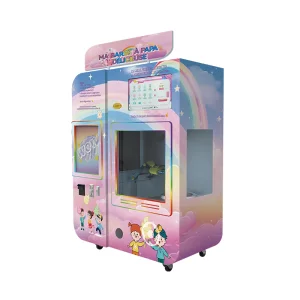

In-depth answers addressing key business requirements, ODM engineering timelines, software telemetry, compliance, and ROI modeling.
Standard ODM projects follow a structured 4-phase milestone schedule: 1) CAD/3D Industrial Design and Component Architecture (10–14 days), 2) Functional Prototype Fabrication & Engineering Debugging (20–25 days), 3) Regulatory Certification Testing and Software Telemetry Integration (15 days), and 4) Pilot Batch Production (10 days). Overall timeline from initial Business Requirement Document (BRD) sign-off to first container shipment averages 60 to 75 calendar days.
Our machines utilize an open RESTful JSON API layer over TLS 1.3 encryption. Real-time telemetry events—including sales transactions, ingredient consumption rates, temperature logs, and hardware fault codes—are pushed directly to client cloud endpoints (SAP, Salesforce, or proprietary ERP platforms). Additionally, push webhooks allow automated dispatch routing for restocking teams when ingredient levels fall below 15% thresholds.
North American configurations require 110V/60Hz single-phase power supply, NEMA 5-15 or 5-20 plug profiles, ETL safety listing conforming to UL 751, and NSF/NAMA sanitation approval for direct food-contact surfaces. European configurations utilize 230V/50Hz power, CE marking (LVD/EMC/Machinery Directives), RoHS compliance, and food-grade Regulation (EC) No 1935/2004 material attestations.
Hardware controllers incorporate MDB 4.3 standards allowing plug-and-play installation of PCI-DSS compliant credit card terminals (NAYAX VPOS Touch, CPI ePay, Ingenico Self/3000). For Asian and Latin American markets, embedded 2D optical scanners support instant QR payment protocols via direct API handshake with local payment service providers.
Robotic food equipment features automated daily self-cleaning cycles (such as steam flush and UV disinfection inside preparation chambers). Physical maintenance is streamlined: ingredient replenishment is performed every 2 to 4 days depending on footfall, while mechanical drive lubrication and filter replacements are scheduled on 6-month preventive maintenance cycles.
Due to extremely low raw material costs (e.g., sugar, syrup, popping corn) yielding gross margins between 80% and 92%, average hardware payback period across high-footfall venues (shopping malls, theme parks, transit stations) ranges between 3 to 6 months per unit. Unattended operation completely eliminates continuous floor staff wage overhead.
Transform your automated retail strategy with enterprise-grade engineering, robust software telemetry, and guaranteed global regulatory compliance. Contact our engineering team today to review your Business Requirement Document (BRD) and request custom ODM manufacturing quotes.