Explore certified robotic cotton candy, soft-serve ice cream, and popcorn vending platforms engineered for 24/7 unattended high-margin revenue generation.


Analyzing the macro-shift toward unattended micro-concessions, automated retail robotics, and high-density location monetization.
The traditional brick-and-mortar concessions industry is undergoing an unprecedented structural evolution. Rising labor costs, spatial real estate inflation, and shifting consumer expectations for instant, touchless fulfillment have driven commercial real estate operators to rethink floor space productivity. Placing a vending machine is no longer merely an auxiliary amenity; it has emerged as a primary, high-yield asset class for micro-retail monetization. Original Design Manufacturers (ODM) and source factories now engineer multi-axis robotic platforms capable of dispensing freshly prepared soft-serve ice cream, multi-pattern cotton candy, and freshly popped gourmet corn in seconds, eliminating counter staff while capturing 24/7 foot-traffic impulse sales.
When evaluated through a Capital Expenditure (CAPEX) versus Operational Expenditure (OPEX) lens, automated vending robotics offer unmatched return metrics. Standard traditional snack vending units deliver incremental margins on pre-packaged goods (30–40% gross profit). In stark contrast, specialized culinary vending hardware—such as ODM robotic cotton candy makers and soft-serve ice cream vending terminals—convert raw commodities (granulated sugar, liquid dairy mix, popcorn kernels) into high-value experiential treats, yielding gross profit margins between 75% and 85%. By deploying equipment engineered by direct tier-1 source factories, route operators achieve rapid payback windows (typically 3 to 6 months in prime high-footfall corridors).
Industry Data Insight: Strategic deployment of interactive robotic vending equipment increases dwell time in commercial entertainment zones by an average of 4.2 minutes while generating up to $3,200 per square meter of annualized spatial revenue.
Inside the technical hardware specifications, component telemetry, and quality control benchmarks of commercial vending factory production.
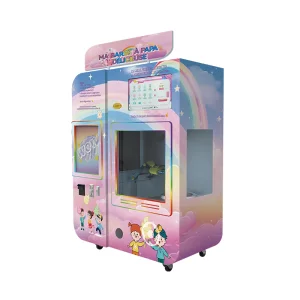
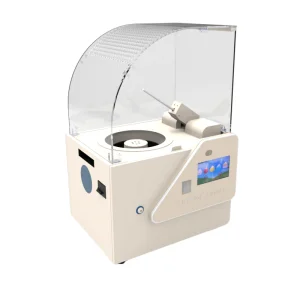
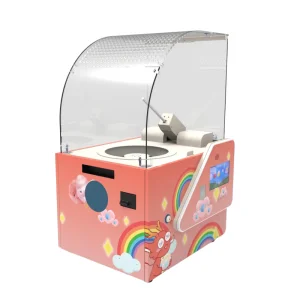
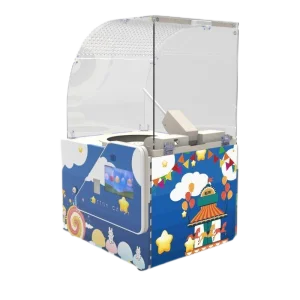
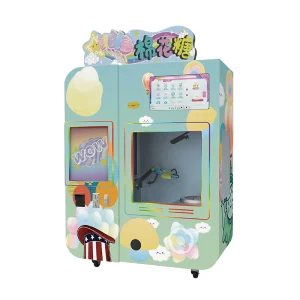
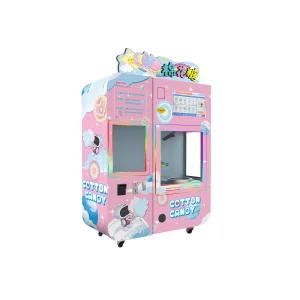
Modern ODM vending manufacturing integrates industrial multi-axis Cartesian and articulated robotic arms driven by high-torque stepper motors and closed-loop optical encoders. In fully automatic cotton candy machinery (such as the SC-320 series), robotic positioning accuracy down to 0.1mm is required to wrap intricate 3D sugar flower patterns dynamically in real time, transforming passive vending into an engaging live performance visual display.
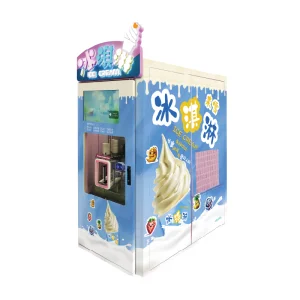
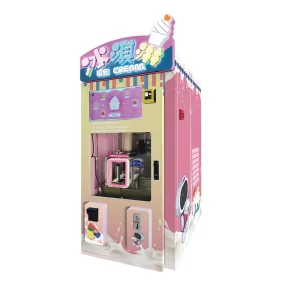
For frozen treat vending platforms (like the SI-321 Ice Cream Robot), factory engineering centers on food-grade 304/316 stainless steel food contact chambers, hermetically sealed dual-compressor refrigeration units, and automated high-temperature pasteurization circuits. PID micro-controllers regulate barrel temperatures within ±0.5°C tolerances to maintain optimal overrun texture while ensuring compliance with stringent global health authority standards (NSF, CE, ETL).
Placing a vending machine effectively requires robust onboard computing. Factory-installed industrial motherboard controllers support Multi-Drop Bus (MDB) 4.2 protocol, enabling seamless integration of global telemetry systems (Nayax, CPI, Ingenico, custom credit card readers, QR code wallets, and coin/bill acceptors). Machine data is continuously pushed to cloud telemetry dashboards via 4G/5G cellular modules for real-time inventory tracking.
| Vending Hardware Subsystem | ODM Factory Engineering Standard | Operational Function & Benefit | Compliance / Certification |
|---|---|---|---|
| Robotic Manipulation | Closed-loop Servo Arm / Stepper Actuators | Precision sugar wrapping & cone delivery without manual touch | CE Machine Directive, RoHS |
| Refrigeration Circuit | Embraco/Secop Compressors (R290/R404a) | 30-second rapid soft-serve dispenses with consistent viscosity | ETL Sanitation, CB, PSE |
| Automatic Cleaning | In-situ Hot Water CIP (Clean-In-Place) System | Automated nocturnal sanitation cycle reduces field labor cost | FDA Food Contact Grade, NAMA |
| Payment Gateway | MDB 4.2 / Pulse / Executive Interface Protocol | Accepts Cashless Cards, Apple Pay, Google Pay, QR Local Apps | PCI-DSS Compliant Hardware |
| Cloud Telemetry | ARM Cortex-A53 Industrial Android Control Board | Real-time sales analytics, remote fault alerts & dynamic UI ads | FCC, CE-EMC |
Granular spatial analysis for placing vending machines across high-performing commercial, leisure, and institutional real estate nodes.
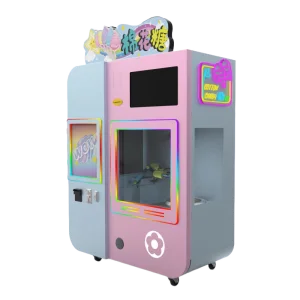
In high-sensory environment settings like amusement parks, indoor arcades, and trampoline zones, visual attraction drives sales. Fully automated cotton candy machines (like SC-320A) serve as ambient visual anchors. The illuminated glass chamber and active robotic spinning motion convert passing foot traffic into impulse transactions, outperforming static beverage vending machines by up to 300% in gross daily sales volume.
Mall corridors and dead-space alcoves represent prime opportunities for machine placement. Occupying less than 1.5 square meters, a compact four-color cotton candy or ice cream machine turns underutilized floor space into a revenue engine for property managers. Remote IoT monitoring allows operators managing multi-mall routes to optimize ingredient restocking trips based on live sales volume.
High-volume transportation terminals demand rapid transaction speeds and zero equipment downtime. Fast 30-second serve cycles engineered into ODM prime ice cream units ensure rapid throughput during peak transit hours. Rugged sheet-metal chassis construction and anti-vandalism tempered glass protect the asset in 24/7 unmonitored public spaces.
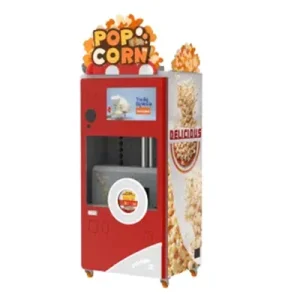
Cinemas require high-volume concession support prior to film showtimes. Automated popcorn vending machines (such as the P30 six-flavor frying model) relieve long main concession queues. Cinema patrons enjoy fresh, hot popcorn on demand via cashless payment, capturing incremental revenue during tight 15-minute pre-show windows.
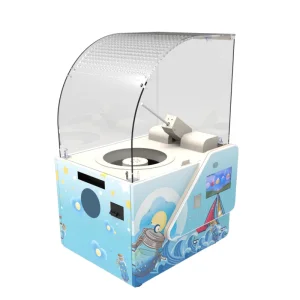
For hospitality operators, semi-automatic commercial cotton candy makers and mini portable units offer flexible event catering and dessert menu expansion without demanding kitchen footprint expansion or dedicated culinary staff. Event rental companies utilize compact ODM equipment to provide memorable interactive experiences at private celebrations and corporate functions.
Universities and youth sports complexes benefit from health-conscious, transparent concessions. The P10 sugar-free, oil-free popcorn vending machine caters directly to wellness-focused venues, giving operators a compliant, non-junk-food option that satisfies institutional vendor requirements.
Key technological advancements reshaping the future of factory OEM/ODM engineering and autonomous retail operations.
Next-generation ODM vending machines are integrating edge AI vision sensors capable of analyzing anonymous foot-traffic demography, dwell patterns, and visual engagement rates. This data enables dynamic menu optimization—adjusting touchscreen promotional displays, cotton candy color recommendations, or pricing tiers based on peak time traffic dynamics and real-time venue environmental conditions.
Future factory software architectures are evolving from reactive error alerting to predictive maintenance telemetry. Onboard sensors track motor torque draw, heating element resistance curve drift, and refrigeration pressure profiles. Machine-learning cloud systems predict sub-assembly wear before failure occurs, dispatching technician maintenance tickets automatically to preserve uptime across large vending fleets.
Environmental regulations across Europe, North America, and East Asia demand eco-friendly refrigerants and energy-efficient operation. Leading ODM suppliers are adopting natural hydrocarbon refrigerants (R290) paired with variable-frequency inverter compressors, reducing machine power consumption by up to 35% and allowing seamless integration with solar-assisted battery power systems in off-grid outdoor parks.
Standardized modular chassis designs allow operators to swap internal concession payload modules (e.g., converting a frozen yogurt dispenser into a robotic soft-serve unit) without replacing the underlying structural frame, payment terminal, or telematics hub. Open API architectures ensure seamless data streaming directly into enterprise ERP software environments.
How source manufacturers partner with global brand operators, distributors, and enterprise operators from initial specification to mass deployment.
Clients define target market voltage requirements (110V/60Hz or 220V/50Hz), payment terminal cutouts, brand color schemes, vinyl wrap graphics, and UI localized language bundles. ODM engineering teams generate structural 3D CAD models and circuit schematics tailored to regional regulatory environments.
Before mass production, prototype machines undergo an 11-step factory test regimen—including 24-hour continuous stress testing, thermal chamber burn-in, simulated road transportation vibration analysis, and 200 consecutive automated dispense cycles to verify zero-fault operation.
Finished units are protected inside reinforced export wooden crates designed to withstand maritime and air transport. Direct factory support provides remote video diagnostics, spare parts fulfillment, firmware OTA updates, and operational staff training for long-term fleet uptime reliability.
From micro retail cosmetic units to fully automated industrial canned production lines, explore our versatile factory lineup.


Comprehensive engineering and procurement answers for operators, distributors, and location partners evaluating vending equipment.
