The global automated retail and industrial vending machine sector is undergoing a paradigm shift. Historically limited to rudimentary coil-dispensing systems for snacks and beverages, modern industrial vending has evolved into a sophisticated convergence of robotic kinematics, IoT telemetry, artificial intelligence at the edge, and industrial-grade mechanical precision. Enterprise organizations, global distributors, and OEM brands are aggressively re-evaluating their automated distribution networks to combat mounting global labor costs, supply chain friction, and increasing consumer demands for frictionless 24/7 service.
Market intelligence indicates that the global automated vending infrastructure market is expanding at a Compound Annual Growth Rate (CAGR) exceeding 12.4%, driven primarily by technical advancements in Original Design Manufacturing (ODM) ecosystems. China's Pearl River Delta, spearheaded by manufacturing powerhouses in Guangzhou, has emerged as the global epicenter for industrial-grade vending engineering. Leading ODM industrial vending factories have transitioned from mere contract assemblers into integrated R&D innovation hubs capable of delivering turnkey hardware-software hardware architectures.
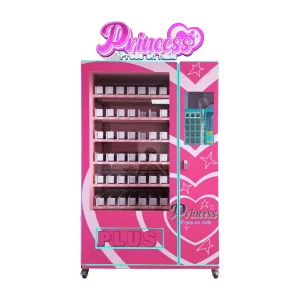
Integration of multi-axis robotic arms, precision stepper motors, and closed-loop position encoders allowing complex preparation of customized confectionery, freshly ground coffee, and delicate cosmetics without human intervention.
Real-time remote monitoring systems communicating via MDB and DEX protocols, transmitting real-time stock levels, predictive component failure diagnostics, and sales telemetry across decentralized global fleets.
Compliance with rigorous international electro-mechanical and food safety mandates including CE, ETL, NAMA, PSE, RoHS, and CB standards, backed by 11-step factory burn-in testing protocols.
Distinguishing modern industrial vending factories from legacy assembly workshops requires empirical validation. Advanced ODM platforms maintain rigorous internal operational metrics to guarantee batch reliability and enterprise scalability.
Securing a market-leading position in automated retail demands complete control over the engineering supply chain. A qualified ODM (Original Design Manufacturer) industrial vending company does not merely assemble off-the-shelf components; it maintains comprehensive, vertically integrated internal R&D capabilities covering structural engineering, firmware compilation, electrical distribution, and thermal management systems.
| Manufacturing Stage | Technical Engineering Focus | Industrial Quality Control Metric |
|---|---|---|
| 1. Heavy Sheet Metal Fabrication | Precision CNC fiber laser cutting, automated hydraulic press bending, robotic seam welding for cold-rolled steel chassis. | Dimensional tolerance within ±0.1mm; structural anti-vibration integrity tests. |
| 2. Subsystem Machining & Actuation | Machining of high-precision aluminum extrusions, food-grade 304 stainless steel dispensing funnels, and optical encoder mounts. | 100% surface roughness verification & material grade spectrographic testing. |
| 3. Embedded Electronics Assembly | Integration of industrial mainboards, ARM Cortex microcontrollers, MDB standard bill/coin/contactless payment buses. | Electrostatic Discharge (ESD) protection testing & signal bus insulation checks. |
| 4. Thermal Management Calibration | Implementation of sealed compressor cooling loops (R290/R404A) or high-efficiency heating elements with PID control. | Thermal chamber test validating operational range from -20°C to +45°C ambient. |
| 5. 24-Hour Continuous Burn-In | Automated stress testing subjecting mechanical linkages, robotic axes, and UI touchscreens to non-stop execution. | Zero-failure operational threshold across 200 consecutive automated dispense cycles. |
By controlling every stage from raw sheet metal processing to firmware optimization, leading ODM factories eliminate batch-to-batch discrepancies. This vertical integration allows enterprise client customization—such as custom cabinet dimensions, multi-language Android/Linux capacitive touch interfaces, bespoke payment gateway APIs, and branded external vinyl wrap configurations—without sacrificing long-term hardware reliability.
Automated vending technology is no longer confined to traditional office breakrooms. Modern ODM solutions target high-footfall, high-yield vertical deployment environments where experiential engagement or emergency utility is paramount.
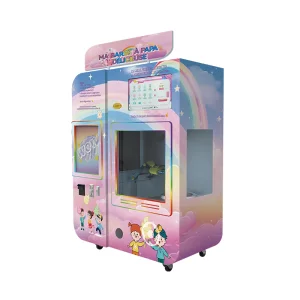
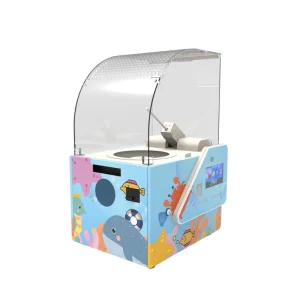
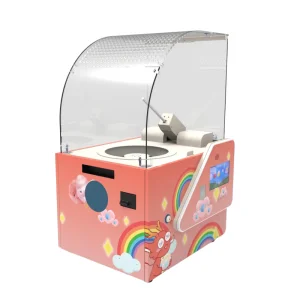
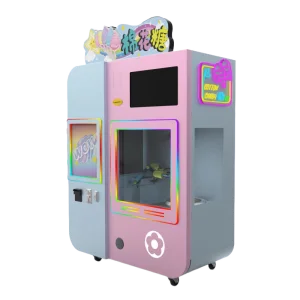
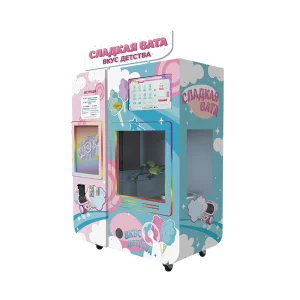
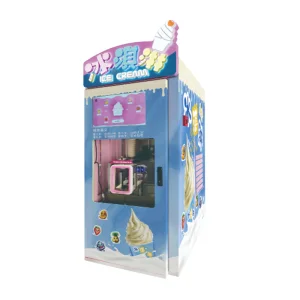
High-margin visual confectionery systems (such as fully automated flower-pattern cotton candy robots and soft-serve ice cream robots) act as self-funding entertainment attractions. Integrated transparent glass displays and RGB LED lighting sequences convert waiting queues into high-conversion impulse purchases.
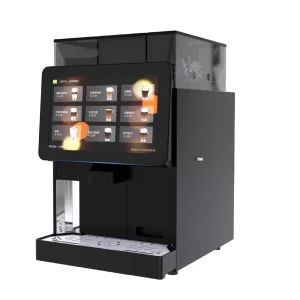
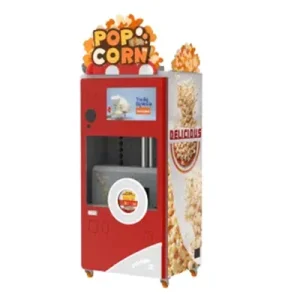
Airports, central train stations, and metro corridors require ruggedized hardware. High-capacity countertop coffee kiosks and freshly popped popcorn units (P10/P30 platforms) provide rapid transactional throughput (under 45 seconds per dispense) with cashless payment terminals (Nayax, Ingenico, QR wallets).
Enterprise manufacturing plants deploy specialized ODM industrial locker and spiral vending units to track consumable tool usage, safety gear (gloves, respirators), and high-value equipment. Employee RFID badge integration links directly to corporate ERP systems to reduce material waste by over 25%.
The future trajectory of ODM industrial vending focuses on absolute autonomy, predictive maintenance algorithms, and hyper-personalized user interaction. Enterprise buyers partnering with leading ODM factories benefit from continuous engineering upgrades across four critical technological pillars:
Edge AI cameras replace traditional optical drop sensors. Neural networks inspect food dispense shapes (such as checking cotton candy flower symmetry or ice cream swirl height) in real-time, automatically triggering corrective axis adjustments if dispensing deviates from standard metrics.
Automated thermal self-cleaning loops for dairy and beverage machines. Pasteurization cycles operate overnight at 75°C to sanitize pumps, mixing chambers, and tubes automatically—extending manual maintenance intervals from daily to bi-weekly while ensuring strict compliance with local health department mandates.
Future-proof payment architecture supporting concurrent credit card processing (EMV L1/L2), Apple Pay/Google Wallet NFC, biometrics, and local QR wallet protocols (Alipay, WeChat Pay, PayTM) with integrated end-to-end telemetry encryption adhering to PCI-DSS Level 1 compliance.
Exporting industrial vending equipment globally requires meticulous compliance with disparate electrical, safety, and sanitary standards. A reliable ODM manufacturer must engineer equipment platforms ready for fast-track regional certification.
| Target Region | Primary Voltage & Frequency | Mandatory Compliance Certifications | Key Localization Requirements |
|---|---|---|---|
| North America (USA, Canada) | 110V - 120V / 60Hz | ETL / cETL, NAMA, FCC, UL 751 compliant design | ADA (Americans with Disabilities Act) touch height, Nayax/USA Technologies payment integration. |
| European Union (EU) | 220V - 240V / 50Hz | CE, RoHS, CB, WEEE Directive | Multi-language UI switching (EN, DE, FR, ES, IT), GDPR-compliant telemetry data isolation. |
| Japan & South Korea | 100V - 220V / 50-60Hz | PSE (Japan), KC Certification (Korea) | Ultra-compact cabinet footprints for dense urban corridors; specialized coin mechanism calibration. |
| Middle East & GCC | 220V - 240V / 50Hz | GCC Conformity Marking (G-Mark), CB Scheme | Tropicalized high-ambient cooling compressors (rated up to 50°C ambient operating temperature). |
For fleet operators, commercial concessionaires, and vending distributors, procurement decisions rest strictly upon unit economic profitability and Total Cost of Ownership (TCO). Partnering directly with an ODM factory rather than intermediate trading distributors yields immediate capital expenditure (CapEx) savings while optimizing operational expenditure (OpEx) through standardized component replacement.
Eliminating multi-tier agent markups reduces initial machine unit acquisition cost by 30% to 45%. OEM customization fees are amortized across volume orders, ensuring lower break-even hurdles per machine unit.
Precision dosing mechanics prevent ingredient waste. Automated cotton candy sugar dispensing calibrated down to 0.5-gram accuracy reduces raw material cost to under $0.15 per unit sold, supporting retail margins exceeding 85%.
Integrated cloud telemetry alerts operators to low ingredient thresholds or motor strain before operational outages occur, maximizing machine uptime to 99.4% across commercial deployment locations.
In-depth technical and commercial answers compiled by our engineering and export trade team to guide enterprise procurement executives.