Explore top-performing robotic kiosks and commercial vending units optimized for high yield, autonomous operation, and seamless global payment integration.


In the evolving landscape of global automated retail, calculating Return on Investment (ROI) on vending machines has shifted from basic payback periods to a multi-variable financial algorithm. Modern operators must account for Capital Expenditure (CapEx), Operational Expenditure (OpEx), hardware degradation curves, footfall telemetry, and dynamic pricing flexibility.
Evaluating high-yield vending equipment requires moving beyond the initial landed purchase price. True ROI stems from minimizing long-term machine downtime and reducing field service dispatch costs.
Our quantitative growth framework models net monthly profit ($P_{net}$) across variable footfall traffic environments:
Where Ndaily represents daily transaction volume, Vprice is retail price, Cunit is ingredient cost, and Rrent is venue overhead. High-margin items like cotton candy and robotic soft-serve dramatically accelerate payback due to Cunit keeping total cost under 12% of retail price.
The global vending industry is undergoing a structural metamorphosis driven by consumer demand for experiential purchasing, zero-touch hygiene, and hyper-personalized product customization.
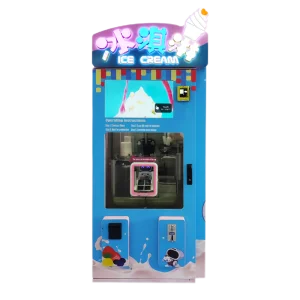
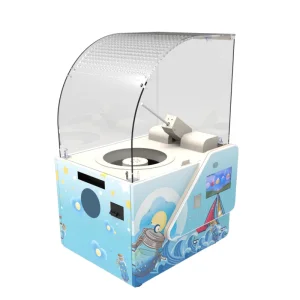
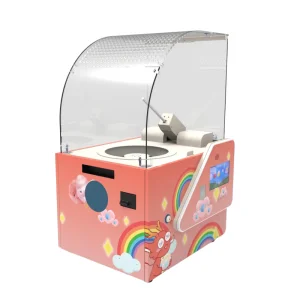
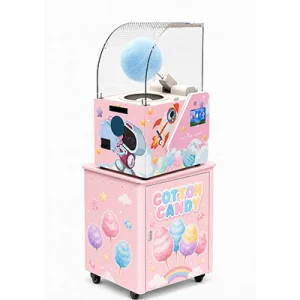
Traditional static vending machines dispensing canned beverages face stagnant price ceilings. In contrast, robotic visual preparation kiosks (such as 3D automated cotton candy spinners and robotic ice cream arm dispensers) transform commodity sweets into live entertainment. This visual theater allows operators to command premium retail pricing ($5.00 – $9.00 per unit), dramatically elevating gross profit per transaction.
Unattended fleet operations rely on real-time data transparency. Modern smart vending platforms integrate IoT telemetry boards communicating with central cloud databases via LTE/5G. Operators monitor real-time ingredient levels, internal temperature logs, voltage stability, and error codes from a mobile dashboard, optimizing route management and reducing phantom site visits by up to 40%.
Cashless penetration has reached critical mass globally. Advanced equipment suppliers offer modular payment integration ready for EMV credit card readers (Nayax, Payter, Cantaloupe), mobile wallets (Apple Pay, Google Pay), and region-specific QR payment ecosystems (Alipay, WeChat Pay, KakaoPay, Paytm). Frictionless checkout directly translates to higher conversion rates among younger demographics.
When evaluating equipment suppliers, enterprise operators must scrutinize the supplier’s API openness and firmware stability. A machine that hardware-locks your payment gateway or lacks remote OTA (Over-The-Air) firmware updating capabilities creates long-term technical debt and increases operational maintenance costs.
Deploying vending machine fleets globally requires strict alignment with localized electrical standards, health authority regulations, and supply chain logistics.
Enterprise procurement teams cannot compromise on regional regulatory certifications. Equipment entering North America requires ETL / cETL and NAMA sanitization certification. European deployments mandate CE, RoHS, and CB compliance for electrical safety and electromagnetic compatibility. East Asian markets like Japan and South Korea mandate PSE and KC marks respectively.
Global franchise chains and automated retail operators require white-label solutions that seamlessly reflect their corporate branding. Factory-direct suppliers must provide modular structural flexibility:
Centering manufacturing in specialized industrial hubs like Guangzhou, Guangdong gives global vending suppliers an unassailable competitive advantage in production speed, component sourcing, and rigorous quality assurance.
The Pearl River Delta manufacturing ecosystem brings precision CNC sheet metal fabricators, robotic arm assembly plants, PCB surface-mount lines, and refrigeration compressor manufacturers into a 50-kilometer radius. This proximity reduces component lead times from weeks to hours, allowing rapid prototyping and fast mass production.
Robust hardware reliability is enforced through structured factory testing protocol. Before export packing, every unit must undergo:
By cutting out intermediary trading companies and sourcing directly from source manufacturers (like SevenCloud / Qiyun Technology), operators reduce capital expenditure by 30% to 50% per machine. This cost savings allows fleet operators to scale location deployments faster while preserving cash reserves for prime location lease acquisition.
Not all vending machines generate equal financial returns. The table below presents real-world performance benchmarks compiled across high-footfall deployment sites in shopping malls, amusement parks, and transit hubs.
| Equipment Category | Avg. CapEx ($USD) | Raw Ingredient Cost % | Avg. Retail Price | Daily Sales Volume | Gross Margin % | Estimated Payback Period |
|---|---|---|---|---|---|---|
| Robotic Cotton Candy Vending Machine | $4,500 – $7,500 | 8% – 12% | $5.00 – $8.00 | 45 – 90 units | 88% – 92% | 2.5 – 4.5 Months |
| Robotic Soft-Serve Ice Cream Vending | $6,000 – $9,500 | 15% – 20% | $4.00 – $6.50 | 60 – 120 units | 80% – 85% | 3.5 – 6.0 Months |
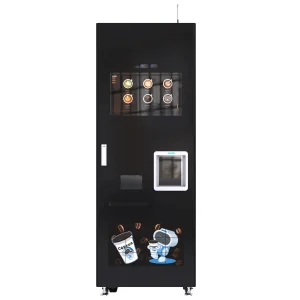
| Bean-to-Cup Smart Coffee Vending | $3,500 – $6,000 | 18% – 25% | $3.00 – $5.00 | 50 – 110 cups | 75% – 82% | 4.0 – 7.0 Months |
| Automatic Popcorn Vending Machine | $3,000 – $5,000 | 10% – 15% | $3.50 – $5.50 | 40 – 80 bags | 85% – 90% | 3.0 – 5.0 Months |
| Traditional Snack & Soda Machine | $2,500 – $4,500 | 45% – 55% | $1.50 – $2.50 | 30 – 60 items | 45% – 55% | 12.0 – 18.0 Months |
Specialty freshly prepared food robotics (cotton candy, soft-serve ice cream) yield a significantly faster payback period than traditional packaged goods vending due to exceptionally low raw ingredient costs coupled with high visual appeal that justifies premium retail pricing.
Location quality is the primary external multiplier of vending machine ROI. Matching the right equipment variant to specific venue footfall demographics ensures maximum daily transaction throughput.
Target Machines: Fully Automatic Cotton Candy Robots & Robotic Soft-Serve Ice Cream Kiosks.
Demographic Profile: Families with children, teenagers, weekend leisure shoppers.
Placement Strategy: Position near children’s play zones, food court entrances, or central escalator landing pads where dwell time is high.
ROI Multiplier: Bright RGB lighting effects and transparent glass windows act as visual magnets, attracting impulse purchases without requiring external marketing spending.
Target Machines: High-Capacity Popcorn Vending Units & Multi-Flavor Cotton Candy Kiosks.
Demographic Profile: High-density vacationers, tour groups, event attendees.
Placement Strategy: Locate along main pedestrian pathways, near ride exit gift shops, and adjacent to queue lines.
ROI Multiplier: High volume capacity minimizes reloading frequency during peak holiday weekends, allowing a single operational team to service up to 15 machines across the park premises.
Target Machines: P30 Six-Flavor Commercial Popcorn Machine & Semi-Automatic Cotton Candy Units.
Demographic Profile: Late-night entertainment seekers, moviegoers.
Placement Strategy: Position directly in lobby waiting lounges to capture revenue from pre-show concession spillover.
ROI Multiplier: Captures high-margin snack sales during late-night hours when traditional staffed concession counters are closed.
Target Machines: SF308 Bean-to-Cup Fresh Coffee Vending Machines.
Demographic Profile: Commuters, medical professionals, office personnel.
Placement Strategy: Position in transit concourses, hospital breakrooms, and corporate lobby floors.
ROI Multiplier: Steady daily usage driven by morning and afternoon caffeine routines delivers predictable cash flow and high customer retention.
Complete your automated fleet deployment with specialized commercial candy machinery, OEM beauty dispensers, and high-throughput production equipment.
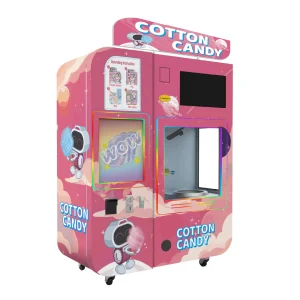
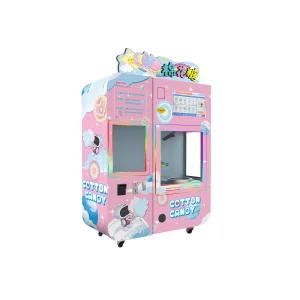
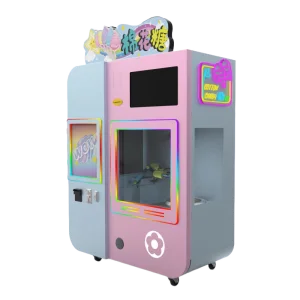

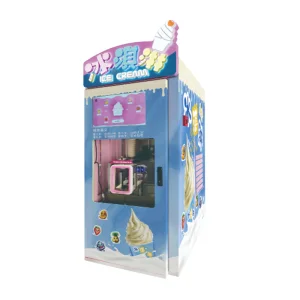
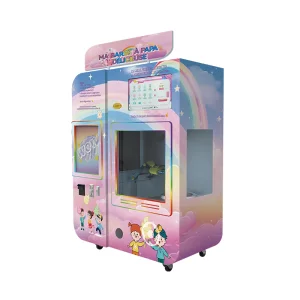
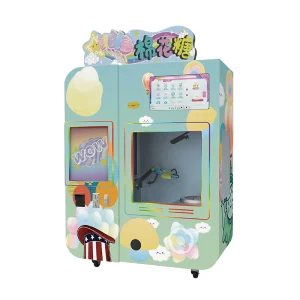
Delivering a predictable ROI requires robust hardware architecture. Our vending platforms integrate industrial-grade components designed to withstand round-the-clock continuous public operation.
Powered by industrial ARM Cortex / RK3399 quad-core processors running optimized Android/Linux microcontrollers. Equipped with hardware watchdog timers to automatically recover from power surges or software freezes without requiring human intervention.
High-accuracy closed-loop stepper motors control sugar volume dispensing down to 0.1 gram margins and regulate ice cream compression valves. This prevents ingredient waste and guarantees consistent product weight across every purchase.
Food safety compliance is streamlined through programmable high-temperature pasteurization and automatic water rinse cycles. Internal mixing chambers undergo scheduled automated sanitization routines, fulfilling local health department standards.
Direct answers to critical procurement, operational, and financial questions asked by fleet operators, global distributors, and entrepreneurs.
The ROI period varies by equipment type and venue footfall. For high-margin visual robotic kiosks such as fully automatic cotton candy and soft-serve ice cream vending machines, the average payback period ranges between 2.5 to 6 months. Because raw ingredient costs account for less than 12% to 18% of retail price, daily sales of 30 to 50 units can generate net monthly profits exceeding $3,000 to $6,000 USD per unit.
SevenCloud manufactures a broad matrix of commercial vending equipment, including fully automatic cotton candy vending robots, robotic soft-serve ice cream machines, P10 (healthy oil-free) and P30 (6-flavor commercial) popcorn vending units, SF308 bean-to-cup coffee kiosks, semi-automatic counter units, mini event-rental cotton candy makers, and automated canned cotton candy production lines.
Machines are exported payment-ready. Factory engineering pre-configures hardware mounting brackets and MDB protocol wiring harnesses for credit card terminals such as Nayax VPOS Touch, Payter, or Cantaloupe. Additionally, the software supports pulse, bill acceptors, coin mechanisms, and QR-code mobile payments (Apple Pay, Google Pay, Alipay, WeChat Pay).
For North America, machines typically require ETL / cETL (UL 751 & CSA safety standards) and NAMA sanitization certification. For European Union countries, CE (Low Voltage Directive & EMC Directive) and RoHS environmental compliance are mandatory. Always verify certification documents for your target destination prior to shipment.
Yes. All smart vending units connect to a central IoT management portal accessible via web browser or mobile app. Operators can monitor real-time sales figures, track remaining ingredient volume, receive instant error push notifications, adjust product pricing remotely, and trigger automated self-cleaning routines.
The P10 Popcorn Vending Machine utilizes a hot-air popping mechanism that is completely sugar-free and oil-free, utilizing separate seasoning packets to cater to health-conscious consumers. The P30 Popcorn Machine utilizes traditional oil-and-sugar kettle popping to deliver classic movie theater-style popcorn with up to six selectable flavor toppings.
Factory suppliers provide a comprehensive 1-year hardware warranty covering primary functional modules (motherboards, touchscreens, motors, compressors). Technical support is delivered via dedicated online engineering groups providing remote diagnostic logs analysis, video walkthrough guidance, and express spare-parts dispatch.
Yes. Factory-direct manufacturing capabilities allow extensive OEM/ODM customization, including custom exterior vinyl graphics, branded user interface logos, localized UI language translations, custom voltage setups (110V/220V), specialized payment cutouts, and bespoke physical dimensions.
High-traffic leisure locations perform best: mega shopping malls, indoor theme parks, family entertainment centers (FECs), amusement arcades, tourist promenades, and resort lobbies. High footfall featuring families with young children delivers maximum visual conversion.
Guangzhou's manufacturing ecosystem brings precision laser sheet metal fabricators, PCB assembly lines, robotic motors, and refrigeration component vendors within a tight geographical cluster. Vertical integration reduces component lead times, minimizes shipping overhead, and delivers 30%-50% CapEx savings compared to Western manufacturing lines.
Daily maintenance involves refilling the liquid ice cream mix hopper and emptying waste wastewater trays (taking under 15 minutes). The machine executes automated Clean-in-Place (CIP) rinse cycles automatically at scheduled off-peak times to maintain food safety compliance.
Canned cotton candy production lines feature hermetic sealing and nitrogen flushing technology, extending product shelf life up to 6 to 12 months. This makes canned production ideal for candy brands, snack wholesalers, and amusement park souvenir shops requiring mass production.
Standard factory production lead time is 7 to 15 business days depending on customization depth. Ocean freight transit averages 18 to 28 days for North America and Europe, while air express delivery takes 5 to 9 days. Machines ship securely packaged in reinforced export wooden crates.
Yes. Compact semi-automatic units are engineered for counter service in restaurants, KTV lounges, convenience stores, and event rental operations. Staff handle payment and insert the stick, while one button automatically spins patterned cotton candy in under 60 seconds.
You can request a tailored procurement proposal by contacting our global sales team with your destination country, target placement venue type, localized payment reader preference, and projected equipment volume. We provide full TCO breakdowns, landed freight quotes, and certification packages.
