Explore engineered hardware platforms designed for maximum ROI, featuring fully autonomous food prep, high-conversion visual displays, and cloud telemetry management.

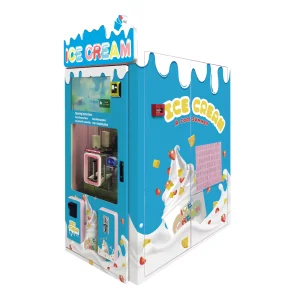
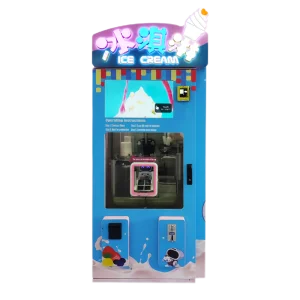

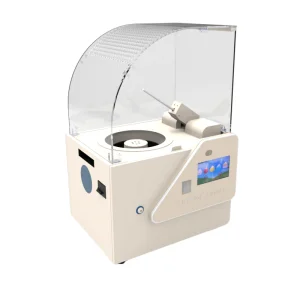
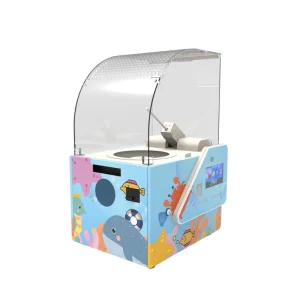
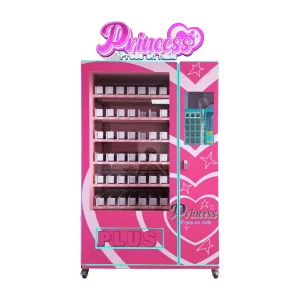
Legacy vending machines operated on micro-margins with static packaged goods. Today, automated robotic food kiosks yield over 85% gross profit by transforming raw ingredients into fresh experiences.
Modern consumers, particularly Gen Z and families, no longer purchase just a snack; they buy an instant performance. Robotic cotton candy sculptors and soft-serve ice cream arms serve as visual entertainment magnets in commercial centers, driving conversion rates by up to 300% over silent ambient snack machines.
Modern commercial operators manage massive decentralized fleets through cloud dashboards. Intelligent micro-controller integration continuously monitors sugar humidity, syrup levels, freezing chamber temperatures, and payment diagnostic codes to ensure 99.8% uptime without manual daily store visits.
With global cash transactions dropping below 15% in major metropolitan centers, modern profit-margin vending relies on MDB 4.2 protocol hardware interfacing seamlessly with credit card readers (Nayax, Ingenico), Apple Pay, Google Pay, and localized mobile wallets via dynamic QR displays.
Traditional pre-packaged beverage/chip vending yields gross margins between 25% and 40% after factoring in wholesale supplier costs and product spoilage. In contrast, freshly prepared robotic confectionery (such as multi-color cotton candy or soft-serve ice cream) uses low-cost raw commodities (flavored sugar, liquid milk base, paper sticks/cups). A single serving of cotton candy costs approximately $0.15 to $0.25 in raw materials while retailing for $5.00 to $8.00 in high-traffic entertainment venues.
Institutional buyers, amusement park concessionaires, and vending fleet operators demand rigorous manufacturing compliance, modular maintainability, and total cost of ownership (TCO) optimization.
Deploying automated food service machinery globally requires adherence to international electrical and food safety standards. Institutional buyers mandate CE, ETL, NAMA, RoHS, and PSE certifications. OEM equipment must feature food-grade 304 stainless steel contact surfaces, automated CIP (Clean-In-Place) sanitation cycles, and sealed anti-bacterial storage zones.
Field maintenance costs can quickly erode operational profits. High-margin suppliers engineer machines with plug-and-play modularity—allowing non-technical venue staff to replace a burner head, robotic cup dispenser, or coin mechanism in under 10 minutes using standardized quick-release harnesses.
Global procurement requires hardware that functions seamlessly across voltage standards (110V-240V, 50/60Hz) and extreme environmental ranges. Smart ice cream and cotton candy kiosks feature industrial compressor refrigeration and internal thermostatic heating systems to maintain product texture from +5°C to +45°C ambient temperatures.
The synergy of fully integrated industrial clusters, advanced CNC laser fabrication, and rigorous multi-stage quality control positions Chinese OEM/ODM factories as premier global partners.
From incoming sheet metal stress testing to electrical insulation checks, every chassis undergoes rigorous inspection before assembly.
Fully assembled machines run continuous operational cycles for 24 hours straight to eliminate early component failure rates.
High-precision fiber laser cutters and robotic bending cells ensure structural rigidity, anti-vibration stability, and long chassis lifespans.
Custom vinyl wraps, custom touchscreen UI themes, localized voice prompts, and specialized housing shapes cater to global brand identities.
By leveraging Guangzhou's world-class robotics, industrial automation, and commercial refrigeration supply ecosystem, production turnarounds are accelerated by 40% compared to Western competitors. Component sourcing, firmware development, and final export logistics occur within a 50-kilometer radius, giving operators unmatched capital efficiency.
Demand for high-margin unmanned kiosks varies across key geographic sectors, driven by labor economics, commercial real estate density, and consumer spending habits.
Primary Driver: Minimum Wage Pressure. Rising labor costs ($15-$20/hr) make traditional counter-served ice cream and concession stands unprofitable for long hours. High-margin vending robots serve as 24/7 labor replacements in Family Entertainment Centers (FECs), shopping malls, and indoor water parks, delivering gross payback in as little as 60 days.
Primary Driver: Strict Compliance & Footfall Footprints. European buyers require strict CE, RoHS, and food contact approvals alongside compact equipment footprints. High-traffic transit hubs, tourist attractions in Spain, Italy, and France, and arcade chains prioritize high visual appeal and credit/contactless card reader compatibility.
Primary Driver: Indoor Entertainment & Tourism. Mega-malls and climate-controlled indoor amusement venues in the UAE, Saudi Arabia, Malaysia, and Singapore experience year-round foot traffic. Operators favor colorful robotic cotton candy units and ice cream machines with high-capacity storage for continuous high-volume dispensing.
Selecting optimal venue types directly impacts daily transaction velocity. Below is a proven operational breakdown across high-converting commercial spaces.
Placing robotic kiosks near children’s play areas, food courts, or cinema entrances captures high impulse footfall. The visual spectacle of robotic fabrication stops foot traffic, turning passive bystanders into active buyers.
High weekend density yields peak throughput. Machines capable of fast dispense cycles (e.g., 60-90 seconds per cotton candy or ice cream cup) prevent queue abandonment and maximize total daily revenue.
Operators frequently rent semi-automatic or fully automatic kiosks to corporate events, weddings, and birthday parties for flat daily fees ($500 - $1,200/day), creating a lucrative secondary B2B revenue stream.
| Operating Metric | Conservative Scenario | Moderate Scenario | High-Traffic Peak Scenario |
|---|---|---|---|
| Daily Cup / Vends Sold | 35 units | 75 units | 150 units |
| Retail Price per Unit | $5.00 | $6.00 | $7.00 |
| Daily Gross Revenue | $175.00 | $450.00 | $1,050.00 |
| Raw Material Cost (COGS ~10%) | $17.50 | $45.00 | $105.00 |
| Estimated Location Rent (15-20%) | $35.00 | $90.00 | $210.00 |
| Net Daily Operating Profit | $122.50 | $315.00 | $735.00 |
| Estimated Monthly Net Profit | $3,675.00 | $9,450.00 | $22,050.00 |
Review additional OEM/ODM models engineered for specialized retail products, compact event spaces, and high-volume commercial installations.
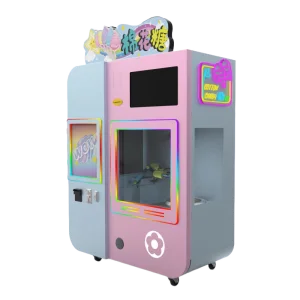
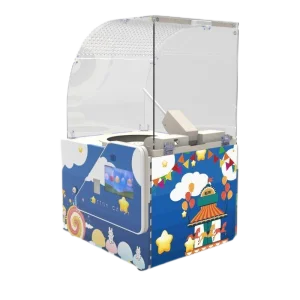

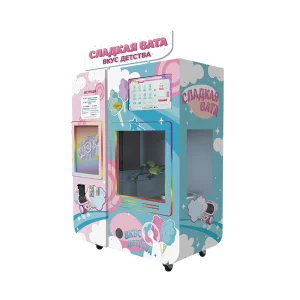
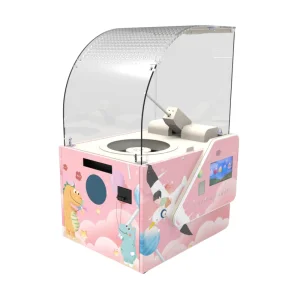
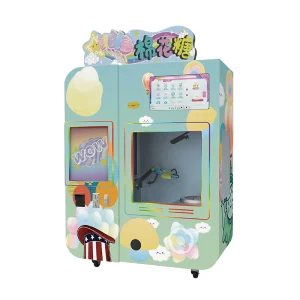
Comprehensive answers covering machine operation, payment system integration, ROI calculations, and global technical support.
Traditional vending relies on pre-packaged goods purchased from distributors, yielding modest 25%-40% gross margins subject to supply chain inflation and spoilage. Custom profit margin vending machines (such as automated cotton candy robots or soft-serve ice cream kiosks) combine inexpensive raw ingredients (sugar, liquid milk base, paper cups/sticks) at the moment of sale. Raw material costs average 8%-15% of retail price, delivering 85%-92% gross profit margins.
Commercial food security is paramount. Our automated ice cream and confectionery kiosks feature built-in Clean-In-Place (CIP) systems. Ice cream units utilize high-temperature pasteurization and pasteurizing cycles to keep liquid mix safe for up to 7-14 days without manual dismantling. Cotton candy units feature automated high-pressure steam cleaning heads that remove residual sugar buildup from the burner nozzle after specified operational cycles.
Yes. Every machine is manufactured with an MDB 4.2 protocol industrial motherboard, making it natively compatible with global payment peripherals. We configure machines for credit card terminals (Nayax, Ingenico, Payter), bill acceptors, coin mechanisms, and local contactless digital wallets (Apple Pay, Google Wallet, Alipay, WeChat Pay, KakaoPay, Paytm) based on your destination market.
As a direct manufacturer, we offer full-spectrum factory customization. This includes custom vinyl cabinet wrapping, structural powder coating colors, tailored LED/RGB lighting profiles, personalized UI touch-screen graphics in any target language, custom audio prompts, and customized robotic motion scripts (e.g., custom flower shapes for cotton candy machines).
Machines can be factory-wired for 110V/60Hz (North America, Japan) or 220V-240V/50Hz (Europe, Asia, Middle East). Power consumption ranges from 800W standby up to 2800W during active heating/freezing cycles. Heavy-duty internal cooling and thermostatic controls ensure optimal operation in ambient temperatures between +5°C and +45°C.
Our proprietary IoT management platform provides continuous real-time insight into machine health. Operators monitor real-time sales revenue, inventory levels (sugar grams remaining, cup counts), component diagnostic status, internal chamber temperatures, and receive immediate SMS/Email alerts if a fault occurs, reducing field service callouts by up to 70%.
Depending on the specific machine series, products are compliance-certified with CE marks, ETL/cETL listed electrical compliance, RoHS material safety certificates, NAMA hygiene benchmarks, and PSE certifications for Japan. Complete certification dossiers, test reports, and customs documentation are provided for hassle-free import clearance.
All machines include a 12-month comprehensive factory warranty on core mechanical and electronic components (compressors, PLCs, touchscreens, servo motors). Replacement modules are dispatched via DHL/FedEx express freight. In addition, our quick-swap modular design allows local technicians to install replacement components rapidly following video guidance from our dedicated technical engineering support team.
