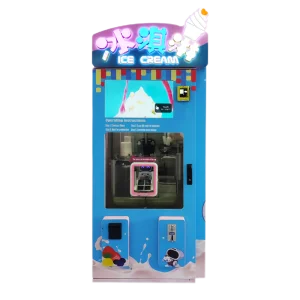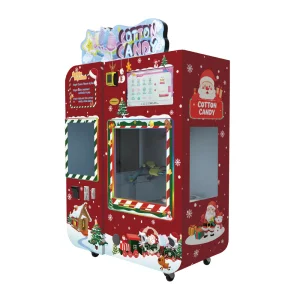

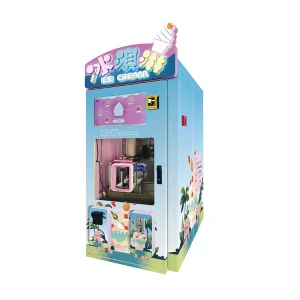

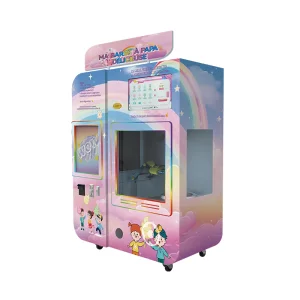
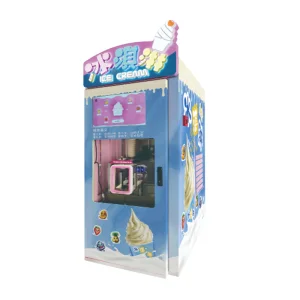
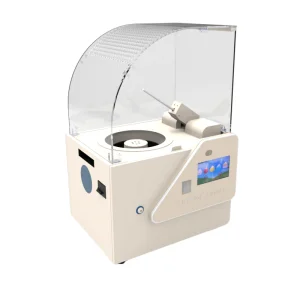
The global autonomous food and beverage vending landscape is undergoing a structural paradigm shift. Driven by skyrocketing labor overheads, advancing robotics, real-time IoT diagnostics, and consumer demand for contact-light instant gratification, automated dessert dispensing has evolved from a passive utility into a high-margin, software-driven asset class. Within North America, specifically Canada, the market for custom ice cream vending machines is experiencing unprecedented acceleration across metropolitan hubs such as Toronto, Vancouver, Montreal, and Calgary.
Historically, ice cream distribution relied heavily on brick-and-mortar scoop shops or conventional static freezer units. However, commercial real estate lease premiums alongside Canada’s rising provincial minimum wages (exceeding $16.50/hour in key provinces) have rendered traditional retail models economically challenging for boutique dessert operators. Unmanned robotic ice cream kiosks solve this structural friction by maintaining continuous 24/7/365 operations, guaranteeing precise portion control, and reducing human touch points to absolute zero.
Deploying automated ice cream machinery in Canada requires specific engineering considerations tailored to local climatic variances, regulatory environments, and regional payment behaviors. Standard off-the-shelf equipment frequently fails to address the operational realities of Canadian commercial spaces.
While Canadian summers deliver high outdoor foot-traffic spikes along waterfronts and seasonal amusement parks, Canadian winters necessitate a dual-deployment strategy. Top-tier operators transition assets into climate-controlled indoor environments during sub-zero months:
Canada is one of the most cashless societies globally, with Interac Flash debit cards and mobile NFC wallets (Apple Pay, Google Pay) representing over 85% of unattended retail micro-transactions.
For Canadian operators, sourcing custom ice cream vending machines directly from leading specialized manufacturers in China provides a decisive competitive moat. China’s advanced robotics cluster—centered in Guangdong’s high-tech manufacturing corridors—combines deep supply-chain integration with unparalleled production speed and cost efficiency.
| Specification Metric | Guangzhou Source Factory Standard | Conventional Domestic Assemblers | Operational Advantage for Importers |
|---|---|---|---|
| Core Refrigeration Engine | Commercial Embraco / Secop Compressors (R404a / R290 eco-refrigerant) | Generic white-label cooling units | Rapid pull-down time (-25°C core storage), zero ice crystallization, NSF-grade thermal hold. |
| Robotic Dispensing Precision | 3-Axis High-Torque Servo Motor Arm (±0.5g precision) | Basic gravity-feed solenoid valves | Zero product wastage, visually stunning visual swirls, consistent weight per cup. |
| Pasteurization & CIP Systems | Automated Clean-in-Place (CIP) high-temp pasteurization cycle | Manual daily tear-down required | Reduces human maintenance intervals from daily to once every 7–14 days. Safe food compliance. |
| Chassis & Insulation | 2.0mm Heavy-Duty Sheet Metal + Polyurethane High-Density Foam | 1.0mm acrylic/plastic composite shells | Anti-vandalism durability, ultra-low energy consumption in high ambient temperature venues. |
| OEM Customization Agility | Full CAD design custom wraps, custom topping hoppers, custom UI within 14 days | Fixed standard catalog configurations | Allows Canadian brands to scale white-label franchise networks rapidly. |
By leveraging China’s end-to-end industrial ecosystem—where sheet-metal laser cutting, PCB fabrication, wiring harness assembly, and cryogenic testing occur under one factory roof—operators capture a 40% to 60% capital expense (CapEx) savings compared to North American assembled units, without sacrificing component reliability.
Modern ice cream vending machines are complex cyber-physical devices. Profitability hinges on minimizing machine downtime. Our source-factory architecture incorporates an enterprise-grade IoT SaaS ecosystem designed for remote fleet management across vast geographic territories like Canada.
Sensors monitor milk mix levels, cup quantities, topping hoppers, and syrup viscosity. Dynamic cloud dashboards push SMS/Email alerts to local routes before stockouts occur.
Telemetry tracks compressor pressure cycles, motor current draws, and condenser temperature gradients to flag wear-and-tear issues prior to physical failure.
Remotely update menu items, adjust pricing structures based on peak demand hours, and run high-definition video advertising campaigns on 21.5" or 32" HD touch displays.
Maximizing Yield per Square Foot requires matching machine configurations to site-specific consumer profiles across Canadian territories:
Locations like Union Station in Toronto or Vancouver's Waterfront Station see thousands of commuter touches daily. A quick 15-second soft-serve dispensing cycle captures high-velocity impulse sales from busy professionals and students.
University student unions (e.g., U of T, UBC, McGill) represent prime environments for 24-hour unmanned retail. Students studying late into the night rely on automated dessert and snack kiosks when cafeterias are closed.
From Whistler Blackcomb lodges during summer months to Niagara Falls entertainment strips, automated machines deliver high-margin gourmet soft-serve without requiring seasonal hospitality staffing.
Indoor mega-venues benefit from brightly illuminated, interactive robotic arms that double as visual entertainment, driving family engagement and word-of-mouth social media marketing.
Procuring ice cream vending robots directly from Chinese manufacturing plants involves a streamlined engineering journey tailored to your corporate requirements.
The next iteration of smart ice cream vending machines will integrate advanced artificial intelligence at the edge. Emerging innovations include vision AI sensors that gauge queue length to dynamically optimize dispensing speeds, ambient temperature-based automated pricing adjustments, and eco-friendly R290 propane compressors that reduce global warming potential (GWP) by 99% in alignment with Canadian federal climate mandates.