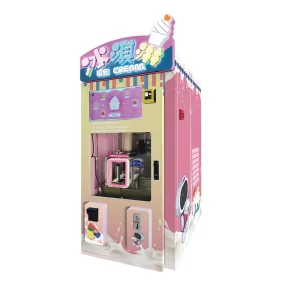
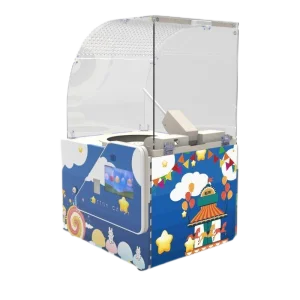
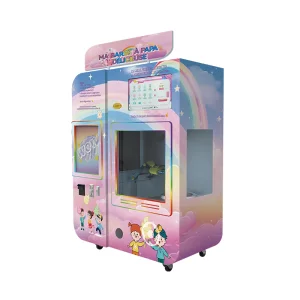
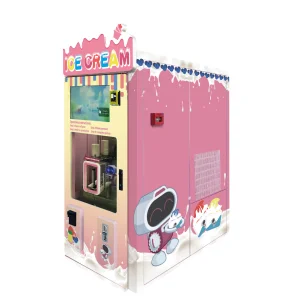
Explore our factory-engineered automated vending equipment, equipped with cashless payment integration, telemetry diagnostics, and ultra-reliable robotics.
The global automated retail and unattended vending ecosystem is undergoing a fundamental paradigm shift. Traditional mechanical, coil-based legacy vending hardware is rapidly being replaced by multi-axis robotics, IoT telemetry cloud backbones, dynamic touchscreen interfaces, and automated micro-fulfillment engines. Modern enterprise procurement teams require scalable, low-TCO (Total Cost of Ownership) hardware customized by specialized suppliers and tier-1 OEM/ODM manufacturing facilities.
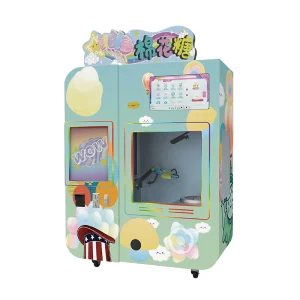
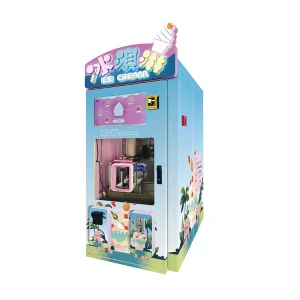
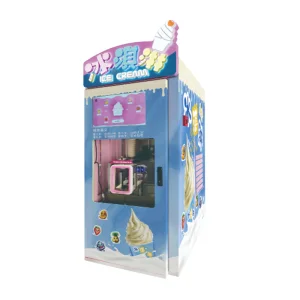
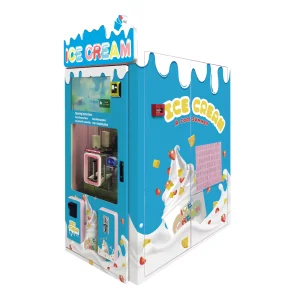
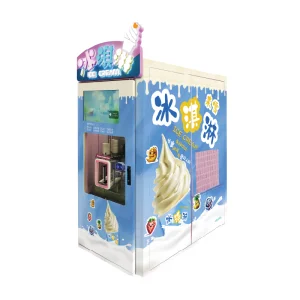
Information Gain Insight: Modern automated vending machines are no longer static snack dispensers—they operate as localized, autonomous micro-factories capable of dispensing customizable visual products (such as 3D floral cotton candy, robotic soft-serve ice cream, freshly ground espresso, and custom cosmetic bundles) with zero human intervention and 99.4% uptime stability.
Custom robotic vending machines yield COGS (Cost of Goods Sold) reductions up to 70% compared to traditional retail counters, resulting in payback periods averaging under 6 to 9 months in high-footfall venues.
Integrated IoT modules feed diagnostic alerts, inventory thresholds, temperature telemetry, and live financial reporting directly to web dashboards and mobile native applications via encrypted APIs.
Equipped with commercial-grade industrial PLCs, NEMA-rated electrical shielding, and thermal management, these autonomous systems generate uninterrupted passive revenue streams around the clock.
When global brands, arcade fleet operators, and specialized retail chains source custom automated vending equipment, China—and specifically the industrial manufacturing cluster of Guangzhou—stands out as the worldwide epicenter for automated retail innovation.
The synthesis of localized sheet-metal fabrication, high-precision micro-stepper motor production, custom PCB circuit architecture, and advanced thermal engineering allows Chinese vending OEMs to innovate faster and deliver units at a fraction of Western capital expenditure while maintaining strict compliance with CE, ETL, RoHS, and NAMA international certification standards.
Unlike regional assemblers who outsource critical components, top-tier Chinese factories maintain in-house laser cutting, robotic bending, automated powder coating, and dedicated cleanroom assembly suites. This ensures structural structural rigidity, long-term corrosion resistance, and total quality control over every chassis.
From initial CAD modeling and mechanical simulation to custom PCB firmware coding and UI development, Chinese suppliers can reduce prototyping cycles from months to weeks. Procurement managers can specify bespoke dimensions, custom robotic end-effectors, multi-drop dispensers, or branded shell wraps effortlessly.
Modern Chinese vending units natively support global MDB (Multi-Drop Bus) 4.2 protocol standards, DEX/CCS interfaces, and pulse communication. This guarantees seamless integration with international cashless card readers including Nayax, Ingenico, Cantaloupe, Payter, as well as mobile wallet QR systems (Apple Pay, Google Wallet).
Leveraging direct access to raw raw materials, high-performance compressors (Embraco/Secop), and optical sensor assemblies, Chinese factories deliver unit costs up to 40-60% below European and North American counterparts, providing bulk buyers with unparalleled operational leverage.
Understanding the internal mechanism of custom automated vending systems is essential for operational managers and enterprise buyers aiming to maximize uptime, food safety, and customer experience.
High-speed servo drives combined with precision linear actuators enable 4-axis or 6-axis movement. Whether carving detailed cotton candy flowers or executing liquid soft-serve swirls, micro-stepping technology ensures repeatability down to ±0.1mm accuracy.
For food-dispensing systems (such as ice cream and espresso machines), integrated Clean-In-Place (CIP) pasteurization cycles execute automated hot-water or chemical sanitization at scheduled intervals, fulfilling stringent FDA and EHEDG health requirements.
Utilizing eco-friendly R290 green refrigerants and multi-zone PID temperature controls, food items are maintained under strict thermal conditions. Anti-condensation heated glass elements preserve visual product presentation in high-humidity climates.
Engineering Specifications Checklist: Look for heavy-duty industrial touchscreens (10.1" to 55" capacitive display with 1000 nits brightness for daylight readability), tempered explosion-proof glass enclosures, dual-source redundant power supplies, and modular sub-assemblies that permit field component replacements in under 15 minutes.
Automated vending solutions achieve maximum yield when precisely calibrated to venue footfall profiles, target audience demographics, and ambient operator logistics.
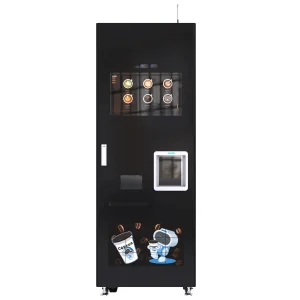
Key Machine Type: Bean-to-Cup Coffee Robots & Beauty/Personal Care Dispensers.
Operational Edge: Travelers seeking fast, high-quality refreshments during off-peak hours drive substantial margin. Cashless, multi-currency support enables effortless transactions for international transit passengers without currency exchange friction.
Key Machine Type: Robotic Cotton Candy & Unmanned Soft-Serve Machines.
Operational Edge: Interactive product spinning creates an engaging visual performance, attracting family crowds and driving impulse buying behavior. High throughput speed (<60s per unit) keeps queues moving during peak visitor hours.
Key Machine Type: Cosmetic Vending & Ice Cream Robot Kiosks.
Operational Edge: Compact footprints (1.2 to 2.5 sq. meters) allow operators to monetize dead hallway spaces, mall concourses, and underutilized elevator bays with ultra-low monthly utility overhead costs.
Key Machine Type: Fresh Food & Premium Beverage Automated Stations.
Operational Edge: Serves shift workers, students, and night-staff when traditional dining facilities are closed. Remote telemetry notifies operators when inventory levels drop below 20%, ensuring optimal restocking schedules.
Selecting the right automated vending machine supplier requires a rigorous evaluation of technical capabilities, manufacturing infrastructure, and post-purchase SLA support.
Ensure the factory possesses full CE, ETL, NAMA, RoHS, and PSE certifications matching your target deployment region. Verify that electrical wiring and refrigeration circuits adhere to local UL or IEC electrical safety codes.
Evaluate beyond the initial FOB unit price. Assess energy consumption (kWh per 24h), routine wear-and-tear consumable costs, modular replacement part availability, and expected mean time between failures (MTBF).
Verify whether the vendor’s SaaS management software allows third-party API integration (REST APIs, Webhooks) into your existing ERP, inventory tracking system, or centralized accounting software.
Review our specialized commercial vending machinery designed for multi-location operators, event rentals, and automated concession businesses.
Custom automated vending solutions are engineered from the ground up to solve specific operational and brand-experience challenges. Standard off-the-shelf vending machines rely on simple drop-down spring mechanisms that restrict product geometry, lack engaging interaction, and offer minimal branding. Custom systems incorporate multi-axis robotics, dynamic linear motion, automated cleaning cycles (CIP), customized dispense elevators, and tailored UI touchscreens that transform passive retail into interactive micro-fulfillment centers with significantly higher profit margins.
Leading Chinese vending manufacturers build machines compliant with the universal MDB (Multi-Drop Bus) 4.2 protocol and DEX interfaces. This standard allows seamless plug-and-play installation of international credit card readers, bill acceptors, and contactless payment hardware such as Nayax VPOS Touch, Ingenico Self/3000, Cantaloupe ePort, and Payter devices. Firmware settings can be customized at the factory to natively handle regional currencies, taxes, and contactless NFC transactions.
Depending on your destination market, you should confirm specific certifications: CE (Conformité Européenne) and RoHS compliance for the European Union; ETL/cETL or UL standards for electrical safety in North America; NAMA (National Automatic Merchandising Association) certification for commercial vending; and PSE for Japan. For food-dispensing systems like soft-serve ice cream or coffee robots, ensure food-contact components are FDA approved or certified for food-grade NSF hygiene standards.
Integrated IoT telemetry modules connect your fleet to a centralized cloud backend dashboard via 4G/5G cellular modules or Wi-Fi. Operators can track real-time sales revenue, monitor internal thermal sensors, check raw ingredient inventory levels, and receive instant automated alerts for mechanical anomalies or empty stock. This eliminates unnecessary physical site visits, optimizes technician restocking routes, and maintains machine uptime at over 99%.
Reputable Chinese OEM factories provide a 1-year to 2-year comprehensive factory hardware warranty on major functional sub-assemblies (compressors, PLCs, motors, touchscreens). Spare parts are engineered modularly so that field service technicians can swap faulty sub-assemblies with quick-disconnect harnesses. Remote video tech support, software updates, and express air-shipment of critical spare components ensure zero prolonged operational downtime.
Factory customization parameters include: exterior sheet-metal paint finish & custom vinyl wrap graphics; touchscreen screen size & customized Android/Linux GUI UI branding; structural dispense mechanisms for specific product geometry; internal refrigeration/heating zoning; custom coin/bill/card payment cutouts; power voltage configuration (110V/60Hz or 220V/50Hz); and localized software multi-language voice prompts.