Explore our CE-certified, IoT-enabled automated vending solutions built for high-footfall revenue execution.
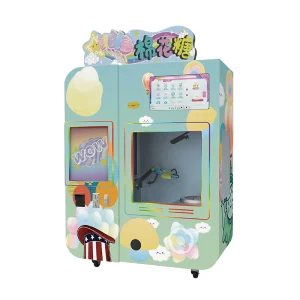
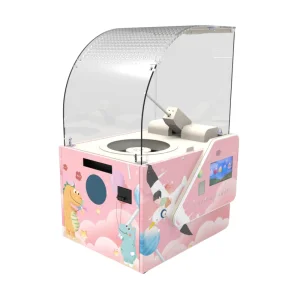
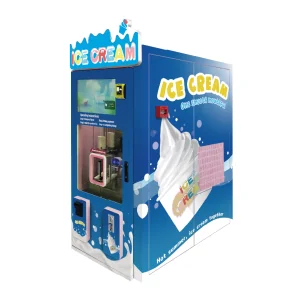
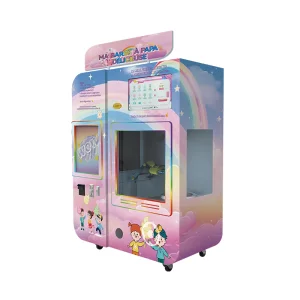

A comprehensive examination of CE compliance, cloud telemetry, automated robotic serving, and global procurement dynamics for commercial vending enterprise buyers.
The global automated retail and unattended vending machine industry is undergoing a structural transition driven by ubiquitous high-speed wireless telemetry, contactless digital payment infrastructures, and robotics automation. Traditional, non-connected electromechanical vending units are rapidly being replaced by intelligent, cloud-connected automated platforms capable of preparing fresh food, beverages, and specialty confectionery on demand.
For commercial operators, venue concessionaires, and enterprise procurement buyers evaluating a CE Certification Wifi Vending Machine Company & Companies, equipment compliance extends far beyond basic mechanical functionality. Modern smart vending operations rely heavily on robust wireless communication (Wi-Fi, 4G LTE, and Ethernet telemetry) to transmit real-time transactional data, inventory status, operational diagnostic alerts, and dynamic digital signage content back to central management platforms.
In international markets—specifically within the European Economic Area (EEA)—a vending machine equipped with Wi-Fi and 4G communication modules must satisfy stringent requirements under the Radio Equipment Directive (RED 2014/53/EU), electromagnetic compatibility standards (EMC Directive 2014/30/EU), and low voltage safety guidelines (LVD 2014/35/EU). Working with an authentic source OEM/ODM factory guarantees that wireless power emission, frequency isolation, and electrical safety are engineered natively into the chassis, preventing signal interference and operational shutdowns in high-density commercial locations.
Understanding the hardware, software, and electronic integration inside enterprise-grade automated vending units.
Equipped with high-gain internal antennas supporting 2.4GHz/5GHz 802.11 a/b/g/n/ac Wi-Fi protocols alongside 4G fallback modules. Ensures continuous network connectivity for cloud payment authorization and instant error telemetry even in subterranean transit hubs or dense steel-framed malls.
Full native integration with Multi-Drop Bus (MDB) standard architecture allowing universal plug-and-play installation of global payment hardware, including Nayax, Ingenico, Payter, coin acceptors, bill validators, and localized QR code payment gateways (WeChat, Alipay, KakaoPay, Pix).
Every structural frame, heating element, step motor, and PCB board undergoes comprehensive laboratory testing to satisfy EN 60335-1 (Electrical Safety), EN 55014-1/2 (EMC), and EN 300 328 (Radio Spectrum Management) standards, guaranteeing frictionless import clearance across EU customs borders.
| System Architecture Component | Technical Specification Standard | Operational & Commercial Benefit |
|---|---|---|
| Wireless Network Connectivity | Wi-Fi 802.11 ac/b/g/n + 4G LTE IoT Modem with Auto-Failover | Prevents transaction dropouts and ensures 100% cloud sync for sales reporting. |
| Microcontroller Unit (MCU) | 32-bit ARM Cortex-M4 Industrial-Grade Controller Board | Sub-millisecond sensor feedback for robotic movement and ingredient metering. |
| Display & User Interface | 21.5" to 32" Full-HD Capacitive Touchscreen with Anti-Glare Glass | Immersive user interaction, video marketing playback, and multi-language UI support. |
| Payment System Support | MDB Level 3 Protocol, Credit Card Reader, Cashless NFC, QR Scanner | Allows seamless operational adaptation to regional consumer payment preferences. |
| CE Safety Certifications | LVD 2014/35/EU, EMC 2014/30/EU, RED 2014/53/EU, RoHS 2011/65/EU | Mitigates regulatory import risk and protects legal compliance for enterprise buyers. |
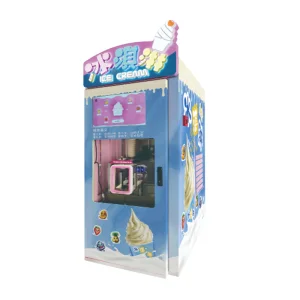
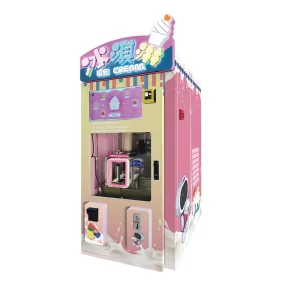
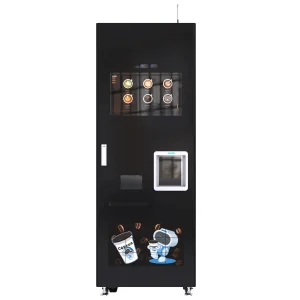
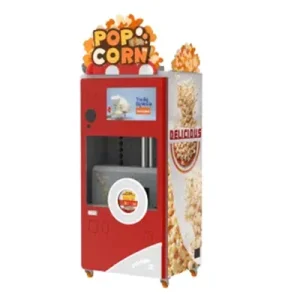
The global automated vending machine market has moved far beyond traditional pre-packaged snacks and canned carbonated drinks. High-margin, interactive vending robots—such as automated cotton candy makers, robotic soft-serve ice cream dispensers, fresh bean-to-cup coffee stations, and specialty gourmet popcorn units—are driving unprecedented revenue yields per square meter.
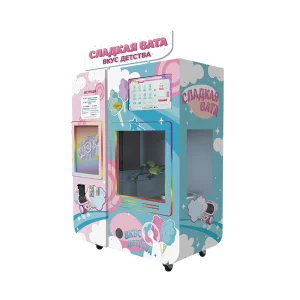
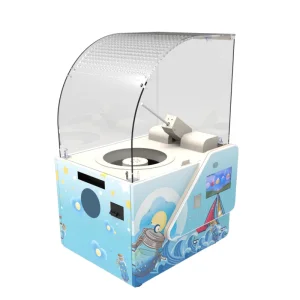
Traditional vending machines operate on a static utility purchase model with net profit margins often restricted to 15% - 25%. In contrast, robotic confectionery and hot beverage machines (such as 3D flower cotton candy machines and robotic ice cream dispensers) turn food preparation into an entertaining visual spectacle. This visual engagement drives impulse purchases among families and young adults, allowing operators to price finished products at 400% to 800% markups over raw material costs.
How direct factory-floor sourcing delivers unmatched technical customization, structural durability, and cost efficiency for international fleet operators.
Controlling the entire heavy-gauge steel stamping, laser cutting, CNC bending, and robotic welding workflow under one roof ensures structural chassis rigidity, anti-vibration performance, and long operational lifespan across transit installations.
Every single unit undergoes raw material testing, harness wiring insulation checks, subassembly functional verification, continuous 200-cycle production simulation, and a mandatory 24-hour continuous burn-in stress test prior to export packaging.
Direct engineering team support allows custom branding wraps, bespoke housing shapes, modified voltage configurations (110V 60Hz / 220V 50Hz), tailored payment harness wiring, and localized telemetry server API integration.
Maximizing revenue per unit through strategic location selection, footfall targeting, and automated remote inventory management.
Primary Machine: Automatic 3D Flower Cotton Candy Robots.
High footfall density featuring children and families creates non-stop queue demand. High-speed automatic sugar spinning delivers up to 30 to 45 servings per hour with zero staffing cost.
Primary Machine: Soft-Serve Ice Cream Robots & Bean-to-Cup Coffee Vending.
Utilizes small 1.5m² floor footprints in high-rent common areas. Wi-Fi management alerts field operators when mix levels fall below 20%, maintaining constant sales availability.
Primary Machine: P30 / P10 Gourmet Popcorn Vending Machines.
Replaces labor-intensive concession counters during peak pre-movie hours. Freshly popped sugar-and-oil or oil-free popcorn dispensed in 60 seconds with automated cup dispensing.
Understanding unit economics is essential for enterprise investors building multi-location vending networks. Below is a representative operational financial profile based on global field deployment data:
| Operational Financial Metric | Estimated Unit Value (USD / Local Equivalent) | Analytical Explanation |
|---|---|---|
| Average Retail Price per Unit Sold | $5.00 - $8.00 USD | Driven by interactive 3D flower shaping visual experience. |
| Raw Material Cost (Sugar + Paper Stick) | $0.35 - $0.50 USD | Includes food-grade color sugar and customized paper stick dispenser. |
| Gross Profit Margin per Sale | 90% - 93% | One of the highest profit margins across all automated food retail. |
| Daily Average Volume (Mall / Theme Park) | 40 to 90 Cups / Day | Varies based on location footfall and weekend traffic spikes. |
| Estimated Monthly Net Operating Revenue | $4,500 - $9,000 USD | Before venue rent share (typically 15-20%) and power utilities. |
| Average Capital Payback Period (ROI) | 2.5 to 4.5 Months | Fast capital recovery enabling rapid multi-machine network expansion. |
A buyer's guide to verifying regulatory documentation and avoiding customs seizures, equipment rejection, or regulatory fines.
When contracting with a CE Certification Wifi Vending Machine Company & Companies, enterprise buyers must verify that test reports and Declarations of Conformity (DoC) are issued by accredited, globally recognized testing bodies (such as TST, SGS, TÜV, Intertek, or ETS). A genuine CE dossier must cover the following core directives:
Unattended automated food vending machines require structured hygiene protocols to remain compliant with local health department regulations:
How artificial intelligence, vision systems, and edge computing are reshaping the next generation of vending robotics.
Cloud management software now allows operators to run dynamic pricing models—automatically offering peak-hour discounts during slow weekday morning periods or adjusting screen advertisements based on weather sensor data.
Next-generation soft-serve and cotton candy machines integrate internal camera sensors to verify syrup dispensing accuracy, visual flower pattern formation, and successful serving door retrieval before closing out the customer order.
Machine learning models analyze continuous motor voltage ripple, heating element resistance drift, and compressor cycle logs to predict component wear weeks before an operational failure occurs, allowing scheduled field service visits.
Expert answers addressing certification compliance, telemetry configuration, delivery timelines, and factory customizations.
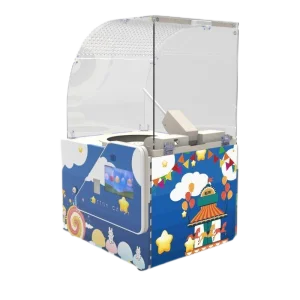
From compact tabletop units to full-scale automated production lines, review our complete manufacturing lineup.