Industrial & Commercial Whitepaper

CE Certification Vending Machines Available Manufacturer & Companies

Global Industry Trends, Corporate Procurement Protocols, Industry 4.0 Supply Chain Integration, and High-Precision Robotic Self-Service Retail Solutions.

CE-Certified Smart Vending Fleet Solutions

Direct factory-engineered automatic vending machines built with robotics, cloud telemetry, and certified safety frameworks for global commercial operators.

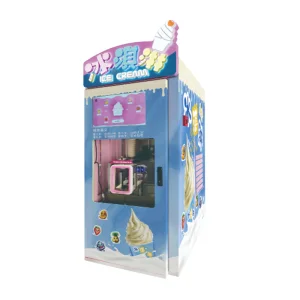
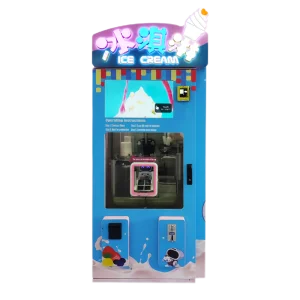
CE Certification Fully automated process Ice Cream Machine

CE Certification Fully Automated Process Ice Cream Machine

View Specifications
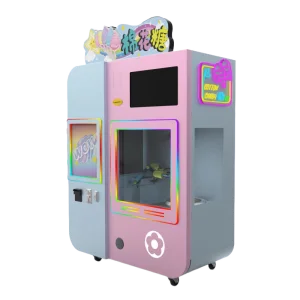
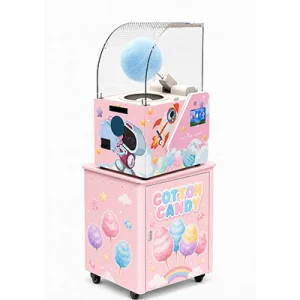
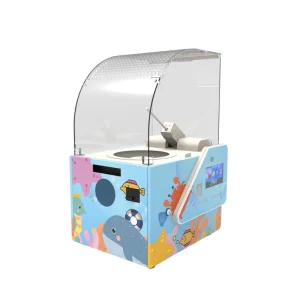
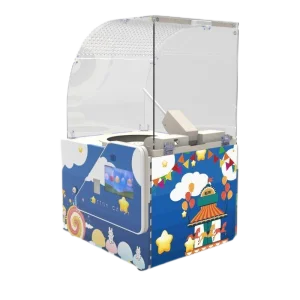
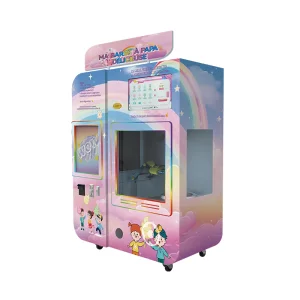
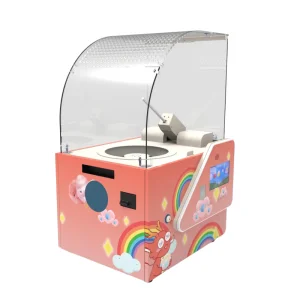
Custom Small Cotton Candy Machine Semi-Automatic

Custom Small Semi-Automatic Cotton Candy Machine for Craft & Events

View Specifications
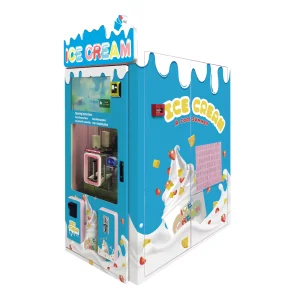
Custom Automatic Ice Cream Vending Machine

Custom 24-Hour Self-Service Automatic Ice Cream Vending Solution

View Specifications
ODM Robotic Arm Cotton Candy Machine

ODM Cotton Candy Machine with Robotic Arm & Touchscreen Technology

View Specifications
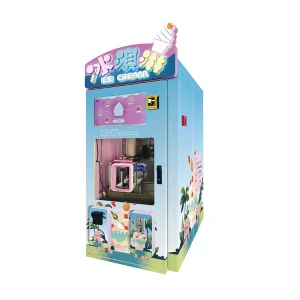
Cloud-Based Ice Cream Vending Machine

Cloud-Based Remote Managed Ice Cream Vending Machine

View Specifications
CE Fully Automatic Cotton Candy SC-320

CE Certified High-Speed Fully Automatic Cotton Candy Machine SC-320

View Specifications
Commercial Grade Ice Cream Shop Robot

OEM Commercial-Grade Ice Cream Vending Robot for Shops & Chains

View Specifications
Commercial Semi-Automatic Cotton Candy 60s

Wholesale Commercial Semi-Automatic Cotton Candy Machine (60s Production)

View Specifications

The Strategic Evolution of Unattended Smart Vending Equipment

An engineering-level analysis of macro economic shifts, robotic integration, and compliance standards governing modern automated retail environments.

The global commercial retail landscape is undergoing a systemic transition toward fully autonomous, contactless, and experience-driven micro-commerce. Traditional snack and beverage vending kiosks are rapidly being displaced by multi-axis robotic systems, precision thermodynamic processing units, and IoT telemetry-integrated smart retail stations. Central to this transformation is the stringent demand for global regulatory compliance, primarily anchored by CE Certification (Conformité Européenne), which establishes mandatory safety, health, and environmental protection benchmarks for equipment operating across international jurisdictions.

As enterprise operators, commercial real estate groups, theme park conglomerates, and fleet franchisees scale their automated footprints, evaluating manufacturers based on engineering rigor, structural component transparency, and supply chain resilience has become a strategic priority. Sourcing CE-certified vending machinery directly from Tier-1 original equipment manufacturers (OEMs) guarantees structural integrity, electrical safety compliance under the Low Voltage Directive (LVD 2014/35/EU), and electromagnetic stability via the EMC Directive (2014/30/EU).

Robotic Automation

Integration of 4-axis and 6-axis precision robotic arms capable of automated sugar spinning, soft-serve dispensing, and spatial payload delivery without human intervention.

Strict CE Compliance

Full adherence to EU Machinery Directives (2006/42/EC), food-grade standard contact materials (EU 1935/2004), and rigorous electrical insulation protocols.

IoT Telemetry & Cloud

Real-time inventory tracking, remote temperature diagnostics, over-the-air (OTA) firmware updates, and integrated multi-currency payment protocols.

Global Corporate Procurement Intent: Decoupling Risk from Equipment Sourcing

When enterprise procurement managers evaluate automated food and beverage hardware—such as fully automated cotton candy robots, soft-serve ice cream vending hubs, bean-to-cup coffee stations, and cosmetic vending systems—the search intent moves far beyond surface-level pricing. Institutional buyers prioritize Risk Mitigation, Total Cost of Ownership (TCO), and Reliability Benchmarks.

Key Procurement Insight: Uncertified commercial equipment imported into Western European or North American markets risks customs impoundment, severe regulatory fines, operational cease-and-desist orders, and invalidation of corporate commercial liability insurance policies.

Anatomy of Mandatory Compliance Standards

To qualify for international deployment, commercial vending machines must navigate an interconnected web of engineering certifications:

  • CE Mark (EU Alignment): Serves as the passport for European Economic Area (EEA) distribution. Mandates comprehensive Technical Construction Files (TCF), Risk Assessment documentation under ISO 12100, and verified test reports for electromagnetic compatibility and high-voltage circuit safety.
  • RoHS Directive (2011/65/EU): Restricts hazardous substances in electrical equipment, ensuring soldering alloys, circuit boards, touchscreens, and wiring harnesses are free of lead, cadmium, and polybrominated biphenyls.
  • ETL / UL / CSA Standards (North America): Essential for US and Canadian retail sites, requiring compliance with UL 751 (Vending Machines) and NSF/ANSI Standard 25 for food sanitation.
  • Food-Contact Hygienic Certification: All fluid lines, extrusion nozzles, sugar spinning bowls, and storage hoppers must utilize food-grade SUS304/SUS316 stainless steel, PTFE tubing, or BPA-free polymers compliant with FDA 21 CFR or EU 10/2011.

China Industry 4.0: Supply Chain Resilience & Manufacturing Scale

How the Pearl River Delta's high-tech industrial cluster delivers unmatched engineering precision, speed-to-market, and manufacturing efficiency for global vending brands.

Guangzhou and its surrounding industrial ecosystems represent the global epicenter of automated device engineering. By leveraging a vertically integrated supply chain, leading vending machine factories achieve seamless synthesis between heavy mechanical fabrication, microelectronics assembly, and software customization.

11,000 m²
In-House Production Area
11-Step
Quality Assurance Control
24/7
Burn-In Stress Testing
160+
Global Markets Exported

The Vertical Integration Edge

Trading intermediaries frequently outsource assembly across fragmented workshops, leading to loose tolerances, inconsistent wiring, and high failure rates in field conditions. In contrast, dedicated OEM direct manufacturers maintain total internal oversight:

  • Laser Cutting & CNC Sheet Metal: Heavy-gauge cold-rolled steel chassis engineered for anti-vandalism, structural rigidity, and thermal insulation.
  • Clean-Room Environmental Testing: Climate-controlled testing chambers simulating extreme ambient temperatures (-10°C to +45°C) and high relative humidity to validate ice cream refrigeration compressors and cotton candy sugar-melting heads.
  • Automated Calibration Protocols: Machine-vision inspection routines verifying robotic arm placement down to sub-millimeter tolerances during product dispensation.

Localized Application Scenarios & Commercial ROI Mechanics

Transforming high foot-traffic physical venues into self-operating visual experiences that generate high-margin passive revenue.

Theme Parks & Attractions

Visual entertainment value drives impulse purchasing. High-speed cotton candy robots craft multi-color 3D floral shapes in 60-90 seconds, turning queue wait time into visual showmanship.

Shopping Malls & Concourses

Compact footprint requirements (1.0m² – 1.5m²) allow deployment in underutilized atrium corridors. 24/7 cashless operation guarantees continuous passive revenue with minimal overhead.

Family Entertainment Centers

Integrated custom sound effects, LED lighting shows, and customizable child-friendly touchscreens maximize engagement in arcades, bowling alleys, and indoor trampoline parks.

Unit Economics & Profit Margin Modeling

The business case for specialized food vending lies in the vast disparity between raw ingredient cost and final retail sale price. For automated cotton candy machines, a single serving requires approximately 20-30 grams of flavored sugar and one paper stick, representing a raw COGS (Cost of Goods Sold) often below $0.15–$0.25 USD, while retailing in prime commercial zones for $4.00–$8.00 USD. Similarly, automated soft-serve ice cream vending maintains gross profit margins exceeding 75-85%, allowing venue operators to achieve rapid capital payback within 3 to 6 months depending on foot traffic density.

Explore Complete Manufacturer Inventory

From mini portable event units to heavy-duty industrial canned production lines and specialized retail equipment.

Electric Cotton Candy Machine for Events

Custom Electric Commercial Cotton Candy Machine for Parties & Events

View Specifications
CE Touch Screen Cotton Candy SC-320

CE Certified SC-320 Touch Screen Advanced Robotics Cotton Candy Maker

View Specifications
Wholesale Fully Automated Ice Cream Solution

Wholesale Factory-Direct Fully Automated Ice Cream Self-Service Solution

View Specifications
OEM Mini Cotton Candy Machine SC-221

OEM Mini Cotton Candy Machine SC-221 for Commercial & Rental Use

View Specifications
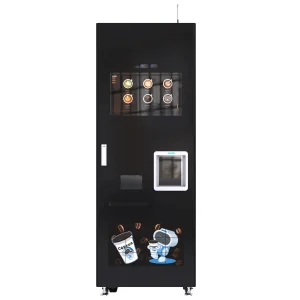
Wholesale SF308 Coffee Vending Machine

Wholesale SF308 Freshly Ground Hot & Iced Coffee Vending Machine

View Specifications
Wholesale Makeup Vending Machine

Wholesale Cosmetics & Beauty Vending Machine (Eyelashes, Lipstick, Nails)

View Specifications
ODM Commercial Vending 24/7 Unattended

ODM Commercial Cotton Candy Machine Factory for 24/7 Unattended Operations

View Specifications
Wholesale Custom Small Semi Automatic Cotton Candy

Wholesale Efficient Small Semi-Automatic Cotton Candy Vending Machine

View Specifications

Frequently Asked Commercial & Engineering Questions

Detailed insights directly from our engineering team regarding CE compliance, IoT integration, maintenance cycles, and OEM customization.

What specific test reports are included with your CE Certification documentation?
Our CE Certification compliance package includes official laboratory test reports covering the Machinery Directive (2006/42/EC), Low Voltage Directive (LVD 2014/35/EU), and Electromagnetic Compatibility (EMC Directive 2014/30/EU). Additionally, food-contact components are verified under EU 1935/2004 regulations. We provide the full Technical Construction File (TCF) and Declaration of Conformity (DoC) for seamless customs validation and insurance clearance.
How does the IoT cloud management system handle multi-location fleet operations?
Each machine is equipped with an industrial-grade IoT gateway connecting via 4G/5G or Ethernet to our centralized telemetry platform. Operators can remotely monitor real-time sales revenue, sugar/milk ingredient levels, internal temperature curves, fault codes, and mechanical cycle counts. Automatic SMS or email alerts notify maintenance teams before stock runs out or if ambient temperature deviations occur.
What payment hardware options can be integrated for international markets?
Our control boards support standard MDB (Multi-Drop Bus) and Executive protocols. We routinely pre-install and configure Nayax VPOS Touch, Ingenico, Payter, and CPI bill validators and coin acceptors. For Asian and South American markets, we support direct API integration for QR code digital wallets (Alipay, WeChat Pay, PayTM, Mercado Pago) and contactless NFC credit cards (Apple Pay, Google Pay).
What daily and weekly sanitation maintenance is required for ice cream and sugar machines?
Automated soft-serve ice cream machines feature programmable pasteurization cycles and automated CIP (Clean-In-Place) hot water flushing systems, reducing manual disassembly to once every 7–14 days depending on local health codes. For cotton candy machines, an automated steam-cleaning nozzle purges the spinning atomizer head after a set number of vends or during scheduled night cycles to prevent sugar crystallization.
Can we brand the machine exterior and touchscreen interface under an OEM/ODM agreement?
Yes. We offer turnkey OEM/ODM customization. This includes custom vinyl graphics wraps, LED cabinet lighting accents, laser-cut logo faceplates, and custom UI/UX touchscreen software layouts. Operators can upload custom videos to play on the high-definition display during idle standby mode to boost promotional visibility.
What is the typical shipping lead time and export packaging standard?
Standard production lead time for sample or small-batch orders is 15 to 20 business days. Units are packaged according to export standards: vacuum-sealed anti-moisture wrapping, corner foam protection, and fully enclosed ISPM 15 fumigation-free wooden crates reinforced with steel banding to withstand ocean container transit.

Partner with a World-Class CE Vending Manufacturer

Whether you are expanding an existing self-service fleet, engineering a specialized ODM retail concept, or seeking regional distribution rights, our engineering team is ready to assist.

Request OEM/ODM Quote