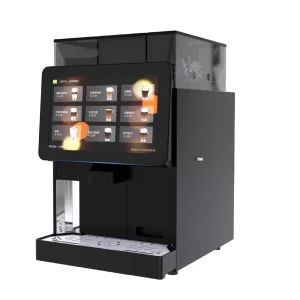
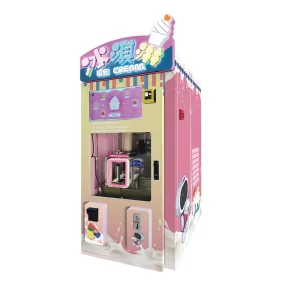
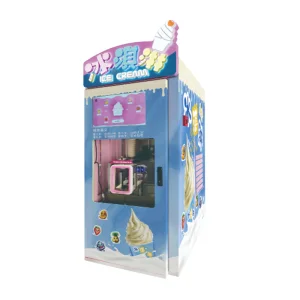
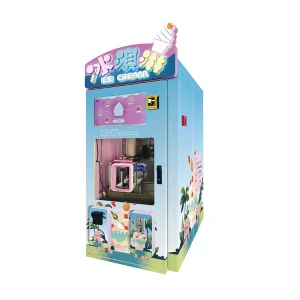
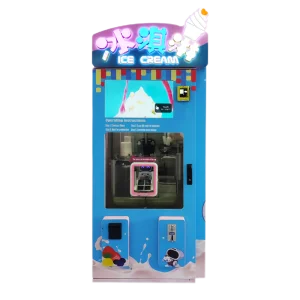
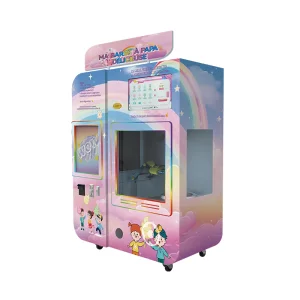
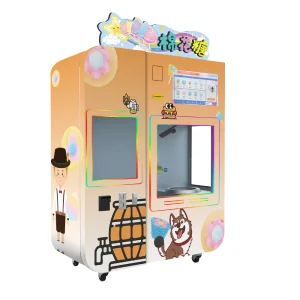
Explore our primary fleet of CE-certified candy floss, cosmetics, and smart robotic vending units available for worldwide commercial deployment.
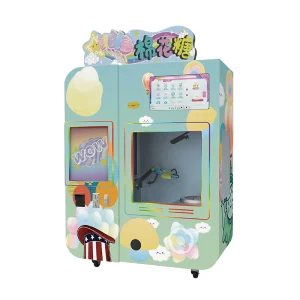
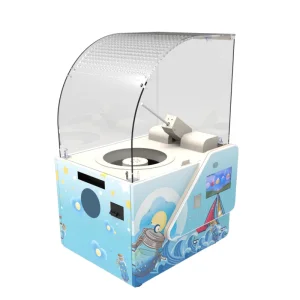

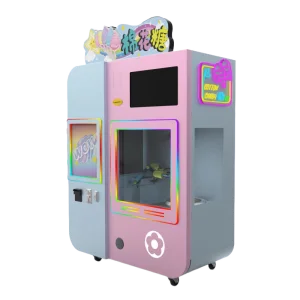

Navigating European Market Access for Automated Food & Beverage Kiosks
The global commercial vending machine market has undergone a paradigm shift from traditional mechanical snack dispensers to fully autonomous, robotic food-processing centers. Devices such as automated cotton candy robots, soft-serve ice cream kiosks, bean-to-cup coffee machines, and fresh popcorn dispensers represent the forefront of unattended retail. However, operating automated food preparation units within public venues across the European Union (EU) and the European Economic Area (EEA) requires strict adherence to mandatory legal safety standards.
The CE (Conformité Européenne) mark is not merely a quality seal; it is a mandatory legal declaration that a vending machine complies with all applicable European Directives regarding safety, health, environmental protection, and consumer hygiene. Importing, distributing, or operating non-compliant vending machines inside the EU creates grave commercial liabilities, including immediate customs impoundments, heavy administrative fines, product recall orders, and complete forfeiture of commercial operating licenses.
Unlike simple non-powered lockers or passive ambient vending units, automated food machines combine high-voltage electrical circuits, rapid-heating elements, high-speed rotary actuators, pressurized water/sugar transport, cloud IoT telemetry, and direct food-contact surfaces. Consequently, compliance must simultaneously satisfy multiple intersecting European Directives rather than a single isolated standard.
Detailed Analysis of Machinery, Electrical, EMC, Food Contact, and Wireless Directives
Requires comprehensive mechanical risk assessment (EN ISO 12100). Robo-arms, rotary sugar burners, and cup dispensing mechanisms must feature hardware-interlocked safety doors, pinch-point physical guards, and immediate emergency-stop (E-stop) circuit trip triggers to prevent injury to children or maintenance technicians.
Governs electrical equipment operating between 50V–1000V AC. Mandates double-insulated wiring harness design, strict creepage/clearance distance engineering, grounded metal chassis framing, flame-retardant electrical enclosures (UL94-V0), and dielectric breakdown testing to eliminate electric shock hazards.
Ensures that high-frequency sugar heating elements, refrigeration compressors, and pulse-width modulated (PWM) motors do not emit electromagnetic interference (EMI) that disrupts nearby equipment, while maintaining immunity against external power surges or electrostatic discharges (ESD).
All internal materials interacting with liquid mix, sugar granules, syrup, ice cream, or purified water must be certified food-grade (e.g., 304/316 stainless steel, food-grade silicone tubing, BPA-free acrylic dispenser chambers). No heavy metal leaching or toxic chemical migration under high heat.
Applies to smart machines containing 4G LTE routers, Wi-Fi modules, or NFC/RFID cashless payment terminals. Validates radio frequency spectrum efficiency, cybersecurity against unauthorized network intrusions, and human electromagnetic field radiation safety.
Mandates automated cleaning and sanitization pathways. Robotic ice cream and coffee machines require automated CIP (Clean-in-Place) high-temperature steam/water flushing systems and sealed pasteurization cycles to prevent bacterial proliferation (e.g., Listeria, E. coli).
| EU Directives | Harmonized EN Standards | Technical Testing Parameter | Operational Safety Focus |
|---|---|---|---|
| 2006/42/EC (Machinery) | EN ISO 12100, EN 60204-1 | Mechanical strength, emergency stop responsiveness, actuator isolation | Prevention of mechanical entrapment, robotic arm collision stopping |
| 2014/35/EU (LVD) | EN 60335-1, EN 60335-2-75 | Hi-Pot dielectric testing (1500V AC), leakage current (<0.75mA), ground bonding | Complete prevention of shock hazards to public end-users |
| 2014/30/EU (EMC) | EN 55014-1, EN 55014-2 | Conducted & radiated emissions, surge immunity testing, electrostatic discharge | Grid stability and uncorrupted payment transaction processing |
| (EC) 1935/2004 (Food Contact) | EN 1186, EN 13130 | Overall migration limit testing (OML), heavy metals (Pb, Cd, Cr, Ni) extraction | Ensuring non-toxic, zero-contamination food product dispensing |
| 2014/53/EU (RED) | EN 301 489-1, EN 62311 | RF power spectrum emissions, wireless coexistence, SAR exposure limit verification | Reliable IoT telemetry communication without signal disruption |
Vetting Qualified Source Manufacturers versus Assembly Trading Agencies
The global demand for unmanned retail hardware is surging, driven by escalating labor costs, 24/7 consumer expectations, and high profit margins on interactive food items. Automated cotton candy machines, for instance, deliver gross profit margins exceeding 85%, turning raw sugar into high-value artistic confections within 90 seconds. However, commercial profitability is entirely dependent on machine uptime and continuous hardware stability.
Enterprise procurement teams must evaluate Chinese OEM/ODM source factories against rigorous engineering benchmarks. Working directly with a dedicated manufacturing facility—such as Guangzhou Seven Cloud Technology Co., Ltd. (SevenCloud / Qiyun)—ensures complete control over mechanical design, sheet metal fabrication, PCB circuit design, and firmware customization.
To guarantee that every unit passing through customs complies with its CE Declaration of Conformity (DoC), reputable factories execute an end-to-end 11-step Quality Control protocol prior to international crating:
Rigorous chemical and dimensional testing of raw stainless steel, food-grade silicone, electrical relays, and touch display panels prior to production assembly.
Microscopic verification of soldered wiring harnesses, motor mount alignments, gear ratios, and thermal insulation shielding.
Bench-testing high-voltage burner heads, cooling compressors, coin/bill acceptors, and card payment telemetry devices in isolated test rigs.
Every assembled machine undergoes a mandatory 24-hour non-stop burn-in cycle, cycling all heaters, robotic arms, and dispenser doors to detect premature component failures.
Automated execution of 200 sequential dispense cycles simulating peak traffic conditions in high-volume shopping malls or theme parks.
Simulating rough sea freight transit and road transport conditions to verify frame weld integrity, bolt tightening torques, and structural rigidity.
Adapting Voltage, Cashless Gateways, and Multilingual UIs for Regional Venues
Achieving international market deployment requires localized hardware adaptation. A CE-certified machine destined for Europe must run natively on 230V 50Hz AC power with Type E/F CEE 7/7 plugs, whereas units exported to North America require 110V/220V 60Hz configurations with NEMA plugs and ETL/UL certifications. Suppliers must offer granular OEM factory customization options to align with local infrastructure.
Seamless integration with MDB (Multi-Drop Bus) protocols supporting Nayax, Pax, Crane, and Ingenico card readers, as well as contactless QR wallets (Apple Pay, Google Pay, PayPal, WeChat Pay, Alipay).
Factory pre-installed user interface software supporting 30+ international languages (English, French, German, Spanish, Portuguese, Russian, Arabic, Japanese, Korean, Hindi) with automated currency conversion.
Real-time telemetry dashboards accessible via iOS, Android, or Web browser. Monitor live sales revenues, track raw sugar/milk mix inventory levels, receive fault codes, and push remote firmware updates over-the-air (OTA).
AI Computer Vision, Precision Robotics, and Eco-Conscious Engineering
The automated vending industry is advancing rapidly toward fully autonomous intelligent robotic micro-stores. Future CE certification frameworks will incorporate stricter cybersecurity mandates under the EU Cyber Resilience Act (CRA) and enhanced Eco-Design directives focusing on standby power reduction and non-fluorinated natural refrigerants (R290 propane compressors).
Next-generation cotton candy vending systems employ high-resolution AI vision cameras paired with multi-axis robotic arms. The system visually inspects the expanding cotton candy web in real time, adjusting burner rotation speeds and sugar feed rates dynamically to execute intricate 3D shapes (flowers, hearts, animals) with 99.4% shape consistency regardless of ambient humidity changes.
Edge AI algorithms analyze electrical current signatures from motors and compressors to predict mechanical wear, notifying operators before a component breakdown occurs.
High-efficiency thermal insulation sleeves and smart standby sleeping modes reduce total machine kWh power consumption by up to 35% compared to legacy food kiosks.
Incorporating air-gesture controls and mobile app instant-scan dispensing to maximize sanitation in high-density hospital, transit, and academic campus environments.
Expert Answers to Critical Questions Regarding Legal Certification, Import Documentation, and Operations
A legally valid Declaration of Conformity (DoC) must be issued by the manufacturer or their authorized representative inside the EU. It must explicitly state the manufacturer details, product machine model numbers, serial number range, and list all complied harmonized European standards (e.g., EN ISO 12100 for Machinery, EN 60335-2-75 for Commercial Electric Appliances, EN 55014 for EMC). It must be accompanied by full accredited test reports from an ISO/IEC 17025 accredited laboratory (e.g., TUV, SGS, Intertek, or accredited Chinese testing authorities).
CE is a mandatory legal compliance requirement for entering the European Union market. UL (Underwriters Laboratories) and ETL (Edison Testing Laboratories) are safety certifications primarily required by local electrical inspectors and insurance underwriters in North America (USA and Canada). NAMA (National Automatic Merchandising Association) certification focuses on health and sanitation standards for vending machines in North America. Source manufacturers like SevenCloud design machines with modular architecture so they can be certified for CE, ETL, FCC, PSE, or NAMA depending on your destination market.
Sanitation is governed under EU Food Hygiene Regulation (EC) No 852/2004 and Food Contact Regulation (EC) 1935/2004. Ice cream machines must feature sealed pasteurization or automated high-temperature Clean-in-Place (CIP) water flushing systems to keep bacterial counts within strict food safety limits. Cotton candy machines require automatic water-cleaning nozzles for the burner head, transparent food-grade acrylic shield doors, and sealed sugar hoppers that prevent insect intrusion or moisture clumping.
Substantial modifications—such as rewiring internal power boards, altering mechanical gear systems, bypassing safety micro-switches, or changing control software—void the manufacturer’s original CE declaration. If an importer makes major alterations, the legal responsibility shifts to the importer, who must perform a new risk assessment and re-certify the unit as a new machine under EU law. Therefore, all required modifications (custom payment brackets, branded wraps, custom UIs) should be executed directly at the factory level prior to shipment.
Professional source manufacturers provide dedicated engineering support channels. Fault diagnostics are tracked via cloud IoT error logs. When a technical glitch is flagged (e.g., thermal sensor disconnect or motor over-current warning), factory technicians remotely diagnose the root cause, provide step-by-step HD video repair walkthroughs, and dispatch pre-tested replacement modules via fast air courier under warranty protocols.
Explore our specialized soft-serve ice cream robots, automated coffee kiosks, and specialized OEM vending hardware.