Engineered for high footfall commercial venues, offering automated payment processing, real-time telemetry, and certified food-grade contact components.

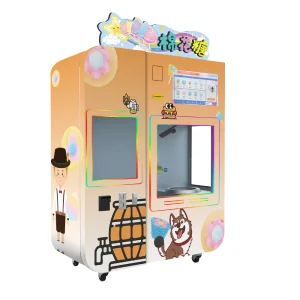
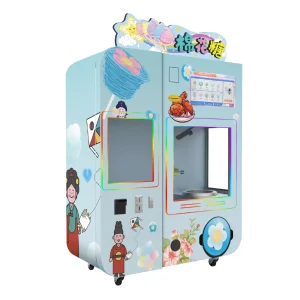
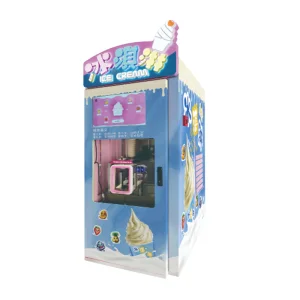
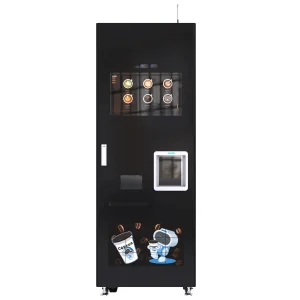
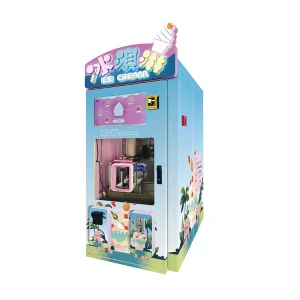
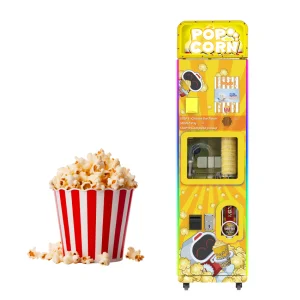
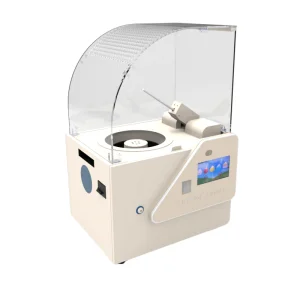
The global automated self-service retail landscape is undergoing a structural paradigm shift driven by advancing robotic automation, high labor overheads, and consumer demand for instant, experiential gratification. At the epicenter of East Asia's unattended retail expansion, South Korea has emerged as a premier launchpad and high-density market for next-generation automated food and snack robotics. Integrating strictly certified hardware—most notably CE Certification (European Conformity) and South Korea's KC (Korea Certification) electrical and safety standards—has shifted from a regulatory prerequisite to a strategic market differentiator for international operators, facility managers, and vending fleet investors.
In high-density urban corridors across Seoul (Gangnam, Hongdae, Myeongdong), Busan, and Incheon, commercial self-service terminals are evolving beyond traditional canned beverage dispensations into interactive visual food preparation stations. Fully automated cotton candy robots capable of carving 64+ complex 3D floral geometry patterns, robotic soft-serve ice cream terminals operating under strict pasteurization regimes, precision bean-to-cup coffee stations, and oil-free popcorn dispensers now define the modern consumer interface. This whitepaper systematically evaluates the regulatory compliance frameworks, manufacturing engineering specs, IoT telemetry infrastructures, and localized operational support models required to deploy high-ROI vending fleets in Korea and worldwide.
Key Takeaway for Enterprise Buyers: Ensuring factory-level compliance with CE Directive 2006/42/EC (Machinery), 2014/35/EU (Low Voltage), and KC Safety Harmonization drastically accelerates municipal site approvals, drastically reduces liability risks, and guarantees seamless integration with local cashless payment ecosystems including KakaoPay, NaverPay, and Korean EMV credit card networks.
Achieving enterprise compliance requires harmonizing international safety marks with localized electrical safety and sanitation mandates.
Ensures all moving robotic arms, heating elements, high-speed sugar spinners, and cup-dispensing actuators feature dual-channel emergency stop interlocks, protective tempered glass barriers, and fail-safe sensor cutoffs.
Electromagnetic Compatibility (EMC) guarantees zero signal interference with surrounding retail wireless networks or POS systems. Low Voltage Directive (LVD) protects against electrical surges and ground fault leaks.
Factory production processes incorporate components pre-qualified for South Korea's KC Safety Standard, enabling streamlined registration for local importers covering voltage requirements (220V/60Hz) and plug configurations.
All food preparation zones—from ice cream freezing cylinders and coffee bean hoppers to cotton candy burning heads and popcorn kettle chambers—utilize certified food-grade SUS304 stainless steel and non-toxic, heat-resistant silicone seals compliant with global food contact regulations (FDA, LFGB, RoHS). Integrated automatic high-temperature cleaning cycles and ozone/UV sterilization preserve microbiological safety during 24/7 continuous operation.
South Korea represents one of the most technologically receptive self-service markets globally. Driven by dense urban architecture, high smartphone penetration (exceeding 98%), and rapidly shifting consumer demographics favoring unmanned storefronts (Unmanned Stores / "무인 매장"), commercial vending infrastructure has transitioned into a highly profitable real estate monetization vehicle.
In Korean metropolitan zones, traditional vending machines are no longer isolated coin-operated boxes placed in alleyways. Instead, they form the core attraction in hybrid entertainment hubs—including self-photo studios (Life Four Cuts concepts), 24-hour unmanned coin arcades (노래방 / KTV rooms), family entertainment centers (FECs), and premium shopping mall atrium zones (COEX, Lotte World Tower, Shinsegae Centum City). Robotic cotton candy vending machines, capable of creating multi-colored visual candy art in 90 seconds, function simultaneously as high-margin concession stations and social media photo backdrops.
Korea is functionally a cashless society. Successful deployment of vending equipment across Korean factories, transport hubs, and retail venues requires seamless hardware API integration with local payment gateway terminals (such as KIS Information & Communication, KCP, and NICE Information Service). SevenCloud hardware architectures accommodate dual IC-card readers, NFC pay terminals, KakaoPay, NaverPay, and QR code redemption systems. Furthermore, cloud IoT backend platforms allow Korean operators to monitor real-time ingredient levels (sugar, milk mix, coffee beans, paper cups), track daily revenue analytics, and receive instant alert notifications via smartphone applications.
With South Korea's minimum wage increases over recent years, food service operators face severe margin pressures. Automated food robots eliminate ongoing staffing costs, reduce electricity consumption via intelligent sleep-mode algorithms, and operate non-stop 365 days a year. A single robotic soft-serve ice cream or cotton candy terminal operating at 70-80% gross profit margins can achieve full capital expenditure payback (CAPEX ROI) within 3 to 6 months depending on venue footfall traffic.
Customizable OEM/ODM manufacturing architectures tailored for global multi-unit fleet operators, regional distributors, and hospitality chains.
Centralized SaaS telemetry dashboard monitoring supply levels, mechanical motor temperature, sales velocity, and diagnostic fault codes. Supports over-the-air (OTA) software updates and dynamic remote menu pricing control.
High-torque multi-axis robotic arms engineered for thousands of maintenance-free cycles. Features high-accuracy humidity sensors and climate-controlled cabinet enclosures to maintain sugar and powder ingredient integrity regardless of ambient weather.
Multi-protocol MDB / Executive interface supporting bill acceptors, coin mechanisms, contact/contactless credit card readers (Visa, MasterCard, JCB, UnionPay), and local mobile wallets across Asia, Europe, and North America.
Unattended equipment must operate reliably without on-site human supervision. A machine failure translates directly to lost retail revenue and brand damage. At our 11,000 square meter Guangzhou production complex, SevenCloud (Guangzhou Seven Cloud Technology Co., Ltd.) enforces an uncompromised 11-step Quality Control (QC) framework before any unit is cleared for ocean or air freight export.
Every sheet metal panel, industrial bearing, peristaltic pump, touchscreen display, and internal power supply undergoes rigorous Incoming Quality Control. Steel housing panels are checked for anti-corrosion powder coating thickness, while electrical assemblies are stress-tested for voltage fluctuation tolerance.
Prior to full chassis mounting, specialized subsystem modules—such as the high-speed cotton candy spinning burner head, soft-serve refrigeration compressor circuit, coffee bean grinder blade assembly, and popcorn heating kettle—are bench-tested for thermal stability, vibration isolation, and noise suppression.
Fully assembled machines undergo an intensive 24-hour continuous electrical and operational burn-in test. Cotton candy machines execute automated automated sequence simulations across 200 consecutive cycles to verify pattern precision, stick picking reliability, and auto-cleaning water jet flushing efficiency. Refrigerator systems undergo thermal pulldown testing to guarantee optimal soft-serve mix temperature maintenance under high ambient heat conditions.
Pioneering the next generation of artificial intelligence, robotic computer vision, and green refrigeration in self-service food equipment.
Next-gen machine vision cameras inside dispensing chambers analyze candy shape geometry and soft-serve swirl heights in real time. Sub-optimal products are automatically discarded before customer retrieval, ensuring 100% aesthetic perfection.
Transitioning soft-serve ice cream refrigeration circuits to ultra-low GWP (Global Warming Potential) R290 hydrocarbon refrigerants, aligning with EU F-gas regulations and global sustainability directives.
Empowering users via touchscreen UIs to draw custom cotton candy shapes or text messages, which the robotic arm converts instantly into precision mechanical motion trajectories.
Direct answers to technical, regulatory, and commercial procurement inquiries from enterprise operators and distributors.
To import and operate food vending equipment in South Korea, machines must comply with Korean Electrical Safety standards (KC Certification) and Food Sanitation Act requirements. European CE Certification provides a comprehensive foundation covering structural safety (Machinery Directive) and EMC. Factory configuration must support 220V/60Hz power specifications and integrate approved local payment readers.
SevenCloud machines incorporate automated sanitation routines. Ice cream robots feature pasteurization heating cycles and automated liquid line cleaning. Cotton candy robots feature high-pressure hot water nozzles that automatically flush sugar residue from the burner head and collection chamber after set production intervals.
Yes. Equipment architecture supports standard MDB card reader cutouts and software integration with Korean payment gateways (NICE, KCP, KIS). This enables acceptance of local credit/debit cards, Apple Pay, KakaoPay, NaverPay, and QR code vouchers.
A fully loaded cotton candy vending station holds up to 4 distinct colored sugar hoppers (4–5 kg capacity each) and up to 200–300 paper sticks. This allows continuous production of approximately 200 to 250 cotton candy units before requiring sugar or stick replenishment.
We offer comprehensive OEM/ODM customization, including custom exterior vinyl decals, LED accent lighting colors, custom brand logos, touchscreen UI language localizations, payment reader cutouts, specialized voltage/frequency wiring, and software function modifications.
All machines come with detailed technical documentation, modular component wiring diagrams, and spare parts support. Remote technical diagnostics, video guidance, and fast-express replacement part dispatch ensure minimal operational downtime for overseas distributors.
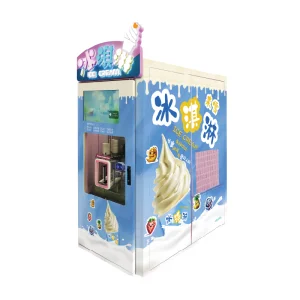
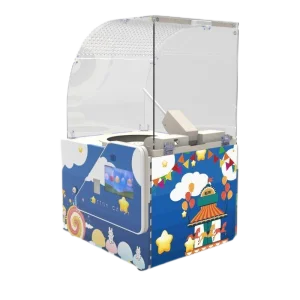
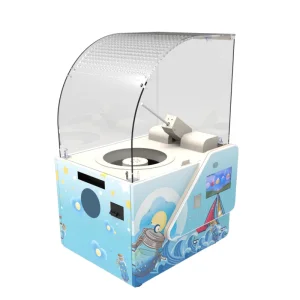
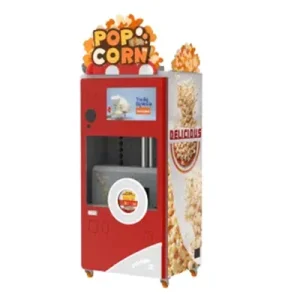
From compact semi-automatic desktop units to enterprise industrial production lines and retail specialty dispensers.
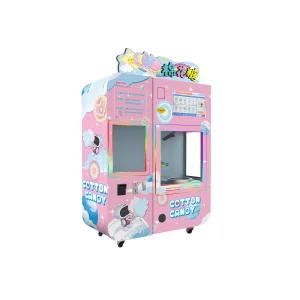


Partner directly with Guangzhou Seven Cloud Technology Co., Ltd. (SevenCloud). Request comprehensive product catalogs, custom OEM/ODM quote evaluations, regulatory compliance documentation, and ocean freight logistics plans.
