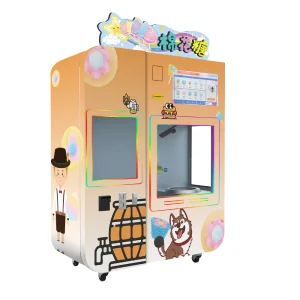
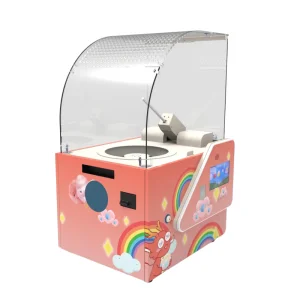
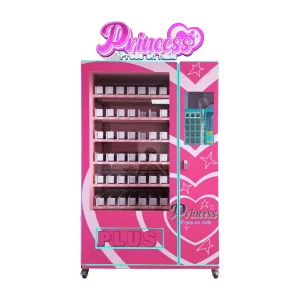
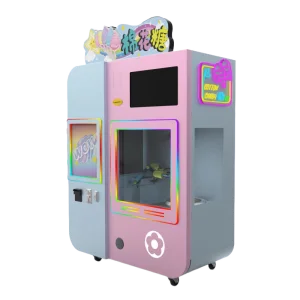
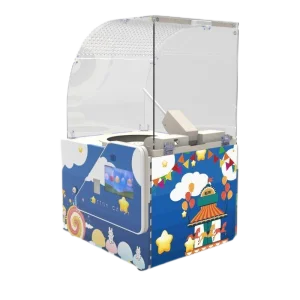
Select certified commercial vending hardware engineered for 24/7 unattended high-margin retail performance.
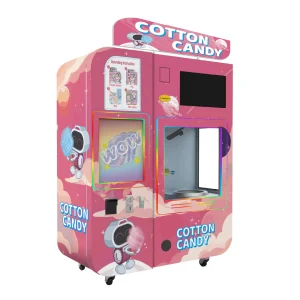

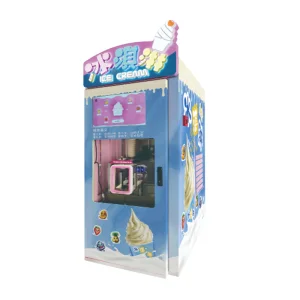

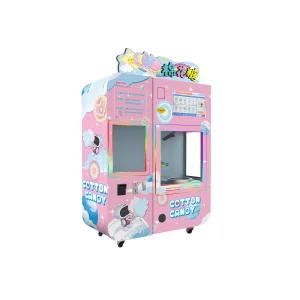
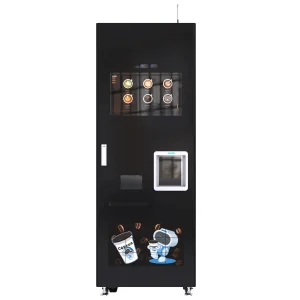
The global vending machine market is undergoing a paradigm shift from traditional passive snack/beverage dispensers toward Interactive Unattended Automated Retail (UAR). Driven by rising labor costs, commercial real estate optimization, and consumer appetite for real-time experiential dining, automated food robotics—specifically fully automated robotic cotton candy machines, soft-serve ice cream robots, smart popcorn dispensers, and bean-to-cup coffee kiosks—have emerged as high-yield capital assets.
When fleet operators, event concessionaires, and procurement executives evaluate smart vending equipment, the central query is inevitably: "How much profit does a CE-certified vending machine generate, and what is the true payback timeline?" This whitepaper delivers an exhaustive financial, technical, and regulatory breakdown designed for enterprise procurement teams, commercial operators, and institutional investors seeking to scale automated retail operations.
To quantify the profitability of CE-certified vending machines, fleet planners must isolate the Unit Economics Matrix across four major commercial categories: Robotic Cotton Candy, Soft Serve Ice Cream, Commercial Popcorn, and Specialty Coffee.
| Vending Category | Avg. Ingredient Cost (COGS) | Consumables (Sticks/Cups/Bags) | Avg. Retail Selling Price | Gross Profit per Serving | Gross Margin (%) | Est. Daily Volume (Units) | Monthly Net Profit (Est.) |
|---|---|---|---|---|---|---|---|
| Robotic Cotton Candy (SC-320A Series) | $0.12 (Sugar & Flavor) | $0.08 (Paper Stick) | $5.00 - $8.00 | $4.80 - $7.80 | 92.5% | 60 - 120 units | $8,640 - $28,000 |
| Robotic Ice Cream (SI-321 Robot) | $0.40 (Mix & Syrup) | $0.10 (Cone/Tub + Spoon) | $4.50 - $6.50 | $4.00 - $6.00 | 86.2% | 80 - 150 units | $9,600 - $27,000 |
| Automatic Popcorn (P30 6-Flavor) | $0.25 (Corn, Oil, Seasoning) | $0.15 (Bucket / Paper Bag) | $4.00 - $6.00 | $3.60 - $5.60 | 87.5% | 70 - 140 units | $7,560 - $23,500 |
| Fresh Ground Coffee (SF308 Series) | $0.35 (Beans & Milk Powder) | $0.12 (Paper Cup & Lid) | $3.50 - $5.50 | $3.03 - $5.03 | 82.4% | 90 - 200 units | $8,180 - $30,180 |
While gross margins are exceptionally high, calculating true Net Operating Profit requires factoring fixed and variable operational costs. Below is a standardized monthly operating model based on a premier shopping mall atrium deployment in North America or Western Europe:
Location access fees typically follow one of two models: Fixed monthly lease ($300 - $800/month for a 1.5–2m² footprint) or a percentage revenue share (10% - 18% of gross monthly sales).
Commercial vending robots operate on 110V/220V power. Idle draw averages 150W; peak operation (heating burner or refrigeration compressor) reaches 1500W - 2500W. Monthly utility cost ranges between $45 and $110.
4G IoT telemetry backend services cost $10 - $25/month per machine. Credit card processing fees (Nayax, CPI, Stripe) average 2.5% - 3.5% per transaction.
Monthly Break-Even Volume = Total Fixed Costs (Rent + Power + Telemetry) / (Retail Unit Price - Variable Cost per Unit)$600 / ($6.00 - $0.20) = 104 units per month (only ~3.4 sales per day to break even!).
When enterprise companies, vending operators, and OEM partners procure commercial robotic vending machines, sourcing directly from specialized Chinese manufacturing hubs like Guangzhou provides distinct competitive and financial leverage.
By leveraging integrated supply chains for precision sheet-metal fabrication, robotic arm assemblies, and custom PCB design, Chinese manufacturers deliver industrial-grade robotic hardware at a fraction of Western production costs. Lower upfront Capex drastically shortens the payback period for fleet operators.
Leading factories maintain in-house software, electrical, and mechanical engineering teams. Whether modifying chassis dimensions, customizing multi-language touchscreens, or integrating localized bill validators/card readers (Nayax, Payter), factory-direct engineers execute custom hardware mods within tight timelines.
Tier-1 factories apply stringent ISO-grade quality protocols. Prior to crating, machines undergo a continuous 24-hour electrical burn-in, stress testing over 200 consecutive preparation cycles, and simulated transit vibration testing to guarantee plug-and-play reliability upon overseas delivery.
For buyers importing smart vending hardware into the European Union, United Kingdom, Middle East, and Australia, CE Certification is not merely a marketing label—it is a legal prerequisite for customs clearance, commercial insurance coverage, and venue leasing compliance.
Operating food preparation machinery requires strict food safety engineering. Top-tier vending factories utilize food-grade 304/316 stainless steel for sugar bowls, dispensing nozzles, and liquid hoppers. Machines feature automated high-temperature steam self-cleaning cycles (Clean-in-Place / CIP systems), preventing bacterial build-up and satisfying municipal health inspection codes worldwide.
Optimal placement dictates profit velocity. Commercial vending robots perform best in locations characterized by high footfall, extended dwell times, and an inclination toward impulsive, visual purchases.
Ideal Models: Cotton Candy Robot, Soft Serve Ice Cream Robot.
Why it Works: Visual lighting effects and transparent glass windows draw children and families. Positioned near food courts, kids' play zones, or main entrance corridors, a single unit routinely turns over 80 to 150 servings per weekend day.
Ideal Models: SC-320A Cotton Candy, P30 Popcorn Robot.
Why it Works: Captures high-volume holiday queues. Outdoor/indoor operational resilience ensures continuous high-margin sales without paying peak hourly wages for concession staff.
Ideal Models: Popcorn Vending Machine, Semi-Automatic Cotton Candy.
Why it Works: Complements gaming and bowling activities. Provides cashless micro-transactions that keep visitors inside the entertainment complex longer.
Ideal Models: SF308 Coffee Machine, Ice Cream Robot.
Why it Works: Provides 24/7 round-the-clock hot coffee and premium desserts during off-peak hours when human-staffed coffee shops are closed.
Scaling a multi-unit vending operation from 5 to 500 machines demands enterprise-grade IoT backend connectivity, intelligent telemetry, and flexible payment gateway integration.
Real-time telemetry dashboards allow fleet managers to monitor live sales volume, ingredient levels (sugar, liquid mix, syrup), internal cabinet temperatures, and fault warnings remotely via smartphone or desktop PC. Automated restock alerts minimize machine downtime.
Factory-built compatibility for MDB/Pulse protocols enables seamless integration with Nayax, CPI, Payter, magnetic card readers, Apple Pay, Google Pay, QR code wallets (Alipay, WeChat Pay, KakaoPay), and local banknote/coin acceptors tailored to target import countries.
Enterprise procurement clients can request custom vinyl cabinet wraps, personalized UI touchscreen software themes, branded video splash screens, custom stick formats, and tailored outer LED light sequences to align with corporate brand identity.
Explore additional high-profit models engineered for retail customization, specialty venues, and event rental operations.