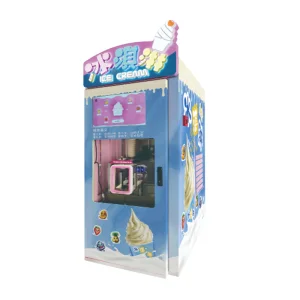
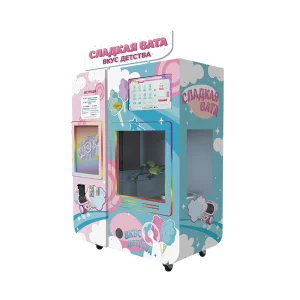
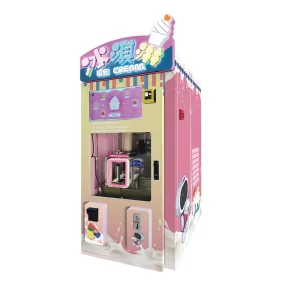
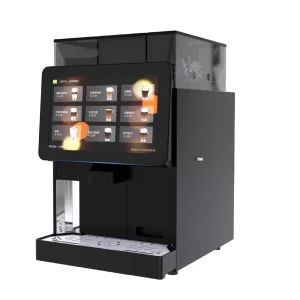
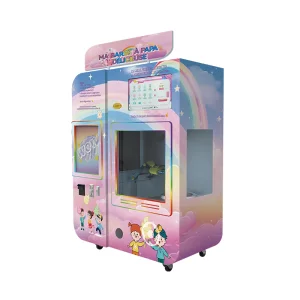
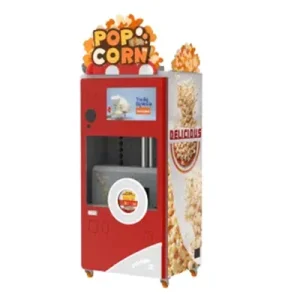
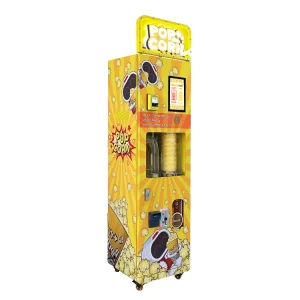
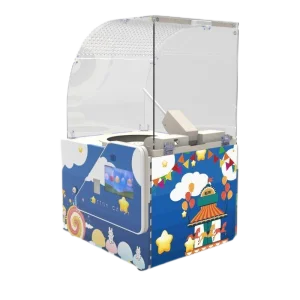
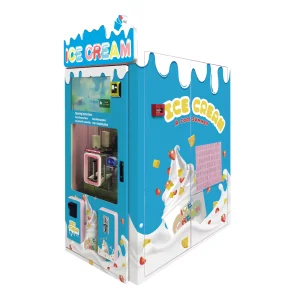
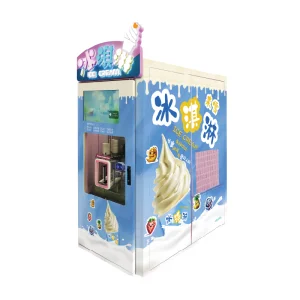
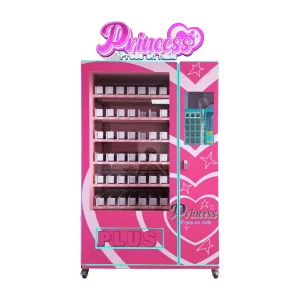
Explore commercial-grade automated retail solutions engineered for high-durability global transport and compliant with stringent CE machinery and electrical directives.
In the rapidly scaling global automated retail sector, deploying sophisticated robotic kiosks—such as soft-serve ice cream dispensers, fresh cotton candy spinners, bean-to-cup coffee hubs, and popcorn units—presents unprecedented operational revenue potential. However, bridging the gap between factory-floor manufacturing and operational installation requires navigating complex cross-border compliance and physical transport dynamics. A critical yet frequently understated vector of project risk lies in the safe transportation of CE-certified vending machinery across international maritime, air, and overland logistics channels.
CE Certification (Conformité Européenne) is not merely an electrical safety badge; it represents a comprehensive structural, electromagnetic, and mechanical safety validation. Under the European Machinery Directive 2006/42/EC, Low Voltage Directive (LVD) 2014/35/EU, and Electromagnetic Compatibility (EMC) Directive 2014/30/EU, equipment must maintain structural integrity and electrical isolation even after exposure to severe mechanical shocks, continuous vibration, and environmental shifts encountered during global transport. Suppliers and corporate enterprise purchasers must adopt an integrated engineering framework that aligns packaging design with CE structural compliance.
Enterprise procurement officers representing commercial shopping centers, theme parks, transportation hubs, and franchisee syndicates operate under strict return-on-investment (ROI) timelines. Unscheduled equipment downtime due to transport damage directly impacts capital efficiency. As a result, procurement evaluation rubrics have shifted from simply rating initial unit purchase cost to assessing the entire OEM/ODM transport safety methodology.
Complete technical construction files (TCF), including CE Declaration of Conformity (DoC), test reports according to EN 60335-1 (Safety of Household and Similar Electrical Appliances), and detailed packing lists prevent costly border seizures and customs holding penalties.
Refrigerated vending units (such as soft-serve ice cream machines) contain sensitive capillary tubes and hermetic compressors. Exceeding a 30-degree tilt angle during loading can flush compressor oil into cooling lines, causing immediate lockup upon commissioning.
Robust, re-usable ISPM-15 compliant export crates with internal EPE foam shock buffers dramatically lower cargo insurance premiums and eliminate freight claim friction between freight forwarders and receivers.
To ensure absolute CE compliance from factory burn-in to final venue installation, advanced manufacturers execute a standardized 4-stage logistics engineering protocol.
Prior to boxing, high-precision sub-systems—including SCARA mechanical arms in cotton candy machines, linear actuators in ice cream dispensers, and coin/bill validator assemblies—are mechanically fixed using heavy-duty transport locking pins and anti-vibration zip ties. Reusable transport brackets absorb lateral dynamic forces.
Machines undergoing ocean transit experience extreme humidity variations and salt-laden air. Enclosures are sealed in industrial-grade vacuum-sealed PE bags injected with Volatile Corrosion Inhibitors (VCI) and silica desiccant bags. This preserves delicate control boards and stainless steel contact surfaces against oxidation.
The base pallet is engineered with high-density Expandable Polyethylene (EPE) foam dampeners customized to match the machine's center of gravity. Multi-layer corrugated honey-comb boards wrap the perimeter, topped with a heat-treated solid wood frame certified under ISPM-15 for worldwide customs compliance.
Every export crate is fitted with visual dynamic indicators, including TiltWatch® and ShockWatch® sensors. Next-generation smart logistics deployments incorporate IoT-enabled BLE or cellular shock loggers that record real-time 3-axis G-force accelerations and internal temperature changes during ocean container voyages.
Understanding how specific European standards govern mechanical design, electromagnetic stability, and packaging safety under transport load stress.
Machinery Directive
Mandates essential health and safety requirements for machinery design. Under transit conditions, structural welds, lifting eyes, and anchor points must withstand dynamic load acceleration factors up to 2.5G without deformation.
Electrical Safety Standard
Governs the safety of household and commercial electrical appliances. Requires post-transit insulation resistance, dielectric strength testing, and earthing continuity integrity before system power initialization.
Electromagnetic Compatibility
Ensures internal switch-mode power supplies, touchscreens, and IoT modems do not emit unwanted RF interference or suffer susceptibility when moved past industrial electromagnetic fields.
Transport Simulation Test
International Safe Transit Association protocol covering packaged products for parcel and full truckload delivery. Encompasses random vibration, atmospheric conditioning, and rotational edge drop testing.
Factory-direct automated kiosks equipped with global payment gateways, remote IoT telemetry, and ruggedized export packaging.
Securing international CE compliance does not end when the cargo ship berthed at the destination port. True operational compliance involves smooth customs clearance, localized electrical configuration (e.g., matching 230V 50Hz EU standard vs. 110V 60Hz North American standard), and post-transit mechanical verification before public activation.
Top-tier suppliers provide regional technical service networks, on-demand replacement parts stocking, and remote engineering diagnostics via integrated IoT backends. The following protocol outlines the recommended post-transport commissioning procedure to ensure CE safety compliance remains intact:
Verify that ShockWatch and TiltWatch indicators remain clear. Inspect external sheet metal and glass panels for stress deformation. Check electrical enclosures for condensation accumulation.
Remove all red transport brackets, robotic arm locks, and zip ties. For refrigeration units, allow the machine to stand upright for a minimum of 24 hours prior to powering on to allow compressor oil to settle.
Conduct earth ground resistance and insulation dielectric testing according to EN 60335-1. Engage the automatic firmware self-diagnostic cycle via touchscreen to calibrate robotic positions.
Authoritative answers to technical procurement, transport packaging, and regulatory questions from enterprise buyers and global operators.
CE Certification under the European Machinery Directive (2006/42/EC) stipulates that a machine must be designed to withstand all foreclosed operational and transport stresses without becoming a safety hazard. This requires manufacturers to design packaging that prevents structural deformation, wire harness loosening, or fluid leaks under ISO ocean freight and overland trucking vibration profiles. If a machine arrives with damaged electrical insulation or displaced safety interlocks due to poor transport design, its CE compliance is compromised until re-tested.
During ocean freight or truck transport, vending machines experience vibration and subtle tilting. Compressor cooling systems rely on internal synthetic ester or mineral oils for hermetic rotor lubrication. If tilted beyond 15 degrees during transit, oil flows into the evaporator coil and suction tubing. Turning the power on immediately forces liquid oil into the cylinder, causing hydraulic compressor lockup and motor burnout. Allowing the unit to sit upright for 24 hours lets gravity return oil safely to the compressor sump.
Enterprise buyers should request a comprehensive technical dossier comprising: (1) Official CE Declaration of Conformity (DoC) listing applicable directives (2006/42/EC, 2014/35/EU, 2014/30/EU), (2) Test reports from an accredited ISO 17025 laboratory, (3) English-language user and maintenance manual with circuit schematics, (4) ISPM-15 wood fumigation/heat treatment certificate for crates, and (5) HS Code classification breakdown (typically HS 8476.21 for refrigerated beverage/food vending or HS 8476.89 for general food equipment).
High-end robotic vending kiosks utilize dual-layer protection: internal structural locking pins and external damped packaging. Internally, multi-axis robotic arms and dispensing gantry carriages are bolted to factory steel datum points with high-visibility red transport brackets. Linear rails are coated with heavy anti-corrosion grease and secured with vibration-resistant blocks. Externally, custom-molded high-density EPE foam cradles the cabinet within an ISPM-15 solid plywood frame, absorbing high-frequency transport resonances.
Most modern commercial vending machines (including ice cream, coffee, and popcorn units) are engineered as single-unit plug-and-play cabinets designed for 100% fully assembled transit. This preserves factory calibration and factory-sealed electrical interlocks required for CE safety certification. Optional top-mounted decorative lightboxes or side advertising wings may be detached and packed in sub-boxes within the primary crate to maintain standard container door heights during loading.
If a ShockWatch (exceeding 25G to 50G impact) or TiltWatch indicator is red upon delivery, the recipient must immediately record the condition on the Bill of Lading (BOL) prior to signing. Photograph the crate exterior from multiple angles before opening. During unboxing, perform a structured visual and electrical inspection checking frame squareness, internal wiring plug seats, glass structural integrity, and refrigerant line brazing welds before attempting system boot-up.