Explore our factory-engineered robotic ice cream and cotton candy vending platforms compliant with European Union safety directives and international electrical standards.


Analyzing macro trends, regulatory dynamics, and structural shifts driving enterprise adoption of CE-certified vending machinery across international markets.
The global automated vending landscape has transitioned from passive canned-beverage dispensers to highly complex, autonomous robotic food points of sale (POS). Modern commercial operators no longer evaluate equipment purely on physical hardware footprint; instead, enterprise procurement frameworks prioritize CE Certification integrity, operational uptime (MTBF), food-contact hygiene engineering, and telemetry cloud compatibility. As labor costs rise globally by an average of 4.8% annually, commercial venue owners—ranging from regional shopping mall conglomerates to international theme park operators—are deploying automated dessert and snack robots to capture high-margin impulse purchases without increasing headcount.
Within this evolving ecosystem, establishing a perfect vending machine company requires harmonizing electrical safety, mechanical endurance, and sanitary design. CE Certification serves as the ultimate baseline for market entry across the European Economic Area (EEA) and acts as a global benchmark for safety verification in over 80 countries worldwide. Procuring equipment from certified manufacturing facilities guarantees compliance with mandatory directives including the Low Voltage Directive (2014/35/EU), the Electromagnetic Compatibility Directive (2014/30/EU), and the Machinery Directive (2006/42/EC).
A comprehensive breakdown of European Union directives governing automated food preparation machinery and electrical safety.
The Low Voltage Directive ensures electrical equipment operating between 50V–1000V AC protects operators and consumers from electrical shock, insulation breakdown, and thermal hazards. Compliance requires rigorous insulation resistance testing, dielectrical strength verification, and creepage distance auditing under standard EN 60335-1.
Electromagnetic Compatibility mandates that automated vending machines neither generate excessive electromagnetic interference (EMI) that disrupts nearby commercial infrastructure nor suffer operational failure due to external electromagnetic disturbances. Verified under EN 55014-1 and EN 55014-2 test standards.
Covering moving robotic elements (e.g., multi-axis SCARA arms, linear actuators, and rotating sugar burners), MD 2006/42/EC mandates physical pinch-point protection, optical safety curtains, emergency stop circuits (ISO 13850), and functional safety SIL ratings according to EN ISO 13849-1.
Beyond electrical safety, food-vending robots dispensing dairy liquid mixes or confectionery sugars must comply with strict food-contact material safety regulations. All fluid tubes, dispensing nozzles, robotic grabbers, and storage hoppers in SevenCloud machinery utilize food-grade 304/316 stainless steel, PTFE, or NSF-certified silicone tubing to ensure zero chemical migration into consumer products.
| EU Directive / Regulation | Technical Scope | Verification Test Standard | Operational Impact on Fleet Operators |
|---|---|---|---|
| LVD 2014/35/EU | Electrical Safety & Insulation | EN 60335-1 / EN 60335-2-75 | Prevents electrical hazards, guarantees structural grounding safety. |
| EMC 2014/30/EU | Electromagnetic Immunity & Emissions | EN 55014-1, EN 55014-2 | Prevents Wi-Fi, cellular, and POS telemetry interference. |
| MD 2006/42/EC | Kinematic Mechanical Safety | EN ISO 12100 / EN ISO 13849-1 | Eliminates consumer pinch hazards during robotic dispensing. |
| EC 1935/2004 | Food Contact Material Safety | EU No 10/2011 / FDA 21 CFR | Ensures zero toxicity and total food grade hygiene integrity. |
Dissecting the mechanical subsystem design, Clean-In-Place thermal management, and enterprise telemetry integration.
SevenCloud robotic vending machinery incorporates high-precision brushless DC servo motors combined with planetary gearboxes to drive multi-axis motion arms. In soft-serve ice cream applications, the robotic arm executes controlled dynamic trajectory curves, maintaining precise cup fill speeds to produce uniform, aesthetic spiral shapes without air gaps or product overflow. In automated cotton candy systems, high-speed rotary atomizers operate at up to 28,000 RPM, transforming granular sugar into micro-fibers which are shaped by robotic end-effectors into 3D flower and heart configurations.
Unattended dairy dispensing requires strict thermal monitoring to prevent bacterial growth (e.g., Listeria monocytogenes). SevenCloud machines feature dual-compressor refrigeration systems that maintain liquid mix storage hoppers at a constant 2°C to 4°C. Integrated Clean-In-Place (CIP) technology automates nightly heat treatment cycles, heating milk pathways to 65°C for 30 minutes to pasteurize liquid media, reducing manual wash cycles to once every 14 days and dramatically lowering fleet OPEX.
All SevenCloud vending robots feature embedded IoT microcontrollers communicating via MQTT over encrypted TLS 1.3 to our central telemetry platform. Fleet managers access real-time operational data including inventory levels, internal hopper temperatures, sales analytics, and component fault logs. Hardware payment interfaces support MDB 4.3 standards, enabling seamless plug-and-play integration with international payment terminals including Nayax, CPI, PAX, and contactless mobile wallets (Apple Pay, Google Pay, WeChat Pay, Alipay).
How commercial purchasers evaluate Total Cost of Ownership, CAPEX amortization, and OEM/ODM factory capabilities.
When enterprise buyers evaluate potential partners among vending machine manufacturers and supplier companies, financial modeling extends far beyond initial equipment unit price. Total Cost of Ownership (TCO) serves as the primary metric for long-term profit forecasting. TCO incorporates four core economic vectors:
Equipment procurement costs, international freight forwarding, customs duties, and local installation configuration.
Raw ingredient utilization efficiency (sugar, ice cream mix, paper sticks, cups), power consumption, and water usage.
Field technician restock travel times, CIP routine cleaning intervals, and scheduled preventive parts replacements.
Loss of income caused by component failures, coin mechanism jams, or telemetry network connectivity drops.
Baseline Parameters: Average sell price per ice cream cup = $4.50. Raw ingredient cost (dairy mix + cup + spoon) = $0.65. Gross profit margin per cup = $3.85 (85.5%).
Daily Transaction Projection: 80 cups/day in a high-footfall shopping center atrium = $308.00 daily gross profit.
Monthly Operating Profit: $9,240 gross profit - $450 venue location lease - $150 electricity/telemetry = $8,640 net monthly return.
Estimated Amortization Period: Complete CAPEX payback achieved within 2.8 to 4.2 months of operational deployment.
Adapting automated vending robotics to diverse commercial real estate environments and consumer behavior profiles.
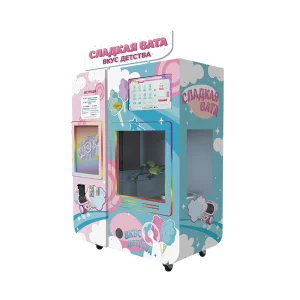
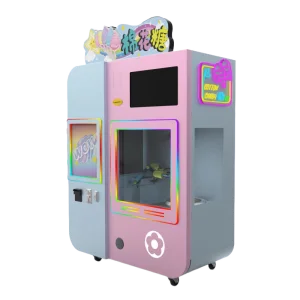
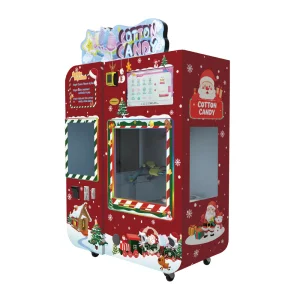
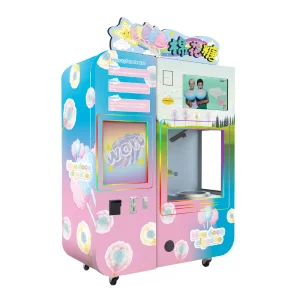
High consumer flow rates require ultra-fast dispense cycles and visual attraction features. SevenCloud flower-shaping cotton candy robots utilize animated 32-inch HD touchscreens and dynamic RGB LED lighting rings to transform sweet treat preparation into a live theatrical performance, pulling queues in amusement zones.
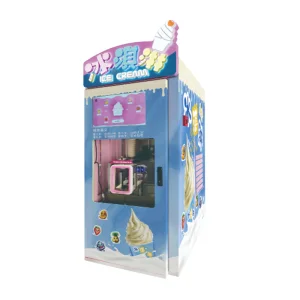
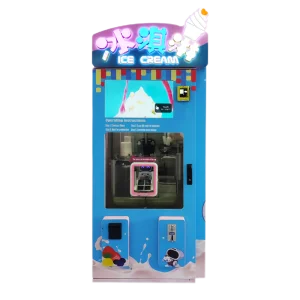
Modern mall operators seek zero-labor micro-tenants that generate steady rental income per square meter. Compact robotic ice cream kiosks require less than 1.5 m² of floor space, operating silently while connecting to existing standard single-phase power drops.
24/7 operating hours make human-staffed food outlets economically unviable during off-peak hours. Automated coffee and soft-serve vending machines bridge this gap, delivering consistent quality to night travelers while operating unattended under cloud monitoring.
Ensuring seamless physical, electrical, and payment integration across North America, Europe, Asia-Pacific, and the Middle East.
Deploying automated machinery across international borders introduces regional technical hurdles. A professional vending machine manufacturer and supplier company must offer factory-level customization to guarantee equipment operates flawlessly upon arrival at the destination port.
Factory configuration for 110V/60Hz (North America), 220V/50Hz (Europe/Asia), or dual-voltage transformer modules, complete with region-specific power cords (NEMA, CEE 7/7, BS 1363, AS/NZS 3112).
Touchscreen interfaces support over 30 languages, including right-to-left (RTL) text rendering for Arabic and multi-character sets for Japanese, Korean, and Simplified/Traditional Chinese.
Pre-configured hardware mounting and software API drivers for local cashless payment validators, bill acceptors, coin mechanisms, and regional QR code payment engines.
Pioneering innovations shaping the future of autonomous micro-retailing and smart food preparation platforms.
Future iterations of SevenCloud robotic vending units integrate embedded neural-network cameras above the preparation zone. The vision system analyzes shape, viscosity, and color consistency of produced food items in real time. If a cotton candy blossom or soft-serve cone fails optical quality criteria, the machine automatically discards the item into an internal waste chute and prepares a fresh unit prior to customer delivery.
In response to global environmental regulations (such as EU F-Gas Regulation No 517/2014), our engineering roadmap transitions all refrigeration loops to low-GWP natural refrigerants including R290 (Propane) and R600a (Isobutane). Variable-frequency compressors reduce standby energy consumption by up to 38%, lowering operating carbon footprints for green-certified venues.
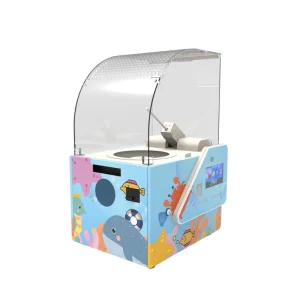
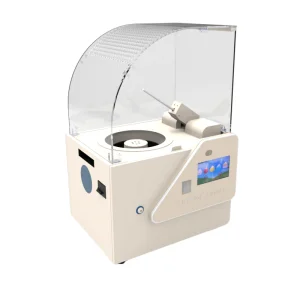
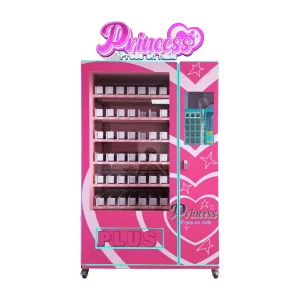
Discover our full line-up of automated cotton candy, popcorn, soft-serve ice cream, and specialized cosmetic vending platforms.
Clear, authoritative answers addressing buyer intent regarding CE verification, factory audits, operational maintenance, and global logistics.
CE Certification is a legal mandate within the European Economic Area (EEA). It confirms that the machinery complies with health, safety, and environmental protection standards outlined in EU directives (LVD 2014/35/EU, EMC 2014/30/EU, and MD 2006/42/EC). Importing non-certified equipment risks customs confiscation, severe regulatory fines, and legal liability in the event of an electrical or mechanical workplace incident.
All internal surfaces, fluid conduits, robotic end-effectors, and storage containers in contact with consumable ingredients strictly adhere to Regulation (EC) No 1935/2004 and US FDA 21 CFR standards. We use food-grade 304/316 stainless steel, non-toxic PTFE tubes, and food-safe silicone components that resist chemical breakdown during high-temperature CIP sanitization cycles.
Our machines support MDB 4.3 industry-standard communication protocols. At the factory level, we integrate credit/debit card readers (such as Nayax, CPI, PAX), contactless NFC payment systems (Apple Pay, Google Pay), bill acceptors, coin mechanisms, and QR code engines compatible with regional digital wallets across North America, Europe, Southeast Asia, and the GCC region.
The SevenCloud IoT Cloud Telemetry Platform allows operators to monitor sales revenue, stock levels (milk mix, sugar, cups, sticks), internal refrigeration temperatures, and diagnostic fault codes in real time via a web dashboard or mobile app. Automated SMS and email alerts notify route drivers precisely when a unit requires restocking or routine maintenance, optimizing field labor routes.
We offer comprehensive OEM/ODM engineering services. Options include custom sheet-metal chassis powder coating, branded vinyl exterior wraps, bespoke UI graphic design, tailored voice prompts, custom robotic dispensing choreography, specific internal component selection, and proprietary IoT API integration for centralized corporate ERP systems.
Every machine is backed by a standard 12-month comprehensive factory warranty covering core structural, electrical, and mechanical components (with extended warranty packages available up to 36 months). We provide lifetime technical support, detailed video diagnostic documentation, fast-track global spare-parts courier dispatch, and direct engineering access via remote telemetry troubleshooting.
