Explore our top-tier CE-certified autonomous kiosks, engineered for high-footfall commercial environments with end-to-end automation.


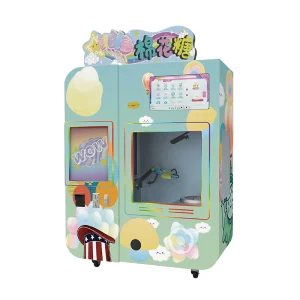
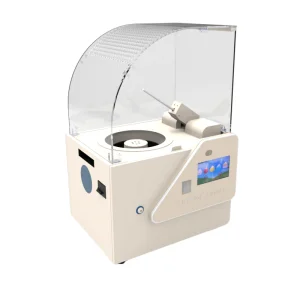
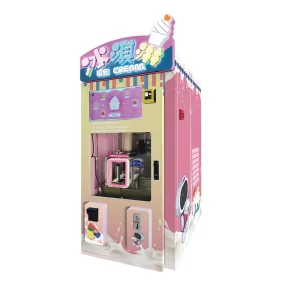
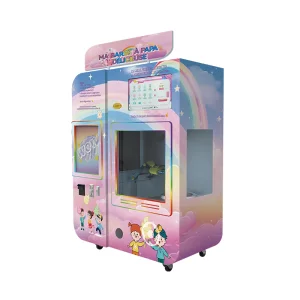
The global automated retail landscape has undergone a monumental shift. Passive coin-operated vending snack boxes have rapidly evolved into fully autonomous, robotic culinary points of sale. Global commercial operators, entertainment conglomerates, and specialized vending management companies are searching for CE-certified new vending solutions that bridge high operational margins with zero-labor overhead. Modern search intent shows a decisive move beyond basic product inquiries toward deep, technical verification of regulatory compliance, telemetry architecture, and total cost of ownership (TCO).
As enterprise purchasers evaluate automated food robotic kiosks—specifically automated soft-serve ice cream stations, 3D floral cotton candy robots, and high-volume concession systems—compliance with international safety directives is no longer optional. It is the core prerequisite for commercial site acquisition, municipal permitting, and liability mitigation in North America, Europe, the Middle East, and Asia-Pacific regions.
Core Technical Takeaway: Modern automated vending platforms must combine strict European Union CE certification compliance with real-time telemetry (MDB/DEX), automated CIP (Clean-in-Place) sanitation cycles, and multi-currency payment integration to deliver repeatable 70%+ gross profit margins for fleet operators.
Understanding the multi-tier engineering requirements necessary to operate commercial food vending robots legally across European and global markets.
Comprehensive mechanical safety evaluation ensuring robotic multi-axis manipulators contain fail-safe physical interlocks, emergency stop loops, and optical safety curtains to prevent consumer pinch hazards.
Strict adherence to Low Voltage Directive (2014/35/EU) and Electromagnetic Compatibility (2014/30/EU). Isolates high-power heating elements and refrigeration compressors from sensitive logic board microprocessors.
All food-contact contact points (extruders, syrup tubes, dispensing nozzles, sugar hoppers) are fabricated from certified 316L stainless steel, food-grade silicone, and PTFE, preventing chemical leaching.
Procurement teams require detailed verification before issuing purchase orders. The table below outlines the core regulatory compliance parameters integrated directly into OEM/ODM manufacturing workflows:
| Regulatory Body / Standard | Technical Scope | Engineering Safeguard Integrated | Operational Value |
|---|---|---|---|
| EU CE (2006/42/EC) | Robotic Arms & Kinetic Motion | Dual-channel safety relays, torque sensors | Prevents mechanical injury; smooth municipal permitting |
| EU LVD (2014/35/EU) | Electrical Insulation & Grounding | Class I insulation, surge suppression circuits | Protects against voltage spikes & shock hazards |
| EU EMC (2014/30/EU) | Radio Frequency & Interference | Shielded industrial wiring, ferrite cores | Zero interference with nearby retail POS or Wi-Fi networks |
| Food Contact EC 1935/2004 | Materials in Direct Food Contact | SUS316L, NSF/FDA-certified silicone piping | Guarantees food purity; simplified health department audit |
| ETL / NAMA Certification | North American Electrical & Sanitation | Automatic hot-water pasteurization & lockouts | Allows turn-key placement across US & Canadian venues |
The global dominance of Chinese OEM/ODM manufacturing in the smart vending sector stems from deep vertical integration. Centered in advanced industrial clusters like Guangzhou and Panyu, source factories bring together precision sheet-metal processing, high-precision robotics, software engineering, and international export logistics under one roof.
Unlike regional assemblers who rely on fragmented third-party component sourcing, top-tier Chinese vending machine factories control the full product lifecycle:
In-house CNC laser cutting, automated bending, and robotic welding ensure cabinet tolerances within ±0.1mm. High structural rigidity extends machine lifespan over 8+ years under heavy public usage.
Direct procurement of industrial-grade Tecumseh or Embraco compressors, Omron sensors, and Mean Well power supplies delivers enterprise-grade reliability at a fraction of Western assembly costs.
Every machine undergoes rigorous end-to-end quality control, including continuous 200-unit dispense stress testing, electrical leakage scans, and 24-hour temperature stability burn-ins before packing.
For international operators managing fleets across dozens of shopping malls or theme parks, hardware is only half the equation. Efficient enterprise procurement requires robust cloud telemetry, remote diagnostic dashboards, and localized payment gateway compatibility.
Modern vending solutions feature high-speed 4G/5G and Wi-Fi IoT modules that stream telemetry data directly to a centralized web browser or mobile app interface. Field operators gain real-time visibility into every machine across their network:
| Hardware Subsystem | Standard Configuration | Enterprise OEM Customization Options |
|---|---|---|
| Payment Systems | Nayax VPOS Touch / CPI Gryphon / Cash / Coins | Localized QR (WeChat/Alipay/Paytm), Contactless EMV, Apple Pay, Google Pay |
| Display & User Interface | 21.5" or 32" Full-HD Industrial Capacitive Touchscreen | Custom UI language localization (30+ languages), branded video screen savers |
| Internal Telemetry | MDB 4.3 Protocol / DEX/UCS Data Interface | Custom API / Webhook integration with enterprise ERP (SAP, Salesforce) |
| Cabinet Branding | Standard Factory UV-Resistant Vinyl Wraps | Full custom 360° corporate graphic wraps, LED logo etching, custom exterior colors |
Discover where automated food vending kiosks generate maximum ROI and how changing consumer preferences are driving market expansion.
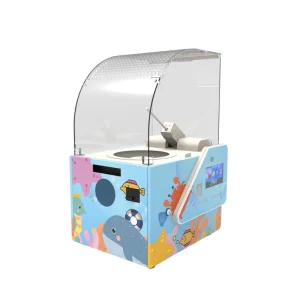
Compact 1.5m² footprint turns underutilized corridor space into high-yield revenue generators. Bright RGB lighting and transparent glass windows turn dessert preparation into visual entertainment.
High-speed production (<45 seconds per unit) easily handles peak queue demand during weekends and holidays, eliminating long concession lines while keeping labor costs at zero.
24/7 unattended operation serves late-night travelers when traditional food outlets are closed. Fully integrated cashless payment accepts international credit cards and mobile wallets effortlessly.
Robotic food kiosks offer compelling financial performance compared to traditional brick-and-mortar storefronts. Below is a sample monthly pro-forma financial benchmark for a high-traffic shopping mall installation:
| Financial Parameter | Traditional Retail Concession Store | CE-Certified Robotic Vending Kiosk |
|---|---|---|
| Initial Capital Expenditure (CapEx) | $65,000 - $120,000 (Fit-out, equipment, signage) | $8,000 - $18,000 (Turn-key hardware purchase) |
| Monthly Labor Overhead | $4,500 - $8,000 (2 to 4 full-time staff shifts) | $0 (Requires ~2 hrs/week for restocking & wiping) |
| Retail Footprint Required | 15 m² - 45 m² | 1.2 m² - 1.8 m² |
| Raw Material Cost per Serve | $0.35 - $0.60 | $0.15 - $0.30 (Sugar, paper stick, cup, syrup) |
| Average Selling Price (ASP) | $4.50 - $6.00 | $5.00 - $7.00 (Premium for novelty automated show) |
| Estimated Payback Period | 14 - 24 Months | 2.5 - 5 Months |
Detailed technical and commercial answers addressing common buyer inquiries for CE-certified vending machinery.
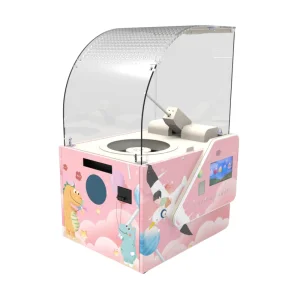
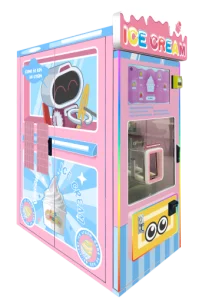
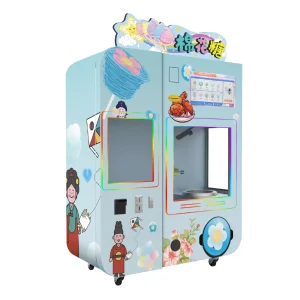
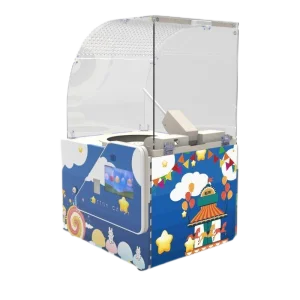
Select from our expanded range of compact, semi-automatic, and multi-flavored automated vending systems designed for high profitability.
Choosing a vending manufacturing partner extends far beyond the initial equipment acquisition. It is a long-term operational commitment to hardware reliability, software uptime, and supply chain continuity. Our enterprise service framework includes clear SLA guarantees for global operators:
