Explore our flagship CE-certified, factory-direct automated vending machinery engineered for high-traffic enterprise deployment, entertainment hubs, and retail automated concessions.

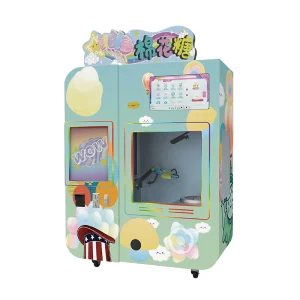
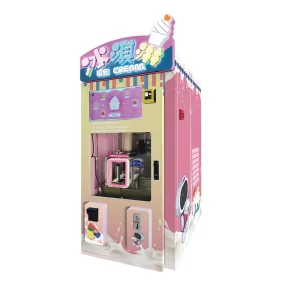
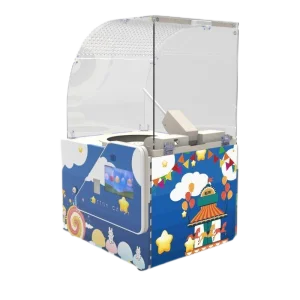
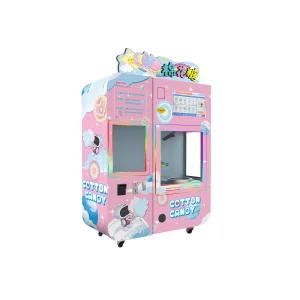
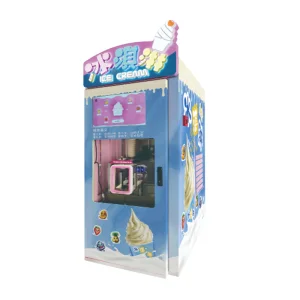
The global unattended retail market is undergoing a structural paradigm shift driven by rising minimum wages, escalating real estate commercial rents, and growing consumer expectations for frictionless, hygienic, interactive service experiences. Within the food and beverage vending sector, soft-serve ice cream and frozen confection robotics represent one of the highest profit margin categories available to commercial fleet operators, achieving gross margins frequently exceeding 80% to 85% per serving unit.
Historically, traditional ice cream vending relied heavily on static pre-packaged freezer chests prone to freezer burn, mechanical jam failures, and low emotional engagement. Modern enterprise operators are aggressively pivoting toward fully automated robot soft-serve ice cream machines manufactured by certified OEM/ODM factories. These advanced units feature dynamic 3D-axis robotic dispensing arms, real-time pasteurization loops, integrated cloud telemetry, and immersive touchscreens that deliver high visual entertainment value—substantially increasing impulse purchases in shopping malls, amusement parks, airports, and family entertainment centers (FECs).
When enterprise procurement directors, commercial vending aggregators, and amusement park concession managers evaluate global equipment manufacturers, identifying a qualified OEM/ODM manufacturing partner requires looking beyond surface-level wholesale unit pricing. A thorough industrial audit must dissect five critical core dimensions:
Verified CE certification issued by accredited Notified Bodies confirming alignment with Machinery Directive 2006/42/EC, Low Voltage Directive 2014/35/EU, and Electromagnetic Compatibility (EMC) Directive 2014/30/EU is mandatory for European market access and legal asset protection.
Leading factories integrate premium inverter commercial compressors (e.g., Embraco, Tecumseh, or Secop) utilizing eco-friendly refrigerants (R290 / R449A), paired with high-efficiency pre-cooling hoppers to maintain liquid ice cream slurry under +4°C continuously.
Comprehensive IoT telematics must support MDB/DEX interfaces natively, enabling plug-and-play integration with Nayax, CPI, Ingenico, CCV, and regional QR digital wallets (Alipay, WeChat Pay, KakaoPay, Paytm) alongside real-time inventory management dashboards.
To pass municipal health inspections globally (NSF/ANSI Standard 18 or European EC 1935/2004), machines must implement automated Clean-in-Place (CIP) thermal pasteurization cycles, minimizing manual disassembly from daily to once every 14 days.
Industrial-grade factories maintain in-house sheet metal laser cutting, CNC bending, and robotic powder coating facilities, allowing high flexibility in custom exterior vinyl wrapping, illuminated acrylic toppers, custom GUI branding, and multi-language software localized to targeted export markets.
Understanding the internal electro-mechanical schematic of a commercial soft-serve robotic vending machine is essential for technical operations managers. Modern ice cream vending machines integrate four interconnected sub-systems working in precise synchronization:
| Sub-System Module | Key Engineering Components | Operational Functionality | Reliability Impact |
|---|---|---|---|
| Refrigeration & Freezing Engine | Inverter Compressor, Dual Evaporators, Air-Cooled/Water-Cooled Condensers, Expansion Valves | Maintains mix hopper at 2°C to 4°C and freezes cylinder down to -7°C to -9°C within 8-10 minutes. | Prevents milk spoilage and guarantees consistent overrun (30%-50% air insertion) for velvety soft-serve texture. |
| Robotic Dispensing & Servicing | 3-Axis Linear/Articulated Servo Motor Arm, Automatic Cup Dispenser, Sauce Injection Pumps | Extracts paper/plastic cup, positions under dispensing nozzle, executes circular swirl motion, dispenses syrup/toppings. | Replaces human labor completely while providing visual "robotic performance" that draws crowd attention. |
| Sanitation & Hygiene (CIP) | Heating Rod Assembly, Peristaltic Disinfectant Pumps, Water Level Sensors, Waste Water Tank | Performs high-temperature thermal cycle (up to 65°C) to pasteurize liquid channels automatically overnight. | Ensures 100% compliance with FDA/EU food safety codes and lowers manual labor costs by over 70%. |
| Smart Telemetry & Industrial PLC | ARM Cortex Processor, Touchscreen HMI, 4G LTE/Wi-Fi Telematics Module, MDB Payment Bus | Manages operational states, monitors real-time mix level alerts, processes encrypted payments, syncs cloud ERP. | Enables remote machine monitoring via iOS/Android apps, reducing field technician dispatches. |
For international distributors, importing commercial automated machinery into the European Single Market or countries recognizing CE standard directives requires rigorous documentary proof. Relying on unverified factory self-declarations poses severe risks of customs seizure, heavy fines, and operational liability. Qualified ice cream vending machine manufacturers execute complete testing protocols across three main EU technical pillars:
Ensures all moving robotics components, pinch points, automated doors, and dispensing mechanisms are equipped with safety interlocks, optical light curtains, emergency stop buttons, and dual-circuit safety relays to guarantee zero customer injury risk during operation.
Validates electrical safety across EN 60335-1 (Safety of Household and Similar Electrical Appliances) and EN 60335-2-75 (Commercial Dispensing Appliances). Tests include dielectric strength insulation, earth continuity (< 0.1 Ω), leakage current under thermal stress, and overcurrent protection.
Verifies electromagnetic compatibility under EN 55014-1 and EN 55014-2. Guarantees that internal high-frequency inverter drives and servo controllers do not generate RF interference that disrupts surrounding retail equipment, while ensuring resistance to external power surges and electrostatic discharge.
As the automated concession industry matures, pioneering manufacturers are integrating artificial intelligence and edge computing directly into standard ice cream vending hardware architectures. Key technology trends defining the next decade include:
By utilizing vibration sensors on compressors, current draw analytics on freezing beaters, and temperature gradient logging, onboard AI algorithms predict component wear (such as scraper blade dullness or belt stretching) 14 days before failure, sending targeted maintenance dispatches automatically.
Integrated optical camera sensors analyze approaching foot traffic demographics (age group, family unit size) and ambient outdoor temperature in real-time, dynamically altering digital signage promotions and adjusting pricing structures to maximize conversion rates and profit margin yields.
Next-gen platforms are expanding from traditional dual-flavor twist capability into 4-flavor syrup blending and automated topping dispensers (gummy bears, sprinkles, nuts, cookie crumbles), allowing consumers to build highly customized visual desserts rendered via real-time 3D UI touchscreens.
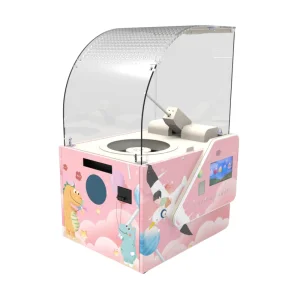
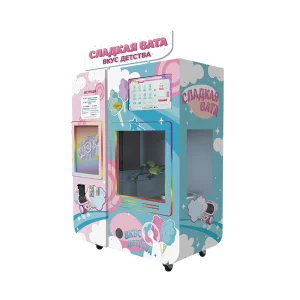
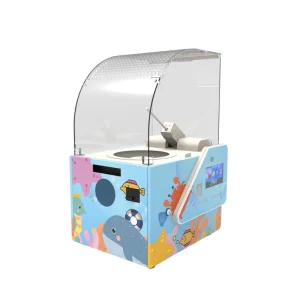
Browse our complete series of industrial soft-serve robotic vendors, automated cotton candy stations, and specialized dessert processing machinery engineered for global delivery.

Addressing critical questions regarding factory lead times, regulatory verification, sanitation cycles, localized maintenance, and telemetry integration for enterprise investors.
