Explore our enterprise-grade automated machinery, engineered with factory-direct precision, IoT telemetry, and global regulatory compliance.

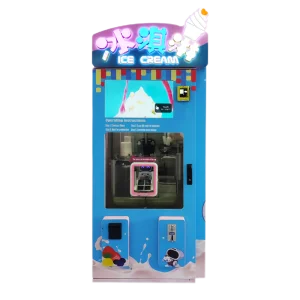
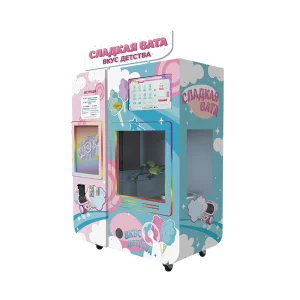
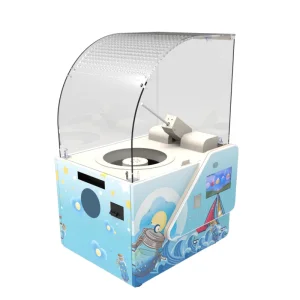

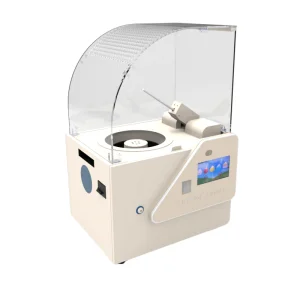
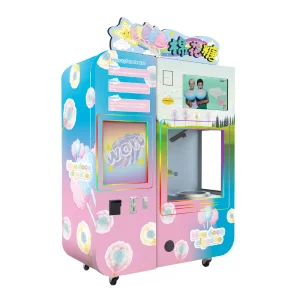
A definitive analysis of macroeconomic drivers, labor cost inflation, and the architectural transition from legacy passive vending machines to robotic micro-retail centers.
The global commercial landscape for automated point-of-sale (POS) equipment is undergoing a fundamental structural transition. Driven by persistent post-pandemic labor shortages, soaring wage overheads, and consumer demand for instant, experiential gratification, legacy mechanical vending systems—which merely drop pre-packaged items—are rapidly being replaced by fully automated robotic preparation hubs. Modern consumers no longer view automated machines merely as transactional boxes; they evaluate them as interactive micro-stores capable of compounding theatrical preparation with hygienic consistency.
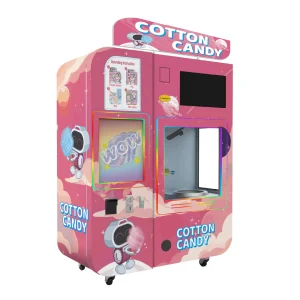
According to industrial sector reports, the smart vending machine market is accelerating toward a multibillion-dollar valuation, with specialty food and beverage systems (such as automated cotton candy robots, soft-serve ice cream dispensers, bean-to-cup coffee centers, and hot popcorn units) leading the highest yield per square foot. However, scaling a fleet of autonomous retail machines internationally presents complex hurdles in terms of electrical safety, mechanical endurance, food contact compliance, and telemetry integration. Navigating these requirements requires working directly with certified source manufacturers rather than white-label trading entities.
In-depth breakdown of mandatory European Directives, electrical insulation, electromagnetic compatibility, and food safety standards required for legal commercial deployment.
Compliance with EN 60335-1 (Safety of Household and Similar Electrical Appliances) and EN 60335-2-75 (Commercial Dispensing Appliances). Mandatory dielectric strength testing up to 1500V, dual-grounding protection circuit, emergency isolation relays, and heat-resistant internal wiring harnesses prevent shock risks under heavy continuous loads.
Adherence to EN 55014-1 and EN 55014-2 standards. High-power heating coils, high-frequency stepping motors, industrial compressors, and wireless IoT payment modules produce electronic noise. EMC certification guarantees zero signal interference with surrounding commercial equipment or credit card terminals.
Every internal fluid pipe, sugar dispensing hopper, robotic gripper, and mixing chamber is constructed from food-grade 304/316 Stainless Steel, PTFE, or BPA-free silicone. Meets rigorous chemical leaching testing, ensuring zero migration of heavy metals or toxic polymers into food products.
| Regulatory Standard | Geographic Region | Target Subsystems & Hardware Components | Manufacturer Verification Protocol |
|---|---|---|---|
| CE (LVD / EMC / MD) | European Economic Area (EEA) | Main power supply, robotic motors, heating element, mainboard | Third-party laboratory testing, EU Declaration of Conformity issuance |
| ETL / cETLus | United States & Canada | UL 751, CSA C22.2 electrical chassis safety, grounding integrity | Quarterly factory audits, strict structural enclosure certification |
| RoHS 2.0 (2011/65/EU) | Global / European Union | Printed Circuit Board Assemblies (PCBA), solder, wire insulation | Spectrometric chemical analysis verifying lead, mercury & cadmium restriction |
| NAMA / NSF 18 | North America | Sanitary food contact zone, automated clean-in-place (CIP) system | Biological cleanability validation, splash-zone smooth radii verification |
| FCC Part 15 Class B | United States | Touchscreen UI, 4G LTE IoT router, RFID & NFC payment readers | Anechoic chamber RF emission and immunity spectral verification |
Inside the mechanics: Precision thermal dynamics, multi-axis robotic kinematics, automated CIP sanitization systems, and IoT telemetry micro-services.
Custom-built 4-axis or 6-axis articulated robotic arms equipped with high-torque brushless stepper motors and optical encoder feedback. Delivers smooth motion accuracy within ±0.1mm for intricate sugar-flower shaping or multi-layer ice cream swirling.
Advanced Micro-PID controllers regulate heating head temperatures in real-time. Eliminates sugar caramelization, clogging, and burning by dynamically adjusting current based on ambient humidity and continuous dispense frequency.
Integrated high-pressure water nozzles and thermal pasteurization cycles clean mixing chambers, sugar burners, and dispense nozzles automatically. Operators schedule CIP cycles remotely via cloud app to maintain strict microbiological hygiene.
The internal electronics architecture relies on an industrial ARM Cortex-A53 processor running an optimized Linux distribution, paired with standard MDB (Multi-Drop Bus) and DEX/UCS communication interfaces. This hardware separation isolates critical robotic control firmware from front-end touchscreen UI interactions and payment processing functions, preventing machine stalls during peak operational periods.
Through our proprietary IoT backend, network engineers and fleet owners gain access to a powerful telemetry suite featuring:
From sheet-metal laser cutting to an 11-step quality assurance program: How our 11,000m² production center delivers failure-proof equipment.
We provide full hardware-level and software-level customization for global distributors and brand operators:
Every unit leaving our production line undergoes rigorous quality validation to eliminate DOA (Dead on Arrival) risks:
Analyzing key high-margin operational environments, footfall patterns, demographic conversion rates, and revenue potential for automated vending machinery.
High family concentration and leisure mindset yield maximum impulse purchases. Visual, dynamic robotic spinning acts as an organic crowd gathering attraction, capturing long-queue foot traffic effortlessly.
Zero staffing overhead allows operators to secure small 1-2m² footprint leases in central corridors. Fast 60-90 second transaction cycles handle peak weekend footfall spikes with maximum yield.
Complementary snack revenue alongside main concession counters. Popcorn and ice cream vending machines reduce pre-show lobby queuing friction while generating high profit margins during peak evening hours.
A realistic financial analysis based on operational field data across key deployment locations over a 12-month period.
| Operational Metric | Automatic Cotton Candy Robot | Soft Ice Cream Vending Robot | P30 Popcorn Vending Machine |
|---|---|---|---|
| Average Unit Retail Price | $5.00 USD | $4.00 USD | $3.50 USD |
| Raw Material Cost per Serve | $0.35 USD (Sugar + Stick) | $0.55 USD (Mix + Cup/Spoon) | $0.40 USD (Corn + Oil + Box) |
| Gross Profit Margin (%) | 93.0% | 86.25% | 88.5% |
| Daily Volume (Units Sold) | 60 Vends / Day | 75 Vends / Day | 50 Vends / Day |
| Gross Daily Revenue | $300.00 USD | $300.00 USD | $175.00 USD |
| Est. Monthly Location Rent & Power | $600.00 USD | $750.00 USD | $450.00 USD |
| Net Monthly Operating Profit | $7,335.00 USD | $7,012.00 USD | $4,075.00 USD |
| Estimated Capital Payback Period | 1.5 to 2.5 Months | 2.0 to 3.0 Months | 1.8 to 2.8 Months |
*Note: ROI projections are based on operational averages in mid-to-high footfall tier-1 shopping centers. Actual payback velocity depends on local site negotiation, pricing strategy, and foot traffic volume.
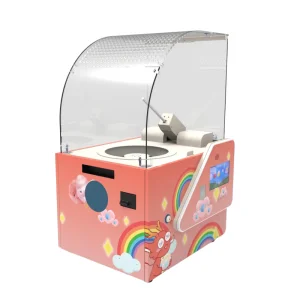
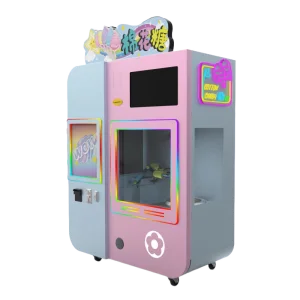
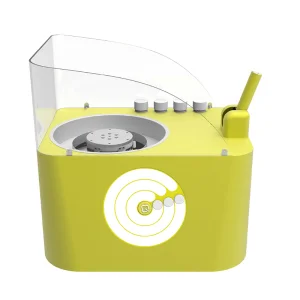
Explore the remainder of our flagship automated equipment. Order directly from the manufacturer to secure global compliance, technical support, and competitive pricing.

Expert answers addressing electrical compatibility, compliance certification, shipping logistics, and aftermarket technical engineering support.
