Explore our CE-certified fully automated cotton candy robots, soft-serve ice cream vending stations, and high-efficiency snack solutions manufactured directly in our Guangzhou facility.

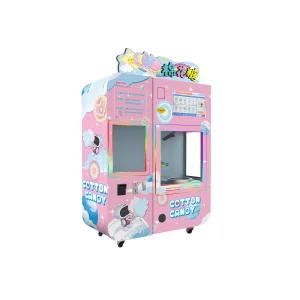
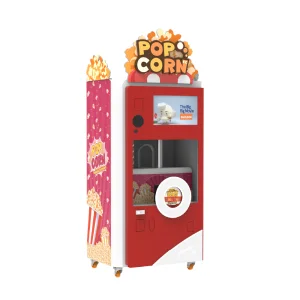
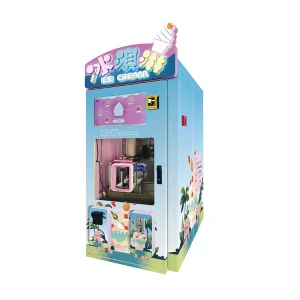
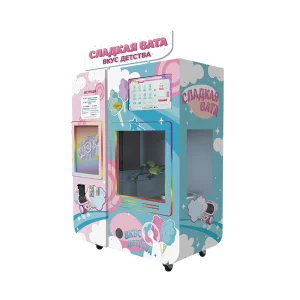
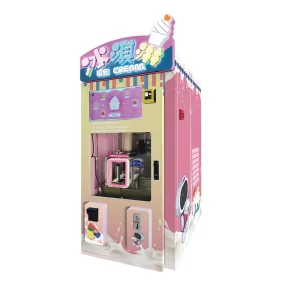
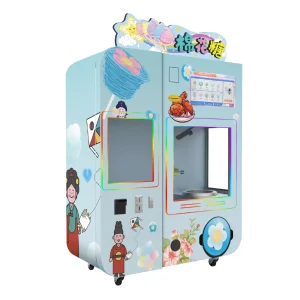
Analyzing the macro-economic shift toward fully automated, high-margin, interactive confectionery micro-retail units across North America, Europe, the Middle East, and Asia-Pacific.
The global automated vending machine market has undergone a fundamental transformation over the past decade. Traditional snack and canned beverage machines—characterized by low gross margins and stagnant consumer interest—are rapidly giving way to interactive, experiential food robotics. Among these innovations, the commercial cotton candy vending machine has emerged as an unprecedented driver of foot-traffic monetization for shopping malls, theme parks, family entertainment centers (FECs), and transit hubs worldwide.
Driven by advances in multi-axis robotic arms, precision sugar-dispensing heating heads, and cloud-connected IoT telemetry, modern cotton candy vending stations do not merely dispense food; they deliver a live 45-to-90-second visual show. This theatrical element converts casual passersby into active buyers, generating gross margins often exceeding 85% to 92% per unit sold.
Understanding Capital Expenditures (CAPEX), Operational Expenditures (OPEX), and Total Cost of Ownership (TCO) for Commercial Procurement.
The upfront purchasing cost of a commercial-grade cotton candy vending machine ranges between $3,000 and $11,500 USD, depending heavily on structural build quality, robotic complexity, certification depth, and software sophistication:
One of the primary strategic advantages of automated cotton candy vending is the negligible consumable expense. A typical multi-layer flower cotton candy requires:
With retail sales prices ranging from $4.00 to $9.00 USD in North America and Europe, operators achieve profit margins unmatched by traditional concessions.
Ongoing operational overhead remains exceptionally lean due to total self-service automation:
The table below illustrates projected monthly and annual return on investment (ROI) for a single fully automatic cotton candy vending machine operating in a mid-to-high foot-traffic retail location.
| Daily Vending Volume | Retail Price / Serving | Daily Gross Revenue | Monthly Gross Revenue | Monthly Raw Costs ($0.12/unit) | Est. Location Rent (20%) | Est. Net Monthly Profit | Est. Payback Period |
|---|---|---|---|---|---|---|---|
| 30 Units / Day (Low Traffic) | $5.00 USD | $150.00 USD | $4,500.00 USD | $108.00 USD | $900.00 USD | $3,342.00 USD | 2.0 – 2.5 Months |
| 60 Units / Day (Medium Traffic) | $6.00 USD | $360.00 USD | $10,800.00 USD | $216.00 USD | $2,160.00 USD | $8,244.00 USD | 1.0 – 1.5 Months |
| 120 Units / Day (Peak Mall/Park) | $7.00 USD | $840.00 USD | $25,200.00 USD | $432.00 USD | $5,040.00 USD | $19,428.00 USD | Under 3 Weeks |
Protecting your enterprise investment, ensuring electrical safety, meeting strict European Union & international customs regulations, and securing commercial venue permits.
Commercial cotton candy machines utilize high-temperature heating elements (exceeding 200°C) alongside high-speed rotating motors. Full CE compliance verifies that all internal electrical wiring, transformers, circuit breakers, and thermal insulation meet rigid European safety thresholds to prevent electrical shocks, short circuits, or thermal hazards.
Automated vending stations operate sensitive touchscreens, robotic micro-controllers, multi-currency payment terminals, and Wi-Fi/4G telemetry antennas simultaneously. CE EMC testing guarantees that the machine does not emit harmful electromagnetic interference (EMI) that disrupts nearby retail systems, nor suffer operational glitches from surrounding signal noise.
CE certification mandates strict verification of materials used in the food-dispensing path. Our machines feature food-grade 304 stainless steel heating bowls, non-toxic silicone tubes, and BPA-free food dispensing mechanisms, passing rigorous food contact testing under LFGB, FDA, and EU Regulation (EC) No 1935/2004 standards.
Unlocking supply chain velocity, advanced R&D capabilities, precision manufacturing, and unmatched cost-performance efficiency in Guangzhou, China.
Guangzhou serves as the world's epicenter for commercial vending manufacturing. From raw sheet metal laser cutting to custom robotic arm gearing and IoT mainboard programming, 95% of components are sourced within a 50km radius, reducing lead times dramatically.
Direct sourcing from a verified China manufacturer eliminates multi-tier distributor markups, allowing global vending operators to purchase certified, high-spec robotic machines at a fraction of Western equipment assembly costs without compromising quality.
Every commercial vending unit undergoes an intensive multi-stage quality protocol, including a 24-hour continuous burn-in electrical test and a 200-unit continuous cotton candy production test prior to export packaging.
Tailor your vending machines for immediate global deployment: custom cabinet exterior vinyl wraps, localized touchscreen UI in over 30 languages, customized voltage (110V/220V), and regional cashless payment hardware integration.
Where to position commercial cotton candy vending stations for maximum daily transaction volume and rapid capital return.
Positioning machines near children's clothing stores, food courts, ice cream parlors, or central elevators guarantees high foot traffic. The vibrant internal LED lights, transparent window view of the spinning process, and playful background music instantly draw family audiences.
Outdoor-rated or semi-enclosed venue spots within theme parks capture high impulse purchases from tourists seeking nostalgic treats. High throughput capability (under 60 seconds per serving) keeps lines moving quickly during peak holiday hours.
Family Entertainment Centers (FECs) and multiplex cinemas offer long dwell times and high spending willingness. Automated cotton candy stations serve as an ideal non-staffed complement to traditional concession stands, capturing evening revenue after concessions close.
How intelligent software and mechanical innovations are eliminating downtime and maximizing fleet profitability.
Modern cotton candy robots utilize multi-axis linear drives to wind sugar filaments into elaborate 3D structures—such as multi-layered flowers, hearts, and animal silhouettes—achieving 99.4% shape accuracy and driving viral social media shares.
Operators can manage nationwide fleets from a mobile phone or laptop. Live dashboards provide real-time reporting on sugar inventory levels, daily transaction counts, error alerts, sugar heating cup temperature, and remote automated cleaning triggers.
Seamlessly supporting international payment gateways including Nayax, CPI, credit card swipe, Apple Pay, Google Pay, bill acceptors, coin mechanisms, and regional QR-code payments (WeChat, Alipay, PayTM, KakaoPay).
A transparent roadmap for global buyers, distributors, and arcade chain managers sourcing direct from China.
Define venue specifications, target country electrical voltage (110V/60Hz or 220V/50Hz), plug type, language requirements, and preferred payment hardware module.
Receive transparent factory pricing, shipping estimates (FOB, CIF, or DDP door-to-door), CE compliance documentation, and formal PI invoice outlining warranty terms.
Manufacturing completed in 7-15 business days. Your machine undergoes 24-hour burn-in stress testing and 200 continuous pattern production tests prior to packing.
Enclosed in heavy-duty export-standard fumigated wooden crates. Shipped via ocean freight or air cargo with full custom clearance assistance provided.
Discover our specialized commercial vending machines designed for unattended 24/7 revenue generation.
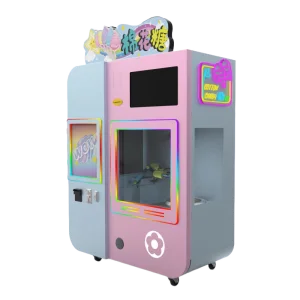
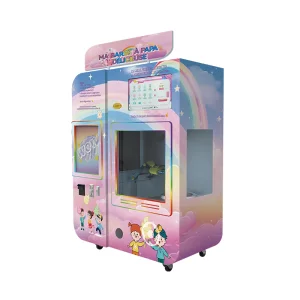
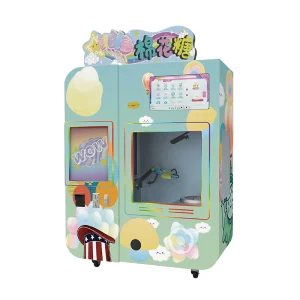
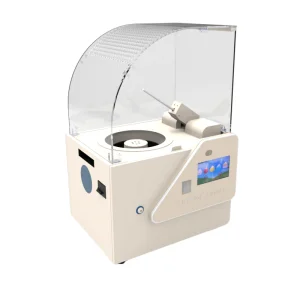
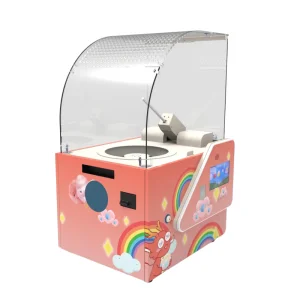
Addressing crucial technical, legal, operational, and commercial questions for enterprise buyers and vending operators.
Factory-direct procurement costs range between $3,000 and $11,500 USD per unit. Entry-level semi-automatic models start around $1,500–$3,500, while fully automatic robotic models with touchscreens, CE/ETL certification, and credit card readers cost between $4,500 and $7,500. Premium AI-powered 3D flower stations with 64+ designs range from $8,000 to $12,000 depending on customization.
CE certification proves that the vending equipment complies with mandatory European safety standards, specifically the Low Voltage Directive (LVD) for high-voltage heating/motor safety, the Electromagnetic Compatibility Directive (EMC) for signal non-interference, and Food-Contact Hygiene Directives. Without CE certification, customs authorities may reject or seize imported equipment, and commercial venue owners will refuse location leasing permits due to insurance liability.
Gross profit margins typically exceed 88% to 92%. The total consumable cost (granulated sugar + food-grade paper stick + protective film) per serving is roughly $0.10 to $0.15 USD, whereas retail prices range from $4.00 to $8.00 USD. In a mid-to-high traffic shopping mall or theme park selling 40 to 80 units daily, the net monthly profit can exceed $4,000 to $8,000 USD, allowing operators to achieve full equipment payback within 1.5 to 3 months.
Our machines feature an intelligent high-pressure hot water flushing system. After a set number of vending cycles (or via scheduled cloud timer), the machine injects a controlled dose of pure water onto the rotating sugar burner head to melt residual caramelized sugar. The wastewater drains automatically into an internal closed waste tank, preventing sugar buildup, reducing manual maintenance visits to just once every 3 to 5 days.
Yes. All machines are equipped with standard MDB (Multi-Drop Bus) communication protocols. We seamlessly integrate leading global payment systems including Nayax VPOS/Onyx, CPI, AirPAY, standard bill acceptors, coin mechanisms, and QR-code mobile payments (Apple Pay, Google Pay, WeChat Pay, KakaoPay, PayTM, etc.).
The machines utilize standard coarse-grain granulated sugar (white, pink, blue, yellow, purple) with food-grade flavoring powders. Using standard coarse sugar (particle size 0.8–1.2mm) ensures optimal melting without clogging the heating head. The paper sticks are standard 300mm food-grade cylindrical paper sticks engineered specifically for automated robot arm gripping mechanisms.
