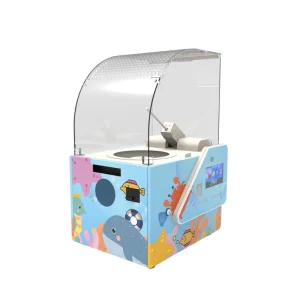
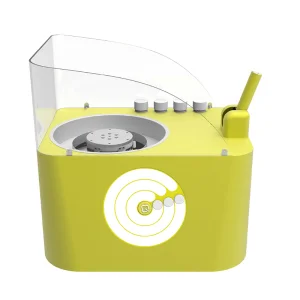
Explore our top-tier CE-compliant unmanned automated retail equipment manufactured directly in our state-of-the-art facility. Engineered for maximum ROI, 24/7 reliability, and global compliance.
The global commercial coffee and fully automated vending ecosystem is undergoing a dramatic structural pivot toward unattended robotic retail, decentralized corporate catering, and intelligent IoT beverage hubs. Multi-site operators, facility managers, enterprise procurement officers, and global distributors are aggressively shifting capital expenditure away from legacy, high-labor-footprint traditional coffee shops toward fully automated commercial bean-to-cup coffee vending terminals.
To succeed in high-density operational hubs such as international airports, Class-A office towers, university campuses, transit interchanges, and hospital complexes, equipment must achieve stringent European Conformity standards. Sourcing CE Certification coffee machine vending machine suppliers & factories is no longer merely a regulatory formality; it is the ultimate risk-mitigation benchmark governing mechanical integrity, food contact hygiene, electrical safety, and electromagnetic safety across worldwide jurisdictions.
Rising minimum wage benchmarks and high barista turnover rates are driving demand for autonomous robotic extraction systems that maintain barista-quality espresso without human intervention.
CE marking guarantees compliance with Low Voltage Directives (LVD) and Electromagnetic Compatibility (EMC), ensuring safe integration into heavy-duty commercial power grids.
Direct compliance with Regulation (EC) No 1935/2004 guarantees that internal boilers, fluid tubes, and milk circuits emit zero toxic leachates, heavy metals, or hazardous polymers.
For procurement professionals evaluating commercial coffee machine suppliers in China and globally, understanding the exact scope of European Conformity (CE) certification is critical. CE certification is not a single mark, but a combined attestation that the coffee vending machine satisfies several interconnected European Union directives:
| EU Directive / Standard | Technical Scope & Testing Requirements | Operational Impact on Coffee Vending Machines |
|---|---|---|
| Low Voltage Directive (LVD) 2014/35/EU | EN 60335-1, EN 60335-2-75 (Commercial Dispensing Appliances) | Ensures high-voltage heating boilers (2000W-3500W), pumps, and power supplies are insulated against leakage currents, ground faults, and thermal runaways. |
| EMC Directive 2014/30/EU | EN 55014-1, EN 55014-2, EN 61000-3-2 | Prevents electromagnetic interference (EMI) from high-frequency grinders, touchscreens, and telemetry pumps from disrupting neighboring airport or hospital equipment. |
| Machinery Directive 2006/42/EC | EN ISO 12100 Risk Assessment for Automated Moving Parts | Mandates protective sensors on robotic cup-dispensing arms, automated doors, and internal bean grinder gearboxes to eliminate pinch-point hazards. |
| Food Contact Regulation (EC) No 1935/2004 | FDA / LFGB / EU Heavy Metal & Polymer Migration Tests | Verifies that stainless steel dual boilers, Teflon-lined tubes, and silicone seals do not leach Lead, Nickel, Bisphenol A, or Phthalates into espresso products. |
| RoHS Directive 2011/65/EU & (EU) 2015/863 | Restriction of Hazardous Substances in Electrical Circuitry | Eliminated lead solders, hexavalent chromium, and hazardous flame retardants from control motherboards and touchscreen digitizers. |
A legitimate manufacturing OEM/ODM factory subjects every coffee vending machine production line to rigorous third-party lab verification (such as TÜV Rheinland, SGS, or Intertek) to issue formal Certificates of Conformity (CoC) and complete Technical Construction Files (TCF).
Commercial grade coffee vending machines engineered by market-leading Chinese factories represent complex precision robotics. Rather than scaling up household espresso machines, these industrial units leverage heavy-duty mechatronic sub-systems designed for thousands of continuous cycles without calibration decay.
Equipped with 64mm commercial-grade flat titanium/hardened steel burrs driven by variable-torque DC stepper motors. Delivers micro-adjusted particle distribution (200–400 microns) for optimal cremaproducing coffee extraction.
High-pressure hydraulic circuits featuring dual brass boilers with independent temperature PID loops. Maintains extraction water temperature precisely at 92°C ± 0.5°C under high-volume surge demands.
Integrated Clean-in-Place (CIP) technology featuring automated thermal steam purging and chemical sanitization cycles. Meets international HACCP food safety compliance without daily manual disassembling.
Precision auger-driven food-grade plastic canisters for instant milk powder, cocoa, matcha, and sugar. De-moisturizing heating elements prevent clumping in high-humidity ambient environments.
CE-certified coffee machine vending solutions cater to diverse commercial operational profiles. Top-tier ODM/OEM factories engineer custom software interfaces, telemetry protocols, and structural hardware to match specific target environments:
Sourcing directly from a certified source manufacturer guarantees rigorous operational quality control. Premium factories utilize an 11-stage quality assurance protocol to maintain zero-defect export standards across every manufactured batch:
Spectrographic testing of stainless steel sheets, pressure-chamber qualification of hydraulic valves, and electrical stress screening of motherboards upon warehouse arrival.
Calibrating grinder burr concentricity, testing hydraulic boiler pressure at 1.5x operating limits, and bench-testing touchscreen controllers for response latency.
Every fully assembled coffee vending machine undergoes an uninterrupted 24-hour electrical burn-in cycle and thermal chamber test to eliminate early-life electronic failures.
Dispensing 200 consecutive beverage orders to confirm volumetric dosing precision, followed by high-frequency vibration table testing to ensure international maritime/air freight safety.
Modern CE-certified coffee machine vending equipment functions as an edge-computing internet node. Machine intelligence goes far beyond simple drink dispensing, driving high profitability through remote cloud telemetry and predictive maintenance.
Sensors continuously measure coffee bean levels, milk powder weights, water tank volume, and waste bin capacities, transmitting low-stock automated alerts via SMS/Email to route operators.
Cloud analytics track pump pressure decay, grinder motor current spikes, and heating element cycle counts to predict mechanical component wear before field breakdowns occur.
Native MDB (Multi-Drop Bus) and DEX/UCS protocols allow seamless plug-and-play integration with global payment solutions including Nayax, Payter, Apple Pay, Google Pay, WeChat Pay, and local QR wallets.
Remotely update promotional pricing, launch seasonal beverage recipes, tweak brewing parameters (extraction water volume, pre-infusion time), and upload digital video advertisements across thousands of vending nodes instantly.
Purchasing commercial coffee vending equipment from an overseas supplier requires robust post-purchase security. Established source factories provide comprehensive global service guarantees designed to protect corporate procurement investments:
Maintain strategic spare parts inventories (pumps, solenoid valves, motherboards, burrs) in regional logistics hubs across Europe, North America, and Southeast Asia for rapid air-express dispatch within 24-48 hours.
Comprehensive warranty coverage backed by direct factory technician support, detailed video troubleshooting guides, wireframe electrical diagrams, and live remote video diagnostic sessions.
Full customization support including exterior vinyl decal graphics, custom powder-coated chassis colorways, branded laser-etched stainless paneling, localized UI language translations, and custom booting animations.
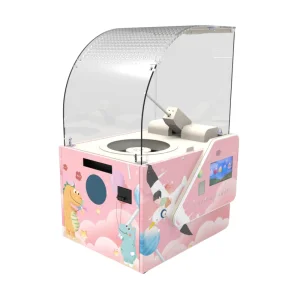
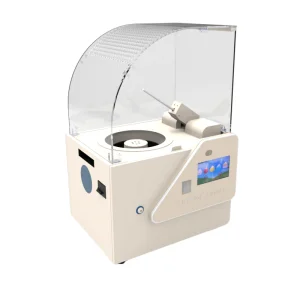
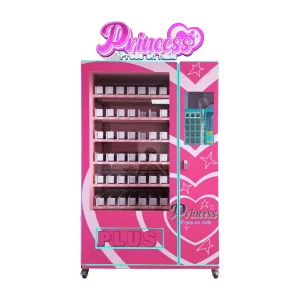
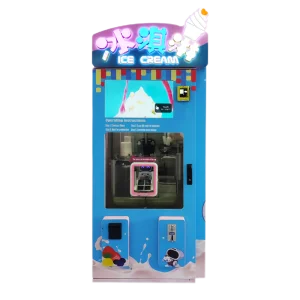
Browse the remainder of our specialized unmanned equipment catalog, engineered in China factories under strict international quality guidelines: