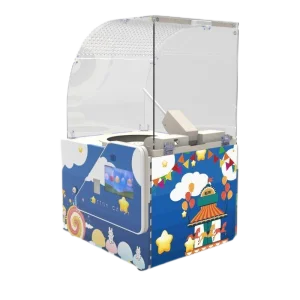
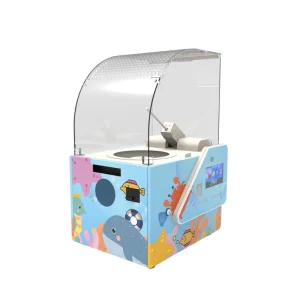
Explore certified commercial-grade unattended retail platforms. Directly manufactured under ISO9001 and CE frameworks for high-footfall revenue extraction.
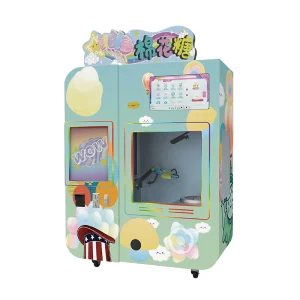

The global market for smart automated soft serve vending machines is experiencing exponential structural expansion. Procurement executives, route operators, and commercial real estate developers face a pivotal decision: how to balance capital expenditure (CAPEX), mechanical reliability, regulatory compliance (CE certification), and speed-to-market.
Guangzhou and the Greater Bay Area serve as the global epicenter for precision commercial refrigeration and vending robotics. Chinese OEMs integrate sheet-metal stamping, food-grade 304/316 stainless steel milling, custom peristaltic pumps, and embedded microprocessor assembly within a 50-kilometer radius. This industrial clustering collapses raw component lead times by 65% compared to Western counterparts.
Top-tier Chinese factories operate under strict ISO9001 quality management systems. Achieving authentic European CE certification (covering both Low Voltage Directive 2014/35/EU and Electromagnetic Compatibility 2014/30/EU) guarantees that electrical architectures, food-contact sanitation safety, structural grounding, and emergency stop systems comply with stringent European standard EN 60335-1 and EN 60335-2-75.
Unlike traditional beverage machine manufacturers, leading Chinese ice cream vending machine factories employ extensive in-house teams of firmware engineers, Android platform developers, and robotic mechanical designers. This allows rapid customization of UI/UX, remote telemetric dashboards, localized payment protocols (MDB, DEX, Nayax, Payter), and custom branding chassis wraps in days instead of quarters.
Historically, low cost was associated with compromised reliability. Today, top-tier Chinese vending machine factories utilize imported Secop/Embraco high-efficiency compressors, Japanese Panasonic refrigeration valves, Omron sensors, and food-grade Teflon/Tygon tubing. Sourcing directly from factory floors eliminates 30%-50% distributor markups while securing premium core engineering components.
The automated dessert ecosystem is shifting from passive static coin-operated machines to fully autonomous visual robotic kiosks. Understanding these technological shifts allows fleet managers to make future-proof capital investments.
Legacy ice cream vending systems relied on simple gravity-fed lever valves, resulting in inaccurate portion sizes, messy nozzles, and high spill rates. Modern 2025/2026 models integrate high-precision multi-axis SCARA or 3-axis cartesian robotic arms. These arms emulate human barista flair, dispensing soft-serve ice cream in consistent artistic spirals into paper cups, complete with automated topping insertion (crunchies, sprinkles, fruit syrups).
Food safety compliance (HACCP) is the single biggest operational barrier in soft-serve vending. Contemporary CE-certified machines incorporate full-cycle pasteurization and automatic CIP cleaning systems. By heating liquid mix reservoirs to 65°C-70°C overnight and cycling food-safe sanitizing fluid through internal lines, machines maintain strict bacteriological compliance while extending manual disassembly cycles from daily to once every 14–21 days.
Every commercial vending unit acts as an IoT node. Integrated telemetry hardware broadcasts real-time liquid level sensor readings, freezing cylinder temperatures, compressor pressure metrics, and sales velocity back to central cloud dashboards. Machine Learning (ML) algorithms analyze current draw variations to predict motor strain or scale buildup before a breakdown occurs, lowering field service dispatch costs by up to 40%.
Consumers buy with their eyes. High-performing locations utilize transparent OLED display glass or clear double-paned toughened acrylic observation windows illuminated by dynamic RGB LED lighting. Watching a robot arm retrieve a cup, actuate the soft-serve freezing nozzle, swirl chocolate sauce, and serve through an anti-pinch safety door transforms a snack purchase into a shareable social media moment.
| Feature Parameter | Legacy Vending Machine (2018-2021) | Next-Gen Smart Robotic Kiosk (2025/2026 CE Standard) |
|---|---|---|
| Dispensing Mechanism | Gravity Drop / Simple Solenoid Valve | 3-Axis Robotic Arm / High Precision Servo Motors |
| Sanitation Protocol | Manual Daily Disassembly & Wash | Automatic Pasteurization & CIP (Clean-In-Place) System |
| Refrigeration Compressors | Single Fixed-Speed Compressor | Dual Inverter Compressors (Independent Mix & Freeze Chambers) |
| Telemetry & Connectivity | Basic Cash/Coin Counters (2G Modem) | IoT 5G/Wi-Fi Telemetry, Cloud ERP, Mobile App Management |
| Payment System Integration | Single Coin Mechanism / Bill Acceptor | MDB/DEX Protocols (EMV Cashless, NFC, QR, Nayax, Apple Pay) |
| Safety Door Systems | Manual Push Flap Door | Electric Anti-Pinch Lockable Automatic Drop Door |
Location selection dictates operational yield. Commercial ice cream vending machines thrive in environments characterized by high pedestrian density, long dwell times, and demographic skewing toward families and youth.
Positioned near food courts, cinema entrances, or children's indoor play zones. High ambient footfall ensures strong impulse purchases. Micro-footprints (< 1.5 sq meters) allow operators to negotiate low monthly spatial rents while delivering up to 300+ servings per peak weekend day.
Amusement park queues and arcade halls present captive audiences seeking refreshing treats. Transparent robotic operation serves a dual purpose: high-margin dessert refreshment and interactive visual entertainment that captures tourist attention.
24/7 autonomous operation shines in airports, train terminals, and bus hubs where human-staffed concessions close early. Cashless EMV payment compatibility accommodates international travelers purchasing desserts across multi-currency gateways.
Gen Z and Gen Alpha demographics embrace self-service technology. Strategic placement inside student unions, dining halls, and residence libraries captures high late-night sales volume when traditional campus dining facilities are offline.
Outdoor or poolside indoor placements using weatherized IP54-rated cabinets provide sun-drenched guests with instant, premium soft-serve options. Eliminates labor overhead for resort management while maintaining constant concession revenues.
Concession line congestion during blockbuster releases results in lost revenues. Standalone ice cream vending robots absorb concession overflows, dispensing fresh soft serve in under 45 seconds to keep moviegoers moving.
Scaling an unattended retail operation from 1 machine to a fleet of 50+ units requires disciplined unit economics, supply chain planning, and preventive maintenance protocols.
Soft-serve ice cream delivers unmatched gross product margins in food retail. A single serving consisting of liquid dairy mix (or vegan oat milk base), sugar syrup, edible cone or paper cup, and wooden spoon costs between $0.25 to $0.45 USD to produce. Depending on venue positioning, retail price points range from $3.50 to $6.00 USD, yielding gross profit margins exceeding 85% to 92%.
Payback Period Calculation Example: At a moderate volume of 75 cups/day sold at $4.00 ($300 daily gross revenue) with an operational cost of $40/day (mix + electric + location rent), net daily profit equals ~$260. A capital cost of $10,000 for a CE-certified factory-direct machine achieves 100% CAPEX payback within ~40 to 50 operating days.
Managing dispersed vending locations requires real-time enterprise management software (EMS). Modern factories provide white-labeled mobile and desktop dashboards offering:
Navigating international trade regulations, safety certifications, and custom branding is critical for global distributors and franchise operators purchasing equipment from China factories.
Do not accept generic supplier declarations. Legitimate export factories provide authentic CE test certificates from accredited NB (Notified Bodies) verifying conformity to:
Direct manufacturers configure internal power supplies, transformers, compressors, and electrical cabling during assembly to align with target destination standards:
Vending hardware must interface via standard MDB (Multi-Drop Bus) protocol or DEX interface. Direct factory customization enables seamless plug-and-play installation of top credit card readers and payment terminals:
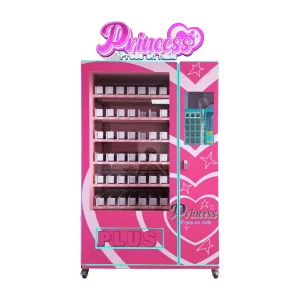
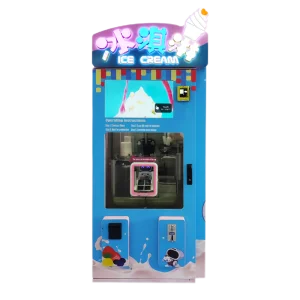
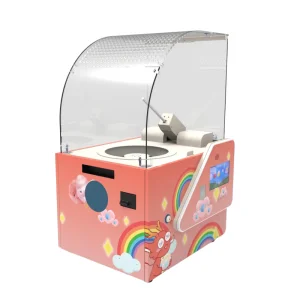
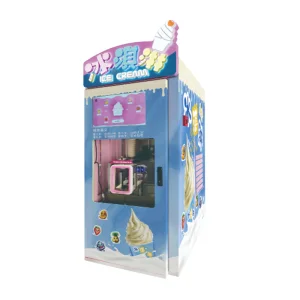
Discover our specialized line-up including full-size soft serve kiosks, cotton candy automated robots, and personal care retail dispensers.
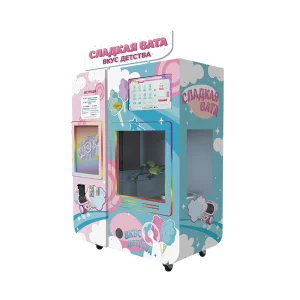
Expert answers to standard technical, compliance, and logistical inquiries raised by international B2B purchasers buying commercial soft-serve ice cream vending equipment.