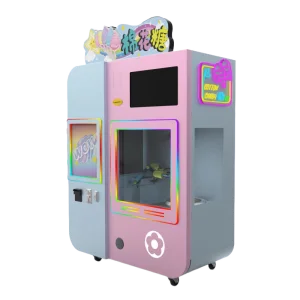
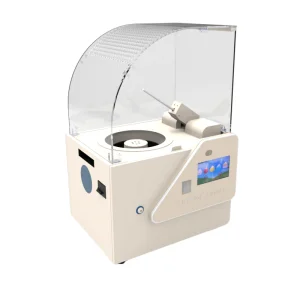
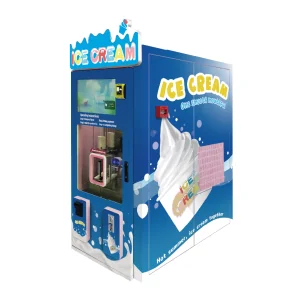
Explore our flagship automated cotton candy, soft-serve robotic ice cream, and specialized retail vending units designed for continuous 24/7 revenue generation.
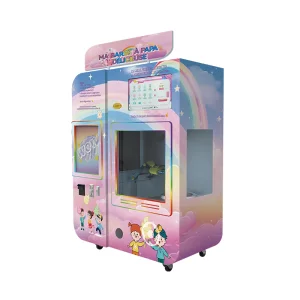
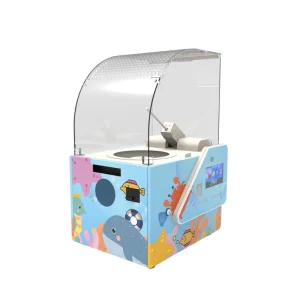
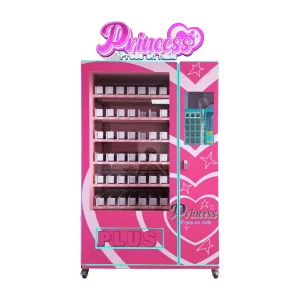


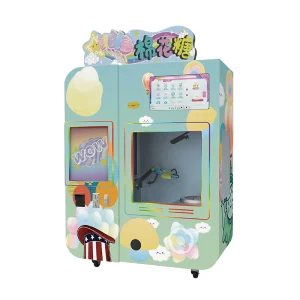
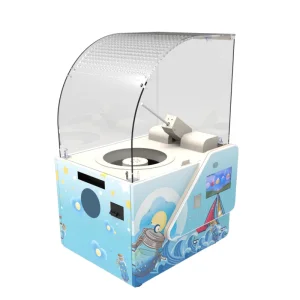
The transition from traditional mechanical coin-operated dispensers to robotic, IoT-connected smart vending systems.
The global automated retail and smart vending machine ecosystem is undergoing a fundamental structural transformation. Driven by acute global labor shortages, rising real estate costs per square meter, and evolving consumer demand for instant, experiential gratification, commercial operators are rapidly scaling unmanned retail infrastructures. Unattended food preparation robotics—specifically specialized automated confectionery units such as robotic cotton candy machines and soft-serve ice cream vending terminals—have emerged as the highest-yielding asset class within the broader vending sector.
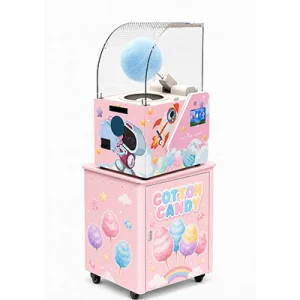
Modern consumers no longer view vending machines merely as utilitarian snack dispensers; they expect immersive, hygienic, and entertainment-driven retail experiences. Automated robotic cotton candy machines, for instance, utilize multi-axis robotic arms, vibrant RGB ambient lighting, and transparent viewing windows that transform food preparation into a captivating visual show. This visual theatricality captures family foot traffic in high-density entertainment hubs, converting passive passersby into active impulse purchasers.
Furthermore, the integration of contactless telemetry—enabling cashless payments via Apple Pay, Google Pay, credit card swipe terminals (Nayax, Ingenico), and QR-code mobile wallets—has eliminated friction at the point of sale. Regional market analysis indicates explosive growth across North America, Western Europe, the Middle East, and Southeast Asia, where venue operators prioritize high sales velocity within minimal physical footprints.
Navigating European Union regulatory compliance and safety directives for commercial vending machinery imports.
For international procurement managers, commercial distributors, and fleet operators, importing smart vending machinery into the European Economic Area (EEA) and global markets accepting harmonized European standards requires strict compliance with CE Directives. CE certification is not merely a marketing badge—it is a legally mandatory framework ensuring electrical safety, electromagnetic compatibility, mechanical integrity, and food safety sanitation.
Guarantees electrical equipment operating within specific voltage ratings offers robust protection against electrical shock, thermal burns, isolation failure, and mechanical hazards. Mandatory electrical insulation testing and earthing continuity are thoroughly audited.
Ensures that high-frequency sugar-heating elements, high-RPM motor drives, and touchscreen telemetry modules do not radiate harmful electromagnetic interference or suffer degradation when exposed to surrounding industrial signals.
Mandates strict safety requirements for moving mechanical parts, robotic arms, automatic dispensing doors, and emergency stop mechanisms, mitigating pinch or crush risks for end-user consumers and maintenance personnel.
Because these smart robotic units prepare food items directly consumed by the public, all internal mechanical components coming into contact with ingredients—such as sugar dispensing hoppers, stainless steel spinning burners, water tubes, and ice cream freezing barrels—must strictly conform to food-grade material standards. Leading Chinese factories deploy food-grade 304/316 stainless steel, PTFE tubing, and non-toxic silicone seals that prevent chemical leaching under thermal stress.
A strategic evaluating framework for corporate buyers, franchise chains, and multi-location operators.
Enterprise procurement executives evaluating commercial vending equipment suppliers look far beyond initial machine acquisition costs (CAPEX). True profitability is dictated by Total Cost of Ownership (TCO), operational uptime, telematics robustness, component failure rates, and ease of routine cleaning (CIP - Clean-In-Place capability).
Real-time monitoring of raw material levels (sugar, syrup, cups, sticks), operational temperature, fault code diagnostics, sales telemetry, and automated sales reporting accessible via web and mobile apps.
Modular integration supporting MDB/DEX protocols, bill acceptors, coin validators, contact/contactless credit card readers (Nayax, PAX, CPI), and regional QR payment frameworks.
Plug-and-play internal assemblies (burners, dispensing arms, refrigeration compressors) that enable rapid field replacement by local technicians without specialized factory training.
How Guangzhou’s smart manufacturing industrial clusters deliver unmatched scalability, engineering agility, and cost-competitiveness.
The global dominance of Chinese vending machine suppliers—specifically concentrated in advanced industrial manufacturing hubs like Guangzhou, Guangdong—is backed by deep supply chain ecosystem verticalization. Guangzhou Seven Cloud Technology Co., Ltd. (SevenCloud) exemplifies Factory 4.0 manufacturing integration, operating an 11,000 square meter in-house facility equipped with high-precision fiber laser cutters, CNC bending centers, automated PCB assembly, and dedicated robotics testing bays.
Unlike trading entities that assemble outsourced parts, direct source manufacturers control every link of the production chain. This vertical integration provides distinct competitive advantages for international enterprise buyers:
From rigorous incoming raw material inspection (IQC) to subassembly module testing, every chassis undergoes strict dimensional, electrical, and thermal stress checks before final packaging.
Every completed machine undergoes a continuous 24-hour non-stop burn-in test alongside a 200-unit continuous production validation run to eliminate early component failure before shipment.
In-house engineering teams can rapidly re-engineer machine decals, exterior vinyl wraps, custom touchscreen UI languages, chassis colors, and specific plug/voltage configurations tailored to destination markets.
Optimizing location selection, foot-traffic conversion, and venue compatibility across diverse real estate environments.
Maximizing revenue per unit requires aligning specific vending machine platforms with localized foot-traffic profiles, dwell times, and consumer demographics. Below are field-tested application deployment models:
Recommended Unit: Fully Automatic Cotton Candy Robots & Ice Cream Machines.
Strategy: High dwell times and family queues maximize visual attraction sales. Transparent glass enclosures act as dynamic visual billboards.
Recommended Unit: Multi-Flavor Soft-Serve Ice Cream Robots & Popcorn Vending.
Strategy: Positioned near central escalators, food courts, or indoor play zones to convert impulse weekend mall foot traffic into high-margin sales.
Recommended Unit: Bean-to-Cup Coffee Vending Machines & Sealed Snacks.
Strategy: Serves 24/7 travelers seeking instant, hygienic refreshment during off-peak hours when traditional food courts are closed.
In-depth technical, regulatory, and logistics answers from our senior engineering and export trade management team.
Authentic CE certification documentation should be issued by an accredited European Notified Body or an internationally recognized compliance testing laboratory (e.g., TST, TUV, SGS, Intertek). The certificate must explicitly cite relevant harmonized standards under the Low Voltage Directive (LVD 2014/35/EU), Electromagnetic Compatibility Directive (EMC 2014/30/EU), and Machinery Directive (2006/42/EC). Always request the official test report numbers, which can be verified directly on the issuing laboratory's online verification database.
Our factory configures internal transformers, heavy-duty heating elements, compressors, and power supplies natively at the factory according to your destination country's electrical grid specification. North American models are built with UL/ETL compliant wiring harnesses and 110V/60Hz power specifications, whereas European and Middle Eastern models are configured for standard 220V-240V/50Hz grids with appropriate regional plug types (EU Schuko, UK 3-pin, US NEMA).
Our smart vending machines feature standard MDB (Multi-Drop Bus) interface architecture, allowing seamless hardware plug-and-play compatibility with major global cashless payment terminals, including Nayax (VPOS / Onyx), Ingenico, CPI, and PAX. These systems communicate directly with your local merchant acquiring bank or payment gateway via 4G cellular telemetry modules, depositing sales funds directly into your designated bank account.
Fully automatic cotton candy machines feature automated hot-water cleaning cycles that clean the sugar-spinning burner head after a set number of serves. Daily operator maintenance involves wiping down interior transparent acrylic surfaces and replenishing sugar hoppers and paper sticks (takes 10-15 minutes). Robotic soft-serve ice cream units feature built-in pasteurization or automated CIP (Clean-In-Place) systems that maintain strict food hygiene, requiring full manual disassembly washdowns once or twice per week depending on local municipal food safety regulations.
All export vending machines undergo rigorous international logistics packaging protocols. The equipment is first wrapped in anti-static moisture-barrier film, enclosed in thick high-density shock-absorbing EPE foam corner protectors, and sealed inside heavy-duty, fumigation-free solid plywood export crates. Wooden crates feature bottom pallet skids for safe forklift maneuvering during container loading and unloading.
We provide a comprehensive 12-month factory warranty covering all major mechanical, electrical, and robotic components (motors, touchscreens, motherboards, heating elements, compressors). In the event of a technical issue, our dedicated engineering team provides remote diagnostic assistance via live video chat, error log review, and rapid air-express shipment of replacement spare parts.
Explore our complete range of specialized equipment, semi-automatic event models, and high-capacity robotic vending units.