A cotton candy maker can turn a simple sugar treat into a bright, visible part of a customer’s visit. At a fair, family café, cinema, or seasonal shop, spinning floss can draw attention before the first bite. Its color, aroma, and quick preparation may create an easy add-on sale and give customers something memorable to share. Small details matter. A clean counter, steady serving rhythm, and clearly displayed price help the machine feel like part of a professional operation, not a novelty left in the corner.
Before you Buy Cotton Candy Maker, consider expected foot traffic, available counter space, power requirements, and who will operate it. Compare production capacity, bowl size, cleaning needs, replacement parts, warranty terms, and supplier support. A lower purchase price may not be the best value if setup is awkward or cleaning takes too long. Slow days happen. Sales can vary with weather and event schedules, so demand should not be assumed. This guide explores how to judge the business case, choose a suitable machine, and plan daily use. The goal is practical: serve consistently, manage operating costs, and decide whether cotton candy suits your customers—not just the photos.
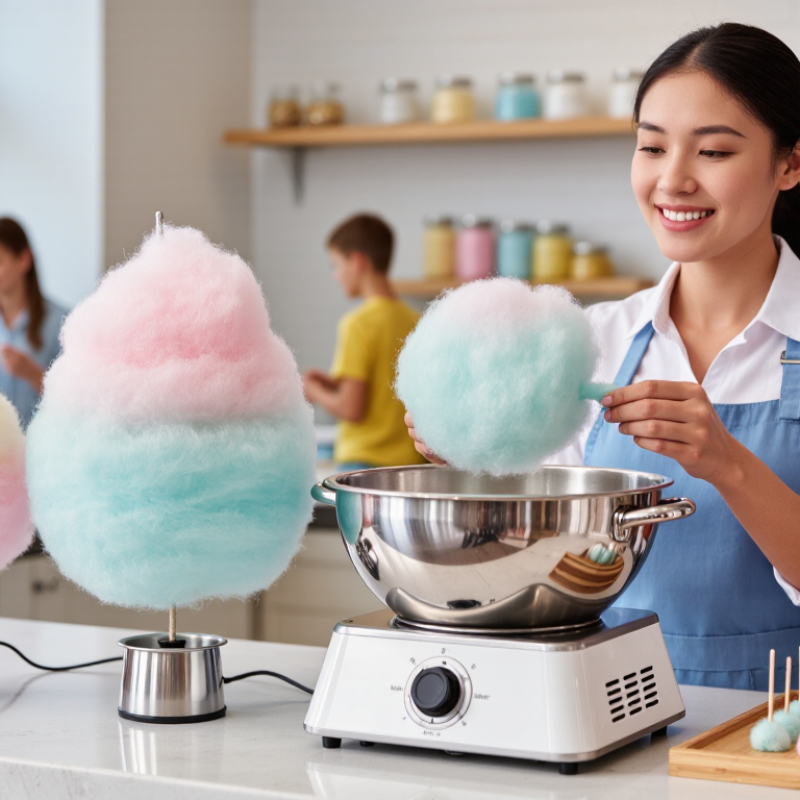
A commercial cotton candy maker turns granulated sugar into fine threads through heat and centrifugal force. After the head warms, sugar melts inside its spinning center. Small openings fling the liquid outward, where it cools and solidifies into wispy strands. The operator gathers them by rotating a paper cone around the bowl. It looks simple. Temperature, sugar quantity, and spin speed still affect the result.
During service, consistent portions help control costs and keep queues moving. Add sugar only as the machine’s instructions specify; overfilling can cause uneven spinning or messy deposits. Allow the head to reach operating temperature before production, then watch for a steady stream of threads. Small adjustments matter. Humidity can also make finished candy sticky, so serve it promptly and keep supplies dry. Cleaning the bowl and spinning head after use helps prevent hardened sugar from affecting later batches.
The National Restaurant Association’s 2024 State of the Restaurant Industry report projected U.S. restaurant sales of $1.1 trillion for that year. That figure describes a broad market, not cotton candy demand specifically. Still, it highlights why operators may test quick, eye-catching treats at events or concessions. A machine is not effortless revenue: staff need practice, and output can vary. I’d track sugar use and servings during a real shift before assuming the numbers will work.
A cotton candy maker fits naturally into businesses where customers have time to pause and watch. At a family entertainment center, it can make a quiet corner more inviting. At fairs, cinemas, bowling alleys, and seasonal markets, the spinning sugar catches attention before guests reach the counter. The machine works best where people can carry a treat easily. That matters.
For a café or concession stand, it can add a made-to-order option without changing the whole menu. Staff can prepare a cone while customers wait, and the colorful product can help draw families toward the serving area. A clear counter layout is important: keep cones, sugar, and packaging within reach, but leave space for customers to queue. The machine also needs regular cleaning and an operator who understands safe handling and consistent portions. Small details show.
Before buying, consider foot traffic, storage, power access, and how quickly staff can serve during a rush. A busy venue may benefit from the visual appeal, while a low-traffic shop could struggle to use the machine often enough. The first layout may feel awkward, too. Track sales and preparation time during a trial period, then adjust staffing or placement. A cotton candy maker is a business tool, not a guaranteed source of extra revenue.
Selling cotton candy can give a business a colorful, easy-to-understand treat that catches attention from across a busy venue. Its spinning sugar and soft pink clouds create a small show, not just a snack. That matters. At fairs, sports events, and family attractions, the product can encourage impulse purchases while giving customers something fun to photograph. A café or seasonal shop might use it as an occasional special, adding variety without building a complicated menu around it. Operators can offer different colors, flavors, or portion sizes to suit the event and customer flow.
The equipment may support quick service when staff are trained and the line is organized. A clear price sign, accessible serving supplies, and a clean work area can make orders easier to manage. Still, sales are not automatic. Cotton candy can be affected by humidity, slow foot traffic, and the time needed to clean and restock. Not every day. Before buying a machine, consider expected event volume, staff capacity, storage, and ingredient costs. Track sales across several shifts; a lively opening crowd may not represent a typical day. The treat can add useful revenue, but only when its workload and demand fit the business.
A cotton candy maker’s purchase price is only part of its real cost. Budget for a cart, protective dome, cones, floss sugar, cleaning supplies, storage, and transport. You may also need spare parts. Output figures can look impressive, but wind, humidity, long queues, and operator practice affect service speed. Sticky hands happen. In the U.S., the Bureau of Labor Statistics reported a median hourly wage of $14.26 for food preparation workers in May 2023. Include setup, serving, and cleanup time when estimating labor, not just minutes spent spinning sugar.
Estimate your cost per serving using actual supplier quotes, then compare it with a realistic selling price and expected volume. The National Restaurant Association’s 2024 State of the Restaurant Industry report found that 38% of surveyed restaurant operators were not profitable in 2023. That figure is not a forecast for event vendors, but it underlines why small expenses deserve attention. Check the machine’s power requirements against the venue’s outlets, and ask how difficult the parts are to clean. A test run in humid conditions can expose problems before a busy event. Leave room for imperfect estimates; crowds are rarely as predictable as a spreadsheet.
Why Buy a Cotton Candy Maker for Your Business?
How to Choose a Cotton Candy Maker for Your Business
Start with your busiest hour, not the machine’s biggest advertised output. Estimate how many servings you expect to sell, then compare that figure with the maker’s rated production capacity. A small unit may suit occasional events, while steady queues call for a model designed for longer operating periods. Check the bowl diameter, too. A wider bowl gives you more room to spin floss without crowding your hands or nearby equipment.
Match the machine to your venue. Measure counter space, doorway width, and available power before ordering. If you work at markets, consider weight, handles, and how easily the unit can be packed away. Ask how the heating head and bowl should be cleaned, and whether replacement parts are readily available. Clear care instructions matter. Sticky sugar can build up quickly during a busy shift, and rushed cleaning is easy to underestimate.
If possible, test a machine with the sugar and cones you plan to use. Listen for excessive vibration, watch how evenly floss forms, and note how long it takes to recover between servings. Check the warranty and support terms in writing. A lower purchase price can be tempting, but downtime during a weekend event may cost more. I would still leave room in the budget for small extras; that part is often overlooked.
Its bright colors and spinning sugar can attract attention at fairs or family events. It also gives customers a treat to photograph. Sales still depend on foot traffic.
No. Humidity, slow crowds, and cleanup time can reduce sales or service speed. A lively opening hour may not reflect a typical day.
Budget for the machine, cart, dome, cones, sugar, cleaning supplies, storage, transport, and spare parts. Small extras add up.
Use current supplier prices for sugar and cones, then include labor and cleanup. Compare that total with a realistic price and expected sales.
Estimate demand during your busiest hour, then compare it with the machine’s rated output. A small unit may suit occasional events; steady queues need longer operating capacity.
Measure counter space and doorways. Check outlet power, too. For markets, consider the machine’s weight and how easily it packs away.
Test it with your planned sugar and cones. Watch how evenly floss forms, listen for vibration, and note recovery time between servings. Test in humid conditions if possible.
Ask how to clean the heating head and bowl, and whether replacement parts are available. Sticky sugar builds up quickly. Rushed cleaning is easy to underestimate.
A commercial cotton candy maker spins heated sugar into fine threads that gather around a cone, turning a simple ingredient into a colorful, ready-to-serve treat. It can fit naturally into family entertainment venues, fairs, event catering, cinemas, and snack counters, where customers are already looking for an appealing impulse purchase. For a business, cotton candy may add variety to an existing menu, attract attention with its preparation, and provide a product that is quick to serve and easy to customize.
Before you Buy Cotton Candy Maker equipment, consider the purchase price, sugar and packaging costs, cleaning requirements, available counter space, and the time needed to train staff. Capacity, heating performance, ease of operation, durability, and maintenance needs should all match your expected customer traffic. By comparing these practical factors with your budget and service setting, you can choose a machine that supports consistent preparation and makes cotton candy a manageable addition to your business.

